Table of Contents
ToggleIntroduction
If you’ve ever felt overwhelmed by complicated workout plans or confusing nutrition advice, you’re not alone. Many people start their fitness journey with enthusiasm, only to quit because things feel too complex or unsustainable. That’s where the Triangle Method comes in—a simple, structured approach that brings clarity and balance to your health routine.
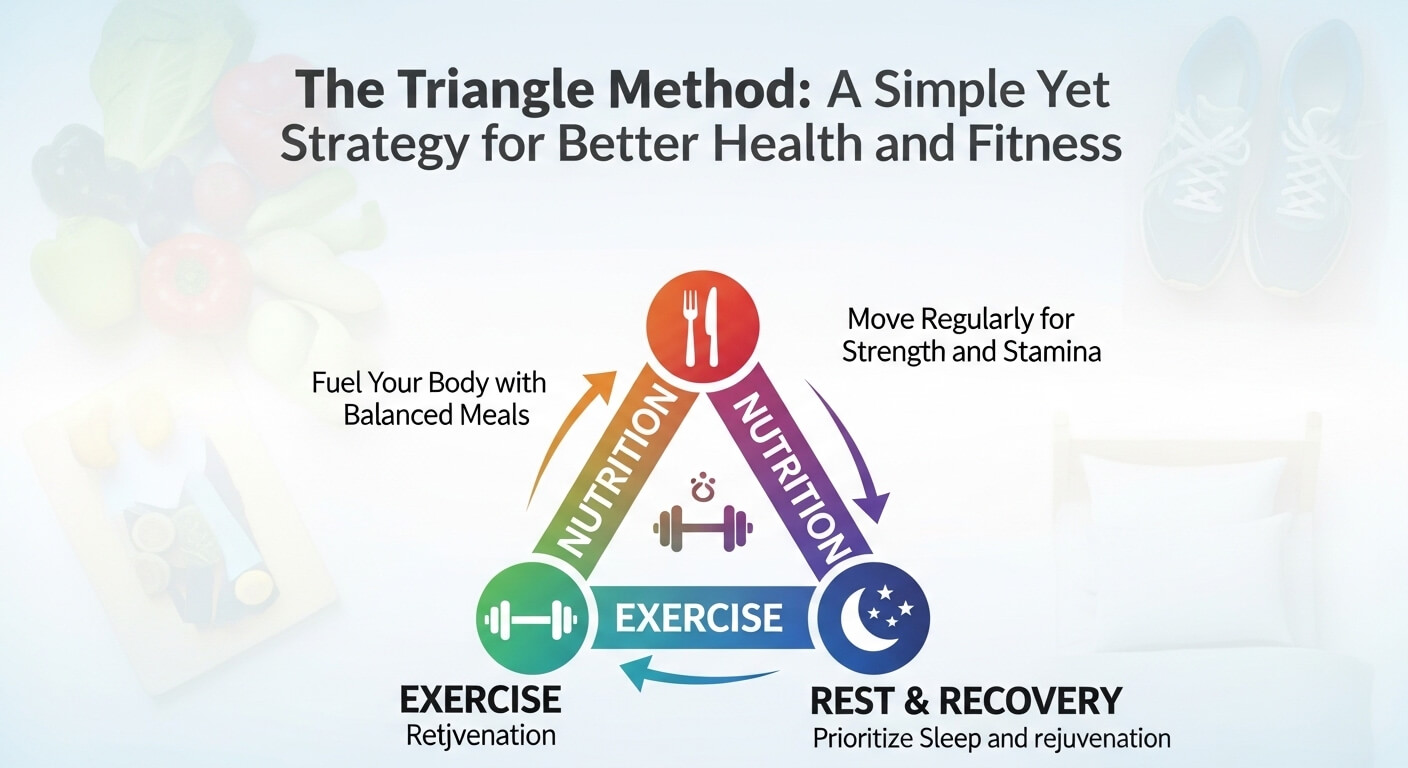
Instead of chasing trends or quick fixes, this method focuses on three core pillars that work together to improve your overall fitness. Think of it like building a strong, stable triangle—each side supports the others. Remove one, and the whole structure weakens.
In this guide, you’ll learn exactly what the Triangle Method is, why it works, and how you can apply it step-by-step to transform your health in a realistic, sustainable way.
What Is the Triangle Method?

The Triangle Method is a holistic approach to health and fitness built around three essential components:
- Exercise (Movement)
- Nutrition (Fuel)
- Recovery (Rest & Mindset)
These three elements form a triangle—each equally important. If one side is ignored, your progress slows or stops.
Why This Method Matters
Many people focus on just one or two areas. For example:
- Working out hard but ignoring diet
- Eating well but not exercising
- Training consistently but neglecting sleep
Research consistently shows that balanced habits produce better long-term results. For instance, studies suggest that poor sleep alone can reduce fat loss by up to 55%, even when diet and exercise are on point.
The Triangle Method ensures you don’t fall into these common traps.
The Three Pillars of the Triangle Method
1. Exercise (Movement)
This is the most visible part of fitness. It includes all forms of physical activity that improve strength, endurance, and mobility.
Key Types of Exercise
- Strength training (weights, resistance bands)
- Cardio (running, cycling, swimming)
- Flexibility (stretching, yoga)
- Functional movement (bodyweight exercises, daily activity)
Why It Matters
- Builds muscle and burns calories
- Improves heart health
- Boosts mood through endorphins
Even 30 minutes of moderate activity, five times a week, can significantly reduce the risk of chronic diseases.
2. Nutrition (Fuel)
You can’t out-train a poor diet. Nutrition provides the energy and nutrients your body needs to perform and recover.
Core Nutrition Principles
- Eat whole, minimally processed foods
- Balance macronutrients: protein, carbs, fats
- Stay hydrated
- Control portion sizes
Example of a Balanced Plate
- 40% vegetables
- 30% protein (chicken, fish, beans)
- 30% carbohydrates (rice, potatoes, whole grains)
Why It Matters
- Supports muscle growth
- Enhances energy levels
- Improves metabolism
A well-balanced diet can increase workout performance by up to 20%, according to fitness studies.
3. Recovery (Rest & Mindset)
This is the most overlooked pillar—and often the missing link in many fitness journeys.
What Recovery Includes
- Sleep (7–9 hours per night)
- Rest days
- Stress management
- Mental health
Why It Matters
- Muscles grow during rest, not workouts
- Reduces risk of injury
- Improves consistency and motivation
Chronic sleep deprivation is linked to increased hunger hormones and weight gain.
Benefits of the Triangle Method
When you apply all three pillars together, the results are powerful and sustainable.
1. Balanced Progress
You avoid burnout and plateaus by supporting your body from all angles.
2. Sustainable Lifestyle
This isn’t a short-term plan—it’s a long-term system you can stick with.
3. Better Physical and Mental Health
You’ll notice improvements in:
- Energy levels
- Mood
- Focus
- Sleep quality
4. Reduced Risk of Injury
Proper recovery and nutrition protect your body from overtraining.
5. Improved Results in Less Time
Instead of working harder, you work smarter.
How to Apply the Triangle Method (Step-by-Step)

Let’s break it down into a simple, actionable plan.
Step 1: Assess Your Current Habits
Ask yourself:
- Am I exercising regularly?
- Is my diet balanced?
- Am I getting enough sleep?
Identify your weakest side of the triangle.
Step 2: Build a Simple Exercise Routine
Start with a realistic schedule:
Beginner Example:
- 3 days strength training
- 2 days light cardio
- 2 rest days
Focus on consistency, not perfection.
Step 3: Improve Your Nutrition Gradually
Don’t try to change everything overnight.
Start with small changes:
- Replace sugary drinks with water
- Add one serving of vegetables per meal
- Increase protein intake
Simple Daily Checklist
- Eat protein in every meal
- Drink 6–8 glasses of water
- Limit processed foods
Step 4: Prioritize Recovery
This is where many people fail.
Build Better Recovery Habits
- Set a fixed sleep schedule
- Avoid screens before bed
- Take at least one full rest day per week
Even a 1-hour improvement in sleep can boost performance significantly.
Step 5: Track and Adjust
Progress isn’t always linear. Monitor:
- Energy levels
- Strength improvements
- Body measurements
Adjust one pillar at a time instead of changing everything at once.
Common Mistakes to Avoid
Even with a simple system, mistakes can happen. Here are the most common ones:
1. Overtraining
More is not always better.
Problem: Exercising daily without rest
Solution: Include recovery days
2. Ignoring Nutrition
You can’t rely on workouts alone.
Problem: Eating junk after workouts
Solution: Plan meals ahead
3. Poor Sleep Habits
Late nights can undo your progress.
Problem: Sleeping less than 6 hours
Solution: Aim for 7–9 hours
4. Trying to Do Everything at Once
This leads to burnout.
Solution: Focus on one habit per week
5. Lack of Consistency
Small actions done daily beat intense efforts done occasionally.
Expert Tips to Maximize Results
Want to take your Triangle Method to the next level? Use these proven strategies.
1. Follow the 80/20 Rule
- 80% clean eating
- 20% flexibility
This keeps your plan sustainable.
2. Combine Strength and Cardio
Instead of separating them:
- Do short cardio after strength workouts
- Try circuit training
3. Use Active Recovery
Not all rest means doing nothing.
Try:
- Walking
- Stretching
- Light yoga
4. Stay Hydrated
Even mild dehydration can reduce performance.
Tip: Drink water before you feel thirsty.
5. Focus on Progress, Not Perfection
Missed a workout? Ate unhealthy once?
No problem—get back on track the next day.
6. Build Habits, Not Motivation
Motivation fades. Habits last.
Start small:
- 10-minute workouts
- Simple meals
- Fixed bedtime
Real-Life Example of the Triangle Method

Let’s say Ahmed wants to lose weight and gain energy.
Before
- Exercises randomly
- Eats fast food frequently
- Sleeps 5–6 hours
After Applying the Triangle Method
- Works out 4 times per week
- Eats balanced meals
- Sleeps 7–8 hours
Result (After 8–12 Weeks)
- Weight loss: 4–6 kg
- Better energy levels
- Improved mood
This shows how balancing all three pillars creates real change.
Who Should Use the Triangle Method?
The beauty of this method is its flexibility.
It works for:
- Beginners starting their fitness journey
- Busy professionals with limited time
- Athletes looking for balance
- Anyone tired of complicated plans
Key Takeaways
Let’s summarize the most important points:
- The Triangle Method focuses on exercise, nutrition, and recovery
- All three must be balanced for best results
- Small, consistent changes lead to long-term success
- Recovery is just as important as workouts
- Simplicity makes this method sustainable
Final Thoughts
The Triangle Method isn’t about doing more—it’s about doing what matters most. By focusing on the three essential pillars of health, you create a system that supports your body instead of stressing it.
If you’ve been stuck, overwhelmed, or inconsistent, this approach can be the reset you need. Start small, stay consistent, and let the triangle work for you.
Your fitness journey doesn’t have to be complicated. Sometimes, the simplest methods are the most powerful.