1. What Is the Chikungunya Virus?
The chikungunya virus is an infection spread mainly through the bite of infected mosquitoes. It is not usually passed from person to person through casual contact like hugging, touching, coughing, or sharing food. The virus is best known for causing sudden fever and severe joint pain, especially in the hands, wrists, ankles, knees, and feet.
The name “chikungunya” is often linked to the bent posture some people develop because the joint pain can be very strong. Although many people recover fully, the illness can be painful and tiring, and some people may continue to feel joint pain for a long time after the fever is gone.
2. How the Chikungunya Virus Spreads
The chikungunya virus spreads when a mosquito bites a person with the virus in their blood and then bites another person. The main mosquitoes that spread it are Aedes aegypti and Aedes albopictus. These are the same types of mosquitoes that can also spread dengue and Zika virus.
They often bite during the day, especially early in the morning and late afternoon, but they can also bite indoors. These mosquitoes like to breed in clean standing water, such as water in buckets, flower pots, old tires, roof gutters, and open containers. This is why removing standing water around the home is one of the best ways to reduce risk.
3. Where Is Chikungunya Virus Found?

The chikungunya virus has been found in many parts of the world, including Africa, Asia, the Indian subcontinent, the Caribbean, Central America, South America, and parts of Europe. Outbreaks can happen when the virus enters an area where Aedes mosquitoes are common, and many people have no immunity.
Travelers can also transmit the virus to another country if they are infected and then bitten by local mosquitoes. Climate, rainfall, travel, and urban crowding can all increase the chance of outbreaks. If you are planning to travel to a warm or tropical area, it is wise to check travel health updates before leaving.
4. Chikungunya Virus Symptoms
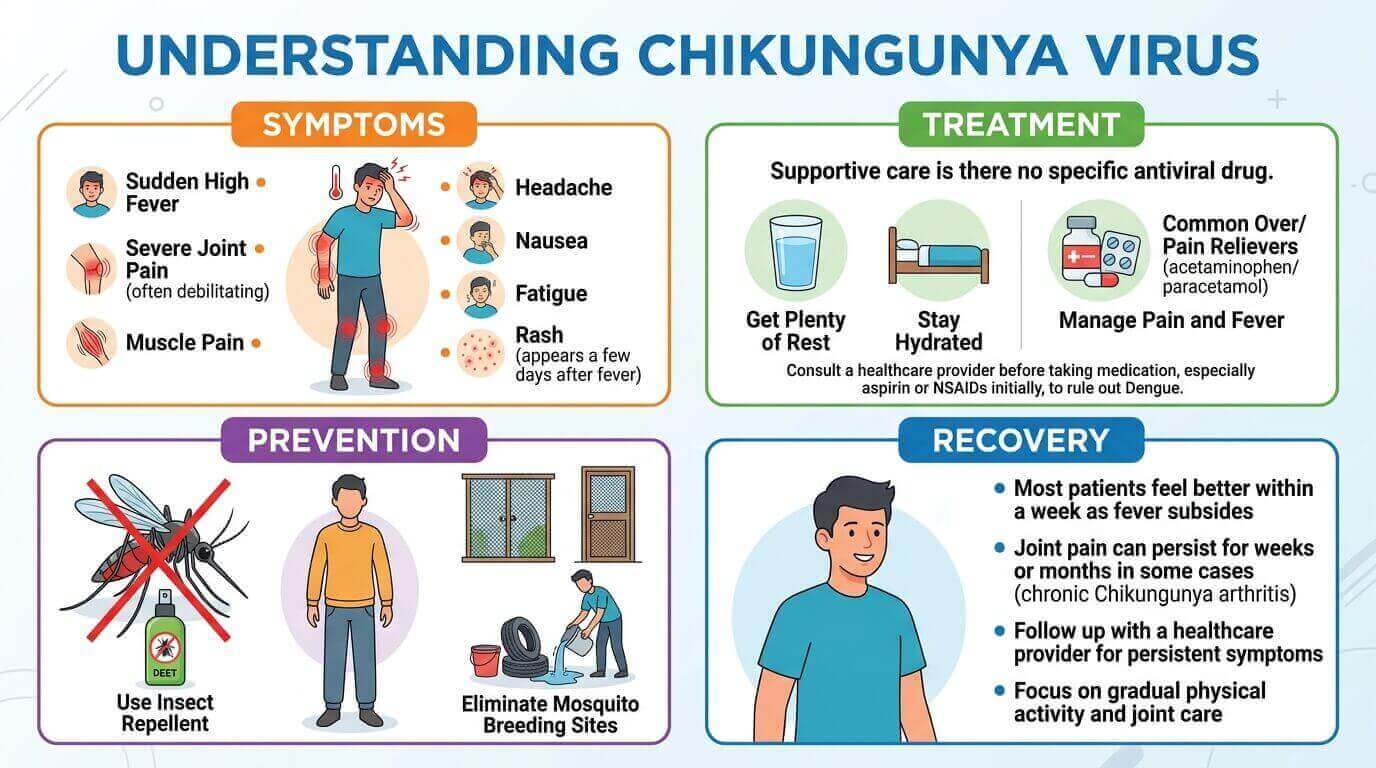
Symptoms of the chikungunya virus often begin about 3 to 7 days after a bite from an infected mosquito, though the timing can vary. The most common symptoms are sudden fever and joint pain. The joint pain can be sharp, deep, and difficult to ignore.
Other symptoms may include headache, muscle pain, swelling in the joints, rash, tiredness, nausea, and pain behind the eyes. Some people may only have mild symptoms and may not realize they have chikungunya. Others may feel very sick for several days. The illness can look similar to dengue, Zika, malaria, or flu, so testing may be needed to know the exact cause.
5. Why Joint Pain Happens With Chikungunya Virus
Joint pain is one of the main signs of the chikungunya virus. The virus can trigger inflammation in the body, especially around the joints. This inflammation may cause swelling, stiffness, and pain that make it hard to walk, hold objects, climb stairs, or do normal daily work.
For many people, the pain improves as the infection clears. For others, the pain may continue for weeks or months. Older adults and people who already have joint problems may be more likely to have longer-lasting pain. Gentle movement, rest, and medical advice can help manage recovery safely.
6. Chikungunya Virus Rash
A rash can appear in some people with chikungunya virus. It may look like small red spots, flat red patches, or a widespread skin rash on the arms, legs, face, chest, or back. The rash may be itchy or uncomfortable, but it is not always painful.
In some cases, the skin may feel warm or sensitive. A chikungunya rash can look similar to rashes caused by dengue, Zika, allergic reactions, or other viral infections, so it should not be used as the only sign for diagnosis. If a rash comes with high fever, severe weakness, bleeding, or breathing problems, medical care is needed quickly.
7. Chikungunya Virus vs Dengue
Chikungunya virus and dengue can look very similar because both are spread by Aedes mosquitoes and both can cause fever, body pain, headache, and rash. However, chikungunya is more strongly linked with severe joint pain, while dengue is more closely linked with bleeding risk, low platelets, and severe warning signs in some cases.
This difference matters because some pain medicines, such as aspirin and ibuprofen, may be risky if the illness is actually dengue. For this reason, doctors often recommend using paracetamol or acetaminophen for fever and pain until dengue is ruled out. A blood test can help tell the difference.
8. Chikungunya Virus vs Zika Virus
The chikungunya virus can also be confused with the Zika virus because both can be spread through the same mosquito species and may cause rash, fever, joint pain, and red eyes. Zika is often milder in adults, but it is especially important during pregnancy because it can affect the developing baby.
Chikungunya can also be serious for newborns if infection happens around the time of birth. If you are pregnant, planning pregnancy, or traveling to an area with mosquito-borne viruses, speak with a healthcare provider before travel. Because symptoms overlap, testing is often the safest way to know which infection is present.
9. Who Is Most at Risk?
Anyone bitten by an infected mosquito can get chikungunya virus, but some people are more likely to have severe symptoms or complications. Higher-risk groups include newborn babies, older adults, pregnant women near delivery, and people with medical conditions such as diabetes, high blood pressure, heart disease, or weak immune systems.
People who live in or travel to outbreak areas also have a higher risk. Outdoor workers, people without window screens, and people living near standing water may be exposed more often. Even healthy adults can feel very unwell from chikungunya, so prevention is important for everyone.
10. How Doctors Diagnose Chikungunya Virus
A doctor may suspect chikungunya virus based on symptoms, travel history, local outbreaks, and mosquito exposure. Because it can look like dengue, Zika, malaria, or other infections, lab testing may be needed. In the first week of illness, a blood test called PCR may detect the virus.
Later, antibody tests may show if the body has reacted to the infection. The right test depends on how many days you have been sick. It is important to tell your doctor if you recently traveled, were bitten by mosquitoes, or live in an area with a known outbreak. This information helps guide testing and treatment.
11. Treatment for Chikungunya Virus
There is no specific antiviral medicine that cures the chikungunya virus. Treatment mainly focuses on easing symptoms and helping the body recover. Rest, fluids, and fever control are important. Paracetamol or acetaminophen is often used for fever and pain, especially before dengue is ruled out.
Avoid aspirin and nonsteroidal anti-inflammatory drugs like ibuprofen or naproxen until a doctor says they are safe, because dengue can increase bleeding risk. If joint pain lasts, a doctor may suggest other medicines, physical therapy, or follow-up care. Never self-medicate heavily, especially if you have other health conditions or take daily medicines.
12. Home Care and Recovery Tips
Home care can make chikungunya virus recovery more comfortable. Drink enough water, coconut water, soups, or oral rehydration fluids if you are sweating or not eating well. Rest when the fever is high, and avoid pushing your body too hard. If joints are painful, gentle stretching may help after the fever improves, but avoid heavy exercise during the early illness.
Cool compresses may reduce discomfort, and loose clothing may help if you have a rash. Eat simple foods such as rice, bananas, yogurt, soup, eggs, fruits, and soft vegetables if your appetite is low. Recovery takes patience, so listen to your body.
13. How Long Does Chikungunya Virus Last?
The fever from chikungunya virus often improves within a few days to a week, but tiredness and joint pain may last longer. Some people feel better after one or two weeks, while others may have joint stiffness or pain for months. In rare cases, joint symptoms can last even longer, especially in older adults or people with previous arthritis.
If pain continues after the fever is gone, it does not always mean the virus is still active. It may be inflammation left behind by the infection. A doctor can help manage long-term symptoms and check for other causes of joint pain.
14. Can Chikungunya Virus Be Dangerous?
Most people recover from chikungunya virus, and death is rare. However, the illness can still be serious for certain people. Severe dehydration, very high fever, severe weakness, neurological symptoms, or worsening medical conditions can happen in some cases. Newborns, older adults, and people with chronic diseases need extra care.
Chikungunya can also cause long-term joint pain that affects work, sleep, movement, and quality of life. Because symptoms can look like dengue, which can be dangerous, it is important to get medical advice if you live in an outbreak area or have strong symptoms after mosquito bites.
15. Warning Signs That Need Medical Help

Seek medical help quickly if you have severe weakness, confusion, fainting, trouble breathing, chest pain, persistent vomiting, severe stomach pain, bleeding from the gums or nose, black stools, very little urine, or signs of dehydration.
You should also see a doctor if the fever lasts more than a few days, joint swelling is severe, symptoms worsen, or you are pregnant, elderly, or caring for a baby with fever. Do not ignore symptoms just because you think it is “only a mosquito fever.” Early medical advice can help rule out dengue, malaria, or other infections that may need urgent treatment.
16. How to Prevent Chikungunya Virus
The best way to prevent the chikungunya virus is to avoid mosquito bites. Use mosquito repellent on exposed skin, especially during the day. Wear long sleeves, long pants, and socks when possible. Use window screens, mosquito nets, and air conditioning if available. Empty standing water around your home at least once a week.
Check buckets, plant trays, old tires, bottles, drains, roof gutters, and water storage containers. Keep water tanks covered. Community mosquito control is also important because mosquitoes can breed in small amounts of water. Prevention works best when families and neighborhoods take action together.
17. Mosquito Repellent Tips
Mosquito repellents can help protect against chikungunya virus when used correctly. Choose repellents with approved ingredients such as DEET, picaridin, IR3535, or oil of lemon eucalyptus, depending on local guidance and age recommendations. Apply repellent to exposed skin and follow the label instructions.
Do not apply it to cuts, eyes, or mouth. If using sunscreen, apply sunscreen first and repellent after. For children, adults should apply repellent carefully to their own hands first and then put it on the child, avoiding hands and face. Repellent is simple, but using it the right way makes it more effective.
18. Preventing Mosquito Breeding at Home
Aedes mosquitoes can breed in very small amounts of water, which makes home control very important. Empty water from flower pots, pet bowls, buckets, and trays. Turn over containers that collect rainwater. Clean roof gutters so water does not sit inside. Cover stored water tightly.
Change water in vases often. Throw away old tires, cans, and bottles that can hold water. If water cannot be removed, local health workers may recommend safe larvicides. A clean yard and home area can lower mosquito numbers and reduce the spread of chikungunya virus, dengue, and Zika at the same time.
19. Chikungunya Virus and Travel
Travelers should take chikungunya virus seriously, especially when visiting tropical or subtropical areas. Before travel, check health notices for outbreaks and pack mosquito repellent, long clothing, and any needed medicines. During travel, choose rooms with screens or air conditioning when possible.
After returning home, watch for fever, rash, and joint pain. If symptoms appear within two weeks of travel, tell your doctor where you went. Also, avoid mosquito bites during the first week of illness because mosquitoes could bite you and spread the virus to others in your area if the right mosquito species is present.
20. Is There a Chikungunya Virus Vaccine?
In some countries, chikungunya vaccines may be available or recommended for certain people, especially travelers or adults at higher risk of exposure. Vaccine availability depends on country rules, age, health condition, and outbreak risk.
Not everyone needs or can receive a chikungunya vaccine, so it is best to ask a travel clinic, doctor, or public health provider for current advice. Even if vaccinated, mosquito protection is still important because mosquitoes can spread other diseases like dengue and Zika. Vaccines are helpful tools, but they do not replace basic bite prevention and mosquito control.
21. Final Thoughts on Chikungunya Virus
The chikungunya virus is a painful mosquito-borne illness that can cause sudden fever, rash, tiredness, and severe joint pain. Most people recover, but some may have joint pain for weeks or months.
Since chikungunya can look like dengue, Zika, malaria, or other infections, medical advice and testing may be needed, especially if symptoms are severe. There is no simple cure, so treatment focuses on rest, fluids, pain control, and safe recovery. The best protection is preventing mosquito bites and removing standing water where mosquitoes breed. With the right knowledge and early care, you can lower your risk and recover more safely.