1. What Is a Foot Reflexology Chart?
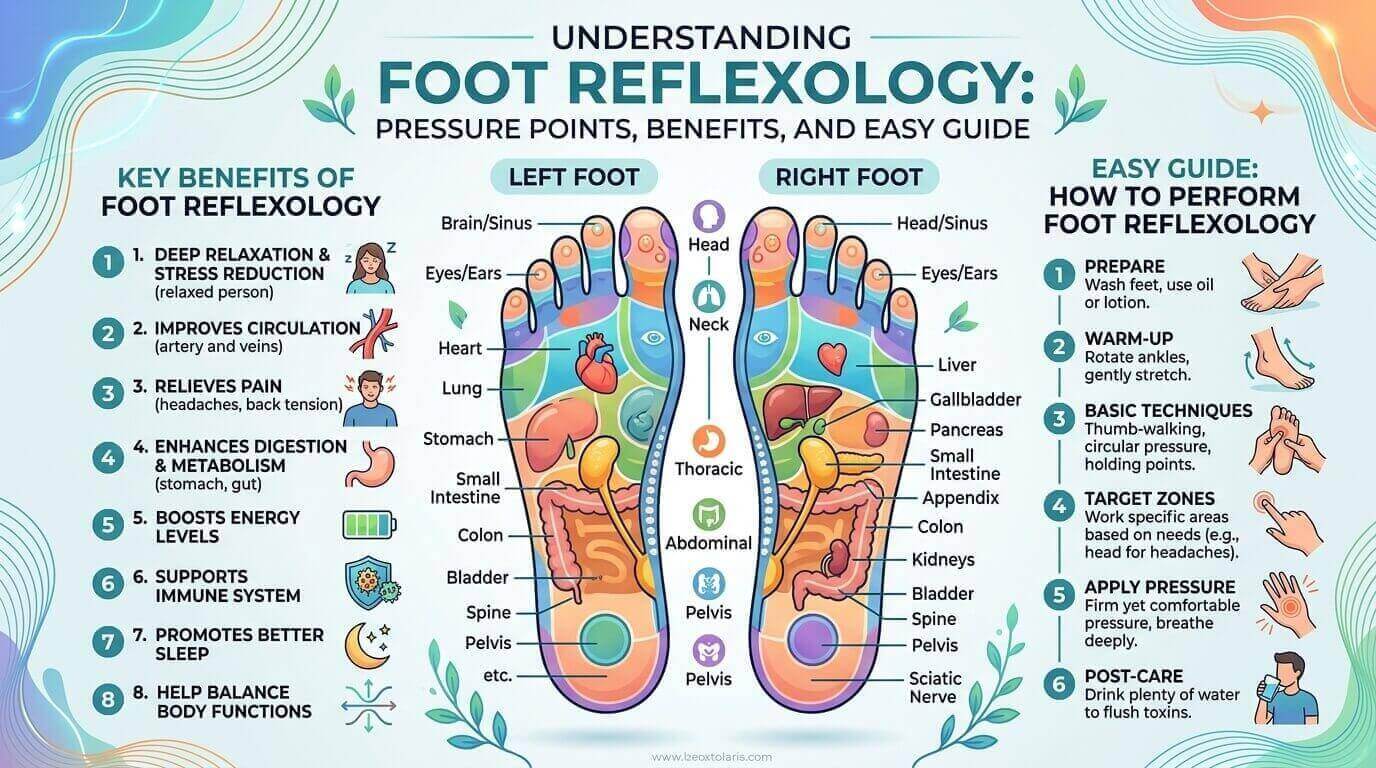
A foot reflexology chart is a visual guide that shows different pressure points on the feet. In reflexology, each part of the foot is believed to match a part of the body, such as the head, neck, stomach, spine, lungs, liver, or kidneys.
For example, the toes are often linked with the head and sinuses, while the arch of the foot is often linked with digestion and internal organs. People use this chart to know where to press, massage, or apply gentle pressure during a reflexology session. It is popular because it is easy to understand and can be used at home for relaxation.
2. What Is Foot Reflexology?
Foot reflexology is a type of therapeutic foot massage based on the idea that certain points on the feet are connected to different body systems. A reflexologist uses fingers, thumbs, and hands to apply pressure to these points. The goal is to support relaxation, improve comfort, and help the body feel balanced.
Some people use reflexology to reduce stress, ease tired feet, or feel calmer after a long day. It is important to understand that reflexology is a complementary practice. This means it may be used alongside healthy habits or medical care, but it should not be used as a replacement for a doctor’s advice or treatment.
3. How a Foot Reflexology Chart Works

A foot reflexology chart works like a map. The right foot and left foot are usually shown separately because they may represent different body areas. The left foot is often connected with organs and body parts on the left side, while the right foot is linked with the right side.
Some areas appear on both feet, such as the brain, spine, lungs, stomach, and intestines. When you look at the chart, you can find the part of the body you want to focus on and then locate the matching area on the foot. This makes reflexology easier for beginners because they do not have to guess where to apply pressure.
4. History of Foot Reflexology
Reflexology has roots in old healing traditions from different parts of the world. Foot massage and pressure point practices have been used for many years in places like China, Egypt, and India. Modern reflexology became more organized in the 20th century when practitioners began creating detailed maps of the feet and hands.
These maps became what we now call reflexology charts. While modern science does not prove every traditional claim about reflexology, many people still find it helpful for relaxation and comfort. Today, a foot reflexology chart is used by wellness practitioners, massage therapists, and people who enjoy self-care at home.
5. Main Zones on a Foot Reflexology Chart
Most foot reflexology charts divide the foot into zones. The toes are usually linked with the head, brain, eyes, ears, and sinuses. The ball of the foot is often linked with the chest, lungs, heart, and upper back. The arch area is commonly connected with the stomach, liver, pancreas, kidneys, and intestines.
The heel is often connected with the lower back, hips, pelvis, and sciatic area. The inner edge of the foot is usually linked with the spine. Understanding these zones helps you use the chart in a simple way. You do not need to memorize every point at once; learning the main areas is enough to begin.
6. Toes on the Foot Reflexology Chart
On a foot reflexology chart, the toes are commonly linked with the head and neck area. The big toe is often connected with the brain, pituitary gland, and head. The smaller toes may be connected with the eyes, ears, sinuses, and teeth. Many people gently massage their toes when they feel tension in the head, tired eyes, or sinus pressure.
Even if you do not believe in every reflexology connection, toe massage can still feel relaxing because the toes carry tension and are often tight from shoes. Use gentle pressure here because the toes can be sensitive, especially if you have foot pain or nail problems.
7. Ball of the Foot Reflexology Points
The ball of the foot is the padded area below the toes. In reflexology, this area is often linked with the chest, lungs, shoulders, and heart. On the left foot, the heart point is usually shown more clearly because the heart sits more to the left side of the body.
People who use reflexology for relaxation often massage the ball of the foot with slow thumb movements. This area can feel sore in people who stand for long hours, wear high heels, or walk a lot. A gentle massage may help the feet feel lighter and more relaxed, even if the body connection is viewed as traditional rather than medical.
8. Arch Area on a Foot Reflexology Chart
The arch is one of the most important areas on a foot reflexology chart because it is often linked with digestion and many internal organs. The middle part of the foot may show points for the stomach, pancreas, liver, gallbladder, kidneys, and intestines.
The right foot often includes liver and gallbladder points, while the left foot may show more stomach and spleen areas. People often massage the arch when they want general relaxation or digestive comfort. The arch can be tender, so pressure should be firm but not painful. If you have plantar fasciitis, flat feet, or arch pain, be extra careful and avoid pressing too hard.
9. Heel Reflexology Points
The heel area is commonly linked with the lower back, hips, pelvis, legs, and sciatic nerve area. People who sit for long hours or stand all day may enjoy a heel massage because the heel carries a lot of body weight. In reflexology, working on the heel may be used to support comfort in the lower body.
However, if you have heel pain, a heel spur, plantar fasciitis, or an injury, deep pressure may make things worse. In that case, use light massage or ask a trained professional for help. A foot reflexology chart can guide you, but your body’s comfort should always come first.
10. Inner Edge of the Foot and the Spine
The inner edge of the foot, from the big toe down to the heel, is often shown as the spine line on a foot reflexology chart. The top part near the big toe may match the neck, the middle edge may match the upper and middle back, and the lower edge near the heel may match the lower back.
Many reflexology sessions include slow thumb walking along this inner edge because back tension is common. This area can be very soothing when massaged gently. If you have serious back pain, numbness, weakness, or pain going down the leg, see a healthcare provider instead of relying only on reflexology.
11. Left Foot vs Right Foot Reflexology Chart
The left and right feet are not always the same on a reflexology chart. The left foot is usually linked with the left side of the body and organs like the heart and spleen. The right foot is often linked with the right side and organs like the liver and gallbladder.
Some organs, such as the lungs, kidneys, stomach, and intestines, may appear on both feet because they affect larger areas or exist on both sides. This is why many charts show both feet side by side. If you are new, it is best to massage both feet evenly rather than focusing on only one point.
12. Possible Benefits of Using a Foot Reflexology Chart
Many people use a foot reflexology chart because it helps them relax and focus their massage. Possible benefits may include reduced stress, better relaxation, less foot tension, improved body awareness, and a calming routine before sleep. Some people say reflexology helps them feel more balanced, but results can differ from person to person.
Scientific evidence is still mixed, so it is better to see reflexology as a wellness practice rather than a guaranteed treatment. The simple act of sitting down, breathing slowly, and massaging your feet can be helpful in itself because it gives your body a break from daily stress.
13. Foot Reflexology for Stress Relief
Stress affects the body in many ways. It can cause tight muscles, poor sleep, headaches, stomach discomfort, and tiredness. Foot reflexology may help some people feel calmer because gentle pressure and massage can relax the nervous system. Using a foot reflexology chart gives structure to the massage, which can make the experience feel more intentional. You can start by massaging the toes, then the ball of the foot, then the arch, and finally the heel. Breathe slowly while you do it. Even ten minutes of quiet foot massage can feel like a small reset after a stressful day.
14. Foot Reflexology for Better Sleep
Many people use foot massage before bed because it helps them slow down. A foot reflexology chart can be useful for a bedtime routine because it gives you a simple pattern to follow. Warm your feet first, apply a little oil or lotion, and massage each foot gently for five to ten minutes.
Focus on slow movements instead of strong pressure. The goal is not to “fix” the body quickly but to tell the body that it is safe to relax. Avoid using your phone during this time if possible. A peaceful foot massage routine may support better sleep when combined with a dark room, regular bedtime, and less caffeine.
15. How to Use a Foot Reflexology Chart at Home
To use a foot reflexology chart at home, start by sitting in a comfortable chair. Wash your feet and hands, then use a small amount of lotion or oil if you want smoother movement.
Look at the chart and choose a general area, such as toes for head and sinus points, ball of the foot for chest points, arch for digestion points, or heel for lower body points. Use your thumb to press gently and move in small circles or short walking movements. Spend a few minutes on each area and repeat on the other foot. Pressure should feel comfortable, not sharp or painful.
16. Simple Foot Reflexology Routine for Beginners
A beginner routine can be very simple. Start by rubbing the whole foot with both hands to warm it up. Then gently rotate each toe and massage the toe pads. Move to the ball of the foot and press in small circles. Next, massage the arch with your thumbs, moving slowly from the inside to the outside.
Then press around the heel and finish by stroking from the toes down to the heel several times. Repeat the same routine on the other foot. This routine does not require deep knowledge of every point on a foot reflexology chart, but it still gives you a full and relaxing foot massage.
17. How Much Pressure Should You Use?
Pressure is very important in reflexology. Many beginners think that harder pressure gives better results, but this is not true. Too much pressure can cause pain, bruising, or irritation. The best pressure is firm enough to feel meaningful but gentle enough that you can stay relaxed. If a point feels tender, reduce pressure and breathe slowly.
Tenderness does not always mean there is a health problem in the matching body area; it may simply mean the foot muscle is tight or tired. A foot reflexology chart is a guide, not a diagnostic tool. Always listen to your body.
18. Who Should Avoid Foot Reflexology?
Foot reflexology is generally gentle, but it is not right for everyone. Avoid strong foot pressure if you have a foot injury, open wound, infection, severe swelling, burns, blood clots, or recent surgery. People with diabetes, nerve damage, poor circulation, or serious heart problems should ask a healthcare provider before trying reflexology.
Pregnant people should also speak with a trained professional because some reflexology points are traditionally avoided during pregnancy. If massage causes pain, dizziness, unusual swelling, or discomfort, stop. Safety matters more than following any chart perfectly.
19. Common Mistakes When Reading a Foot Reflexology Chart

One common mistake is thinking the chart can diagnose illness. A foot reflexology chart does not prove that something is wrong with your liver, heart, stomach, or kidneys. It is only a traditional map used for massage and wellness. Another mistake is pressing too hard on painful points.
Reflexology should not feel like punishment. Some people also focus on one small point for too long and forget to massage the whole foot. A balanced foot massage is usually better. Finally, do not expect instant results. Reflexology is often most helpful when used as a regular relaxation habit.
20. Foot Reflexology Chart vs Acupressure Chart
A foot reflexology chart and an acupressure chart may look similar, but they are not the same. Reflexology maps areas of the foot to body parts and systems. Acupressure is based on traditional Chinese medicine meridians and specific energy points. Both use pressure, but the theories and point locations may differ.
Some wellness practitioners use both methods, while others focus on one. For beginners, a foot reflexology chart is often easier to understand because it looks like a body map on the feet. You can choose whichever approach feels more comfortable, but neither should replace medical treatment.
21. Choosing the Best Foot Reflexology Chart
The best foot reflexology chart is clear, simple, and easy to read. It should show both the left and right foot and label the main areas, such as toes, spine, lungs, stomach, liver, kidneys, intestines, hips, and shoulders. A colorful chart can be helpful, but it should not be overcrowded with too many tiny labels.
If you are a beginner, choose a basic chart first. Once you understand the main zones, you can move to a more detailed chart. You may keep a printed chart near your bed or massage chair so you can follow it during your routine.
Final Thoughts
A foot reflexology chart is a helpful tool for anyone who wants to learn simple foot pressure points and create a relaxing self-care routine. It can guide you to massage the toes, ball of the foot, arch, heel, and inner edge in a more organized way. Many people enjoy reflexology for stress relief, tired feet, and better relaxation, but it should be used wisely.
It is not a cure, and it cannot replace medical care for real health problems. Start gently, use clean hands, listen to your body, and enjoy the process. Sometimes, a few quiet minutes caring for your feet can help your whole body feel more at ease.