1. What Are Raw Honey and Honey?
When people talk about raw honey and honey, they often think both are the same, but there can be important differences. Honey is a sweet, golden liquid made by bees from flower nectar. Bees collect nectar, bring it back to the hive, and turn it into honey through a natural process.
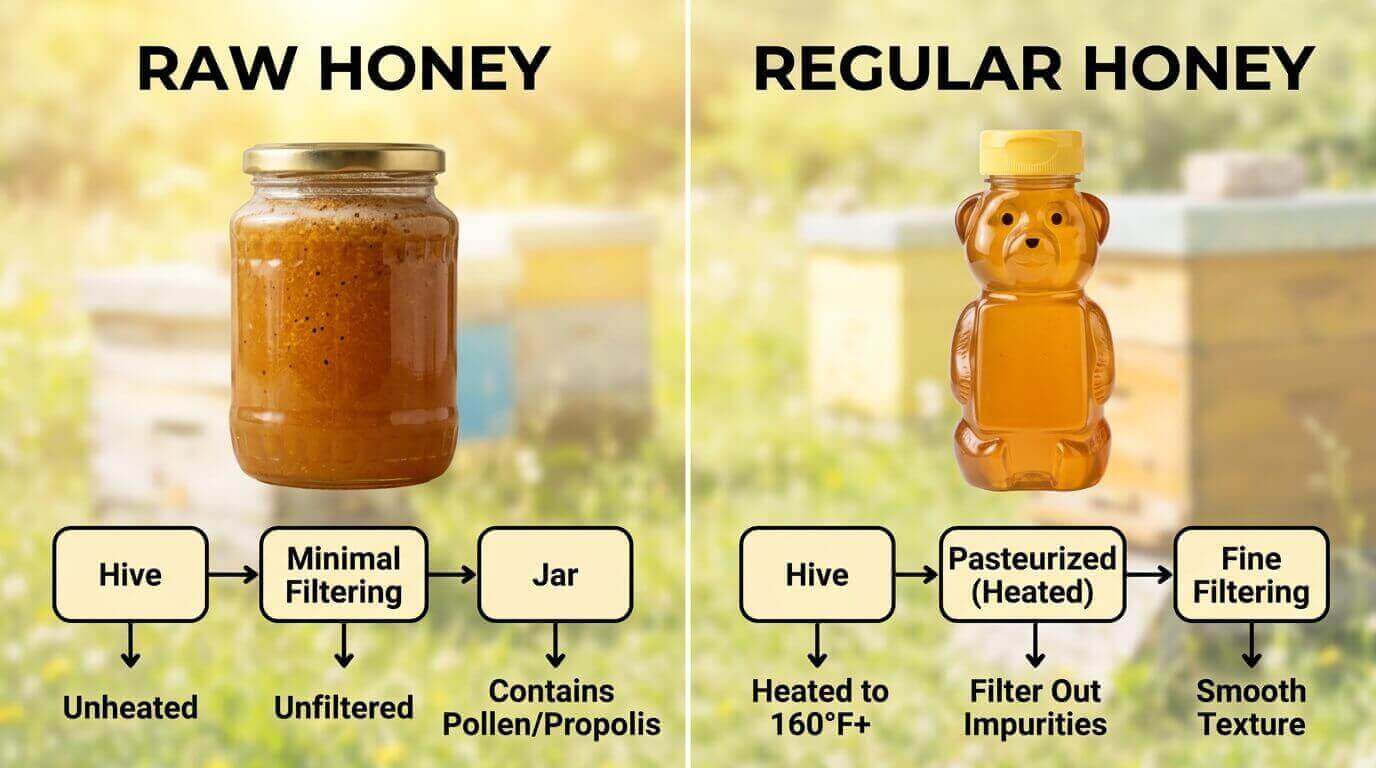
Raw honey is honey that is taken from the hive and lightly strained to remove bits of wax or bee parts, but it is not heavily heated or processed. Regular honey, often found in supermarkets, may be filtered, pasteurized, or heated to make it clearer, smoother, and easier to bottle. Both can be sweet and useful, but raw honey is closer to the natural form found in the hive.
2. Why People Compare Raw Honey and Honey
People compare raw honey and honey because they want to know which one is healthier, tastier, and better for daily use. Some people buy raw honey because they believe it has more natural nutrients and enzymes. Others choose regular honey because it is cheaper, easier to find, and has a smooth look.
The choice often depends on your goal. If you want a natural product with a rich taste and possible pollen content, raw honey may be a better choice. If you want honey for baking, tea, or general sweetness, regular honey may work fine. Understanding the difference helps you spend your money wisely.
3. How Honey Is Made by Bees

Honey begins with flowers. Bees visit flowers and collect nectar, which is a sweet liquid made by plants. They carry the nectar back to the hive and pass it between bees. During this process, the nectar changes and becomes thicker. Bees then place it into honeycomb cells and fan it with their wings to remove extra water.
Once the honey is thick enough, they seal the honeycomb with wax. This natural process is amazing because bees make honey as food for themselves, especially when flowers are not available. Humans collect extra honey from hives, and this is where the difference between raw honey and honey processing begins.
4. What Is Raw Honey?
Raw honey is honey that has not been heavily heated or finely filtered. It may be difficult to remove large pieces of wax, but it usually keeps more of its natural particles, such as pollen, small wax traces, and natural enzymes. Raw honey may look cloudy, thick, or uneven compared to regular honey.
This does not mean it is bad. In fact, many people see this as a sign that the honey is less processed. Raw honey can also crystallize faster than regular honey because it contains natural particles that help crystals form. Its taste may change depending on the flowers visited by bees.
5. What Is Regular Honey?
Regular honey is the honey most people see in grocery stores. It is often heated and filtered to make it smooth, clear, and slow to crystallize. Heating can make honey easier to bottle and can improve shelf appearance. Filtering can remove pollen and tiny natural particles.
This type of honey is still sweet and useful, but it may not have the same natural texture or flavor depth as raw honey. Some regular honey products may also be blended from different sources. This is why reading the label matters. Pure honey should not contain added sugar, corn syrup, or artificial sweeteners.
6. Main Difference Between Raw Honey and Honey
The main difference between raw honey and honey is processing. Raw honey is usually less processed, while regular honey is often heated and filtered more. Raw honey may contain more pollen, enzymes, and natural plant compounds, while regular honey may have fewer of these because of processing.
Raw honey may look cloudy and thick, while regular honey usually looks clear and smooth. Taste can also differ. Raw honey often has a stronger, more floral flavor, while regular honey may taste milder and more consistent. Neither type should be eaten in unlimited amounts because both are still forms of sugar.
7. Nutrition in Raw Honey and Honey
Both raw honey and regular honey are mainly made of natural sugars, including fructose and glucose. They also contain small amounts of vitamins, minerals, amino acids, enzymes, and plant compounds, but honey is not a major source of nutrients like vegetables, fruits, or whole foods.
Raw honey may keep more natural compounds because it is not heavily heated. However, the exact nutrition depends on the flowers, location, season, and processing method. It is important to remember that honey is still high in calories and sugar. A small amount can add sweetness, but too much can affect blood sugar and weight goals.
8. Taste and Texture Differences
Raw honey often has a deeper, richer taste than regular honey. It may taste floral, earthy, fruity, or slightly spicy, depending on the nectar source. Some raw honey is thick and creamy, while some is runny. It may also contain tiny natural bits that give it a more rustic feel.
Regular honey is usually smoother, clearer, and more predictable in taste. Many people like regular honey because it mixes easily into drinks and recipes. Others prefer raw honey because it feels more natural and has a stronger personality. If you love food with real character, raw honey may feel special.
9. Health Benefits of Raw Honey and Honey
Honey has been used for many years as a natural sweetener and traditional home remedy. Some people use it to soothe a sore throat, calm a cough, or add quick energy. Honey also contains antioxidants, which are natural compounds that help protect cells from damage.
Raw honey may contain more antioxidants and natural enzymes than heavily processed honey, depending on quality. However, honey is not a cure for disease. It can be part of a balanced diet, but it should not replace medical treatment. If symptoms are serious or long-lasting, it is always best to speak with a healthcare professional.
10. Raw Honey and Honey for Cough and Sore Throat
Many families use honey for cough and throat comfort. A spoon of honey or honey mixed with warm water may coat the throat and reduce irritation. Some people add lemon or ginger for extra comfort.
Raw honey and honey can both be used this way, but the drink should be warm, not boiling, because very high heat may reduce some natural qualities of raw honey. Honey should never be given to babies under one year old because of the risk of infant botulism, a rare but serious illness. For children over one year and adults, honey may be a gentle option for mild throat irritation.
11. Raw Honey and Honey for Skin Care

Honey is also popular in skin care because it can help attract moisture and may support a soft skin feel. Some people use raw honey as a simple face mask by applying a thin layer, leaving it for a short time, and washing it off gently.
Honey may feel soothing for dry or dull skin, but it is not right for everyone. People with allergies, sensitive skin, or acne-prone skin should be careful and test a small area first. Never apply honey to deep wounds or infected skin without medical advice. Natural does not always mean risk-free, so gentle use is important.
12. Can Raw Honey Help Allergies?
Some people believe local raw honey can help with seasonal allergies because it may contain small amounts of local pollen. The idea is that eating it may help the body get used to pollen. However, scientific support for this is mixed, and honey should not be seen as a proven allergy treatment.
Also, the pollen that causes many allergies often comes from grasses, weeds, and trees, not always the same flowers bees visit. If you have serious allergies, asthma, or a history of strong allergic reactions, speak with a doctor before trying raw honey for allergy reasons.
13. Is Raw Honey Better Than Regular Honey?
Raw honey may be better for people who want a less processed, more natural product with a stronger flavor and possible pollen content. Regular honey may be better for people who want a smooth, clear, affordable sweetener that is easy to find. The better choice depends on your needs.
If you want honey for tea, toast, dressings, and natural flavor, raw honey can be a great option. If you bake often or use honey mainly as a sweetener, regular honey can still work well. The most important thing is choosing pure honey without added sugars or fake fillers.
14. How to Choose Good Quality Honey
When buying honey, read the label carefully. Look for words like “pure honey,” “raw honey,” “unfiltered,” or “local honey,” depending on what you want. Avoid products that list corn syrup, glucose syrup, added sugar, or artificial flavors. Good honey may cost more, especially if it comes from small beekeepers, but quality often matters.
If possible, buy from trusted local beekeepers, farmers’ markets, or reliable brands. Real honey can vary in color and taste depending on the flowers. Very cheap honey is not always fake, but it is worth checking the source and ingredients before buying.
15. Why Raw Honey Crystallizes
Crystallization is normal in raw honey and does not mean the honey is spoiled. Honey crystallizes when natural sugars form tiny crystals. Raw honey often crystallizes faster because it contains pollen and other small particles that encourage crystal formation.
Some people actually like crystallized honey because it becomes thick and spreadable. If you want to make it runny again, place the honey jar in warm water and let it slowly soften. Do not microwave it or heat it too strongly, especially if it is raw honey, because high heat can damage natural enzymes and change the flavor.
16. How to Store Raw Honey and Honey
Honey is easy to store. Keep it in a clean, tightly closed jar at room temperature. A cupboard or pantry is usually perfect. Do not store honey in the refrigerator because cold temperatures can make it crystallize faster. Always use a clean spoon to avoid adding moisture or food particles into the jar.
Honey has a long shelf life because it naturally has low moisture and high sugar, which makes it hard for many microbes to grow. If honey smells fermented, looks foamy, or has too much added moisture, it may not be safe to use.
17. Cooking With Raw Honey and Honey
Both raw honey and regular honey can be used in cooking, but they behave differently from white sugar. Honey adds moisture, flavor, and browning to recipes. You can use it in tea, smoothies, salad dressings, yogurt, oatmeal, marinades, and baked goods. If using raw honey for its natural qualities, avoid adding it to boiling liquids.
Let the tea cool slightly before stirring it in. Regular honey may be more practical for baking because heat will reduce some of the special qualities of raw honey anyway. For daily meals, a small drizzle can add sweetness without needing refined sugar.
18. Who Should Be Careful With Honey?
Honey is natural, but it is not safe for everyone in every situation. Babies under one year old should never eat honey, including raw honey and regular honey. People with diabetes or blood sugar problems should use honey carefully because it can raise blood sugar.
People with pollen or bee-related allergies should also be cautious, especially with raw honey. If you are on a strict weight-loss plan, remember that honey still contains calories. Pregnant adults can usually eat pasteurized honey, but anyone with health concerns should ask a healthcare provider for personal advice.
19. Common Myths About Raw Honey and Honey
One common myth is that raw honey has no sugar. This is false. Raw honey is still mostly sugar, even if it is natural. Another myth is that all supermarket honey is fake. This is not always true, but some products may be low quality or mixed, so labels and trusted brands matter.
A third myth is that raw honey cures all diseases. Honey may have helpful properties, but it is not magic. The best way to enjoy honey is to use it honestly: as a natural sweetener with possible benefits, not as a replacement for healthy food or medical care.
20. Best Daily Ways to Use Honey

You can use honey in simple ways every day without overdoing it. Add a small spoonful to warm tea, spread it lightly on toast, mix it with plain yogurt, drizzle it on fruit, stir it into oatmeal, or use it in homemade salad dressing.
Raw honey is especially nice when used without heavy heat, because its flavor stays strong and natural. Regular honey is useful in sauces, baking, and drinks. Try using honey to replace some refined sugar, but keep the amount small. A little honey can go a long way when the quality is good.
21. Final Thoughts on Raw Honey and Honey
Raw honey and honey are both sweet gifts from bees, but they are not always the same. Raw honey is usually closer to the natural hive form, with less processing, a richer taste, and more natural particles. Regular honey is often smoother, clearer, and easier to use in everyday cooking.
Both can be part of a healthy lifestyle when used in small amounts, but both are still sugars and should be enjoyed in balance. Choose pure, trusted honey, store it well, and use it wisely. Whether you prefer raw honey or regular honey, the best choice is the one that fits your taste, health needs, and daily routine.