Introduction
There is perhaps no sensation quite as unnerving as feeling a tooth move in your mouth when it is not supposed to. Whether you are biting into an apple or simply running your tongue along your gum line, discovering a wobbly tooth can trigger an immediate sense of panic. For parents, this is a normal part of their child’s development, but for adults, it can be a source of significant anxiety and concern.
Because we tend to associate our teeth with permanence, any movement that feels out of the ordinary can make us feel like something is seriously wrong with our oral health. While you should never ignore a tooth that feels loose, it is important to stay calm and understand the landscape of what might be happening before you jump to the worst-case scenario. In this guide, we will break down exactly why teeth become loose, what steps you need to take, and when it is finally time to pick up the phone and schedule that appointment with your dentist.
What is a Wobbly Tooth?
At its most basic level, a wobbly tooth has lost its firm connection to the jawbone. Your teeth are not actually fused directly to your bone like a single solid piece of rock. Instead, they are held in place by a complex system of connective tissue known as the periodontal ligament.
This ligament acts like a shock absorber and a tether, keeping the tooth securely in its socket while allowing for the tiny, almost imperceptible movements that occur when you chew. When a tooth feels loose, it means the strength or the integrity of this ligament—or the bone surrounding it—has been compromised.
It is important to remember that teeth are living structures embedded in living tissue, and they rely on the health of that surrounding environment to stay exactly where they are meant to be.
The Normal Process of Losing Baby Teeth

For children, a loose tooth is almost always a positive developmental milestone rather than a cause for medical concern. As a child grows, their permanent teeth—the adult teeth—develop underneath the baby teeth (also known as primary teeth).
As these permanent teeth get ready to emerge, they naturally press against the roots of the baby teeth, causing those roots to resorb or dissolve. This process is what causes the baby tooth to gradually become loose. It is a slow, usually painless process that allows the child to wiggle the tooth until it finally falls out, making room for the adult tooth waiting below.
If your child is between the ages of five and twelve and has a loose tooth, there is usually nothing to worry about. It is simply nature’s way of preparing the mouth for the set of teeth that will stay with them for the rest of their lives.
Why a Wobbly Tooth is a Major Concern for Adults
Unlike the childhood experience, an adult wobbly tooth is never considered a normal part of aging or development. Because you only get one set of adult teeth, a loose tooth in an adult is a sign that something is actively going wrong within the supporting structures of the mouth.
While it is rare for an adult tooth to just “fall out” without cause, the loosening process is almost always the result of disease, trauma, or structural breakdown in the gums and bone. If you notice even a slight bit of movement in a tooth, you should treat it as a warning sign.
The sooner you identify the cause, the higher your chances are of saving the tooth and preventing the issue from spreading to the neighboring teeth or causing further bone loss in your jaw.
Periodontal Disease: The Number One Cause of Loose Teeth
By far the most common reason adults experience loose teeth is gum disease, also known as periodontal disease. This condition starts as gingivitis, which is the inflammation of the gums caused by plaque buildup. If left untreated, gingivitis progresses into periodontitis, which is much more severe.
During periodontitis, the bacteria in your mouth create deep pockets between the teeth and the gums. These bacteria produce toxins that start to break down the connective tissue and the jawbone that support your teeth.
As the bone begins to erode and the fibers that hold the tooth in place are destroyed, the tooth naturally loses its anchor, leading to that telltale wobbly feeling. This is a progressive disease, meaning that the longer you wait to treat it, the more bone you lose, and the harder it becomes to stabilize the tooth.
How Physical Trauma Can Loosen Your Teeth
Life is full of accidents, and sometimes a wobbly tooth is simply the result of a sudden physical injury. Whether it is a fall during a sporting event, an accidental bump from a hard object, or a car accident, trauma to the mouth can cause a tooth to become loose.
This can happen in two ways: the impact can either fracture the tooth itself or it can damage the periodontal ligament that acts as the tooth’s tether. If you have been involved in an accident and notice that a tooth feels strange or loose, you must see a dentist as soon as possible.
Sometimes, a dentist can “splint” the tooth to a healthy neighboring tooth, holding it in place until the ligament has time to heal and reattach. If you wait too long to seek help after an injury, the damage to the ligament may become permanent, making it difficult to save the tooth.
The Hidden Impact of Teeth Grinding (Bruxism)
Many people suffer from bruxism, or teeth grinding, without even realizing they are doing it, especially since it often happens while they are sleeping. Constant, intense grinding or clenching of the teeth puts an incredible amount of pressure on the periodontal ligaments and the supporting bone.
Over months or years, this relentless force causes the ligaments to stretch out and the bone to actually pull away from the tooth. This process is very similar to what happens in periodontal disease, but the cause is mechanical rather than bacterial.
If you wake up with a sore jaw, a headache, or a tooth that feels slightly loose or sensitive, you might be grinding your teeth at night. A dentist can often spot the signs of wear on the chewing surfaces of your teeth and can fit you with a custom night guard to stop the grinding and allow your ligaments to tighten back up.
Hormonal Changes and Their Effect on Your Gums
It is a lesser-known fact that hormonal fluctuations can have a direct impact on the health of your teeth and gums. During times of significant hormonal change—such as pregnancy, menopause, or even during certain phases of the menstrual cycle—the body’s response to plaque can change.
Hormonal shifts can increase blood flow to the gum tissue, making it more sensitive and prone to inflammation. This is often referred to as “pregnancy gingivitis.” If the gums become inflamed and swollen, they don’t provide the same firm grip on the teeth that healthy, tight gums do.
While hormones themselves don’t typically loosen the tooth directly, they make the gums much more vulnerable to infection, which then leads to the breakdown of the supporting structures. Maintaining meticulous oral hygiene is especially critical during times of hormonal change to keep the gums from becoming a breeding ground for the bacteria that cause loose teeth.
Osteoporosis and Your Oral Health
Osteoporosis is a condition that causes bones to become weak and brittle, and it does not just affect the bones in your hips or spine—it affects the jawbone as well. Since your teeth are anchored into your jawbone, any reduction in bone density can compromise the foundation that holds your teeth in place.
If the jawbone begins to lose density, it effectively creates a looser socket for the tooth. While osteoporosis alone is rarely the sole cause of a wobbly tooth, it is a significant contributing factor, especially in older adults.
If you have been diagnosed with low bone density, it is wise to be extra diligent about your oral hygiene and to mention it to your dentist so they can keep a closer eye on your bone health during your regular checkups.
When to Call the Dentist Immediately

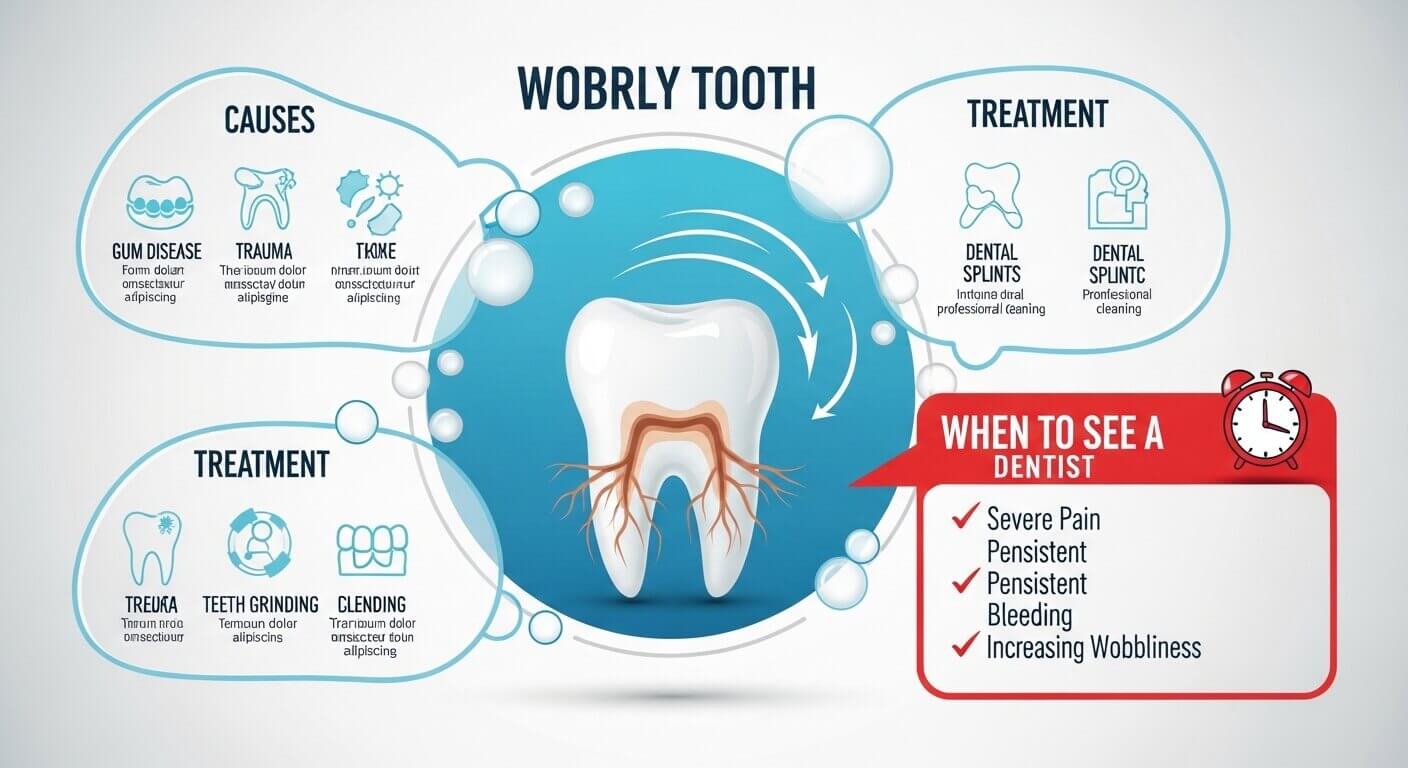
Not every dental problem needs to be handled at 2:00 AM in the emergency room, but a loose tooth is generally high on the list of “call as soon as possible” issues. You should call your dentist immediately if your tooth is loose and you are also experiencing pain, bleeding, swelling, or if the tooth feels like it might fall out at any moment.
If you have had an accident, this is an emergency. If you have a loose tooth caused by gum disease, the sooner you get in, the better. Dentists have specialized tools to clean the deep pockets where bacteria are hiding and can determine if you need specialized gum treatments or a referral to a periodontist (a specialist in gum health).
Ignoring a loose tooth usually guarantees that the situation will get worse, and you risk losing the tooth entirely.
How Dentists Treat a Loose Tooth
The treatment for a wobbly tooth depends entirely on the cause. If the looseness is caused by gum disease, the first step is usually a deep cleaning called scaling and root planing. This involves cleaning the pockets around the teeth to remove the bacteria and smooth the surface of the roots so the gums can reattach.
If the tooth is loose due to an injury, the dentist might splint it to the healthy teeth next to it using a thin wire or a composite resin to keep it stable while it heals. If the cause is bruxism, the solution is often a night guard.
In cases where the gum disease has progressed too far and the bone has been lost, your dentist might discuss regenerative procedures to help the bone grow back or, in extreme cases, might discuss replacing the loose tooth with a dental implant if it cannot be saved.
The Do’s and Don’ts of Managing a Loose Tooth at Home
When you realize you have a loose tooth, your instinct might be to wiggle it to see how bad it is. Do not do this. Constantly wiggling the tooth only irritates the damaged periodontal ligaments further and prevents them from healing. Think of it like picking at a scab; if you keep picking at it, the wound will never close.
- Do: Practice excellent oral hygiene. Gently brush the area with a soft-bristled brush to keep it clean.
- Do: Use an antiseptic mouthwash if your dentist recommends it to help control bacteria.
- Don’t: Wiggle, push, or pull on the tooth.
- Don’t: Eat hard, crunchy, or sticky foods that could pull the tooth out or stress the ligament.
- Don’t: Try to “fix” it by using adhesives or trying to push the gum tissue back.
Building Habits to Keep Your Teeth Strong
The best way to deal with a wobbly tooth is to ensure you never have one in the first place. This comes down to consistent, daily habits. Brushing for two minutes twice a day is the absolute bare minimum, but it is the how that matters. Use a soft-bristled brush and gentle pressure.
Over-brushing with a hard brush can actually cause your gums to recede, exposing the roots and weakening the tooth’s support. Flossing daily is non-negotiable—floss removes the bacteria that your toothbrush can’t reach, and that bacteria is the primary cause of the gum disease that makes teeth wobble.
Beyond these basics, don’t skip your biannual dental cleanings. These cleanings remove the hardened tartar that you cannot remove at home, which is crucial for preventing the onset of periodontal disease.
Managing the Anxiety of a Wobbly Tooth

It is perfectly normal to feel anxious about a loose tooth. Our teeth are essential for eating, speaking, and smiling, and the thought of losing one can be very distressing. However, fear often prevents people from seeking the help they need, which only makes the outcome worse.
Try to frame your anxiety as a signal to take action. Make the appointment, go to the dentist, and find out exactly what is going on. Often, the fear of the unknown is much worse than the reality of the situation. Once you have a plan—even if that plan involves treatment or gum care—you will feel a significant sense of relief because you are doing something productive to save your smile.
The Role of Diet in Supporting Your Periodontal Ligaments
While most people focus on brushing and flossing, your diet plays a surprising role in the health of your teeth’s supporting structures. Your gums and periodontal ligaments are tissues that require vitamins and minerals to stay healthy. Vitamin C, for instance, is vital for the health of your connective tissue.
A deficiency in Vitamin C can actually cause gums to bleed and weaken, which can contribute to the loosening of teeth. A diet rich in leafy greens, fruits, and vegetables provides the antioxidants and nutrients that help your immune system fight off gum infections. Additionally, avoiding sugary, processed foods is critical, as these foods feed the bacteria that cause periodontal disease. Sugar is effectively fuel for the bacteria that destroy your jawbone and loosen your teeth.
Final Thoughts on Oral Health
A wobbly tooth is never something you should try to “wait out.” Whether it is a child’s baby tooth that is perfectly healthy or an adult tooth that requires immediate professional intervention, the best approach is always one of awareness and action. Your teeth are meant to be with you for a lifetime, and they are remarkably resilient when they are cared for properly.
By understanding that a loose tooth is a sign—not a sentence—you can take the steps necessary to address the root cause, protect your jawbone, and maintain your oral health. Remember, dentistry is a partnership. Your dentist provides the expertise and the treatments, but you provide the daily care, the nutrition, and the attention that keep everything solid. Keep your gums healthy, stay vigilant, and never hesitate to ask for help if you notice your teeth moving when they should be standing firm.