Introduction
Healthcare providers today are fighting on two fronts simultaneously. On one side, some patients need more time, more attention, and better communication than ever before. On the other hand, there are mountains of administrative tasks — billing, compliance, documentation, referrals, insurance claims — that consume hours that should be spent on care.
The average physician spends nearly two hours on paperwork and administrative work for every single hour they spend with patients, according to research published in the Annals of Internal Medicine. That ratio is unsustainable — and it is exactly the problem that Care Qevafaginz Network Ltd was designed to solve.
This guide breaks down exactly how Care Qevafaginz Network Ltd works for providers: what the platform does, how to get started, the specific tools available, what mistakes to avoid, and practical tips to extract maximum value from the system from day one.
What Is Care Qevafaginz Network Ltd?
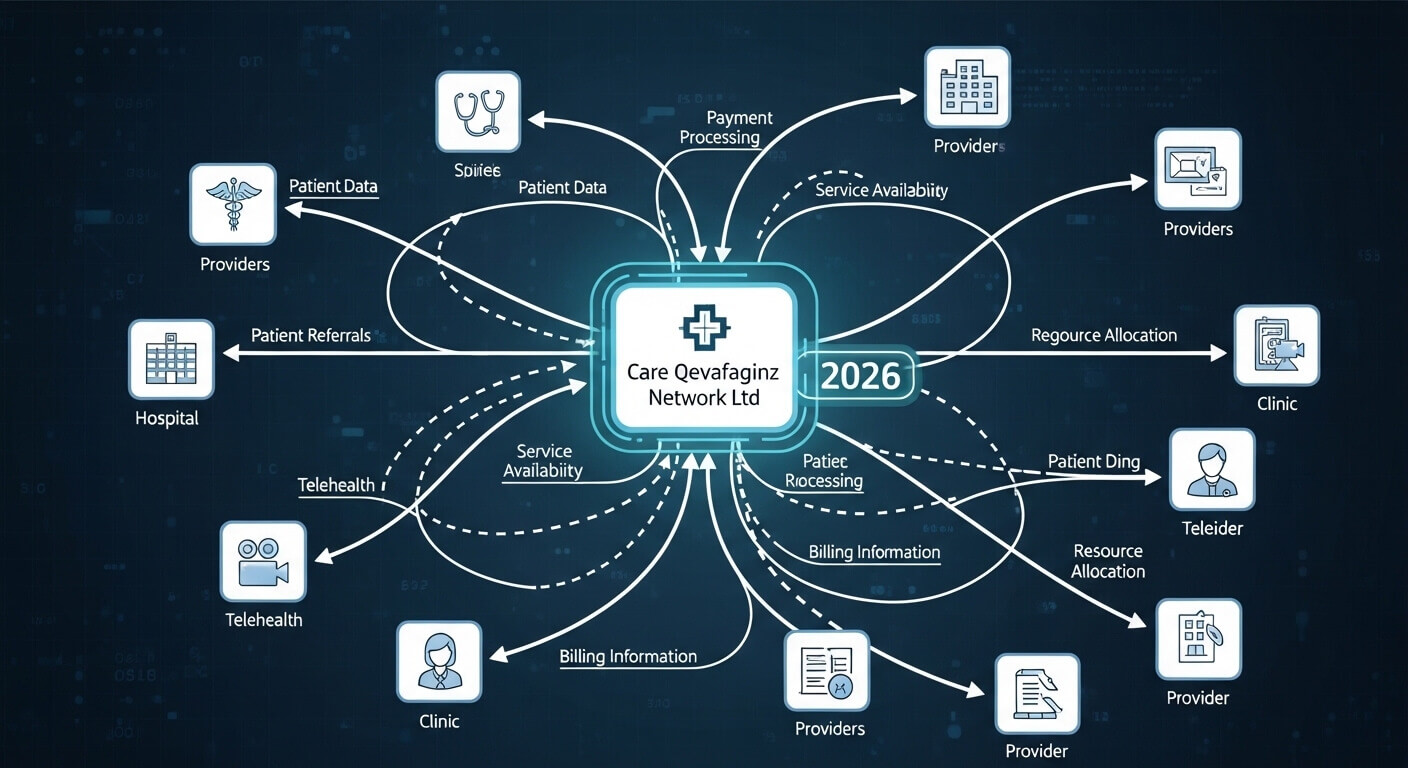
Care Qevafaginz Network Ltd is a healthcare coordination platform built specifically for medical providers. It connects providers and patients within a unified digital ecosystem while simultaneously handling the backend complexity — communications, billing, data exchange, compliance documentation, and care coordination — in one centralised location.
The platform is not a replacement for your existing systems. That distinction matters. Care Qevafaginz Network Ltd integrates with major Electronic Health Record (EHR) systems, including Epic, Cerner, and Allscripts, connecting your current tools rather than forcing you to rebuild from scratch. Think of it less as a new system and more as an intelligent layer that ties your existing tools together and fills in the gaps.
It is built for providers across the spectrum — from solo practitioners and small private clinics to multi-specialty group practices, regional hospitals, and large healthcare networks. The platform scales with the size and complexity of the organisation.
The Problem It Solves
Every provider deals with a version of the same set of frustrations: patient records scattered across disconnected systems, billing errors that delay reimbursements by weeks, referrals that fall through gaps between departments, and compliance documentation that takes far longer than it should.
Care Qevafaginz Network Ltd addresses these through automation, smart routing, role-based access control, and real-time data synchronisation. All provider-related tasks happen in a common, centralised system, so that the left hand of the practice always knows what the right hand is doing.
The result — based on reported outcomes from practices using the platform — is a reduction in operational costs of up to 30% alongside measurable improvements in service delivery metrics and patient satisfaction scores.
Core Features of Care Qevafaginz Network Ltd for Providers

Understanding what the platform actually does in practice is more useful than a list of abstract benefits. Here is a feature-by-feature breakdown of how Care Qevafaginz Network Ltd works for providers in daily operations.
Patient Management and Care Coordination
The patient management system is the operational heart of the platform. It provides providers with:
- Real-time access to patient records — including medical history, current medications, diagnostic results, and treatment plans — accessible from any device, from anywhere
- Appointment scheduling tools that reduce wait times, automate reminders, and integrate directly with provider calendars
- Integrated care coordination between GPs, specialists, hospitals, and laboratories, so everyone treating a patient is working from the same current information
- Patient-matching algorithms that connect patients with appropriate providers based on location, specialty, availability, insurance acceptance, and communication preferences
The care coordination feature specifically addresses one of the most common points of failure in healthcare: the handoff. When a GP refers a patient to a cardiologist, both providers can track the referral, access shared notes, and communicate through the platform without email chains or phone tag. Smart routing sends referrals directly to the appropriate department or specialist the moment they are submitted, cutting lag time significantly.
Billing Automation and Revenue Cycle Management
Billing is where the administrative burden hits hardest for most practices. Care Qevafaginz Network Ltd simplifies this through:
- Automated claims submission — coding checks and validations run automatically before submission, catching errors before they cause delays or denials
- Insurance verification — real-time eligibility checking prevents claim rejections caused by outdated coverage information
- Automated invoicing — payment requests go to patients and insurance companies without manual intervention
- Revenue cycle tracking — providers see real-time payment status, outstanding balances, and financial performance reports from a single dashboard
- Handling of patient copays, deductibles, and out-of-pocket expenses — transparent for patients, protected for provider revenue
The financial impact of these tools is not trivial. Claim denials alone cost the US healthcare system an estimated $262 billion annually, according to a McKinsey analysis. Most of those denials stem from coding errors and eligibility issues that automated pre-submission checks can prevent. Providers using automated billing platforms consistently see faster reimbursement cycles and lower denial rates than those managing claims manually.
Electronic Health Records and Documentation
Care Qevafaginz Network Ltd’s EHR integration supports:
- Comprehensive patient record management, including medical history, prescriptions, diagnostic coding, and care plan development
- Interoperability standards, including HL7 and FHIR protocols, allow patient data to communicate with external laboratories, imaging centres, and referral networks without manual re-entry
- Voice dictation tools and templated charting that reduce documentation time per patient encounter
- Automatic logging of all data access and modifications, creating the audit trail required for compliance purposes
For providers already using an EHR, the integration process is designed to be seamless. Your existing patient data migrates into the connected ecosystem without disruption to ongoing care.
Telehealth and Remote Care
Telehealth has moved from an emergency workaround to a permanent feature of modern healthcare delivery. Care Qevafaginz Network Ltd’s telehealth capabilities include:
- Secure, HIPAA-compliant video consultation tools built directly into the platform — no third-party app required
- Automated documentation of telemedicine visits, including recording and logging where applicable
- Remote monitoring integration that syncs with wearable devices to track patient vitals between appointments
- E-prescription capabilities that allow providers to issue and manage medication orders during virtual consultations
This is particularly valuable for providers serving rural or underserved populations, elderly patients with mobility challenges, or managing chronic conditions that require frequent check-ins without the cost and time of in-person visits.
Security and Compliance
Healthcare data is among the most sensitive data that exists, and any platform handling it must meet the highest security standards. Care Qevafaginz Network Ltd is built on:
- Full HIPAA and GDPR compliance
- Data encryption both at rest and in transit
- Role-based access controls ensure staff only see data relevant to their function
- Multi-factor authentication for all user accounts
- Real-time security alerts and automated breach detection
- Regular third-party security audits
- Complete audit trails tracking every access and modification of patient records
Providers using the platform gain a compliance infrastructure that would cost significant time and resources to build independently. The documentation and audit trail features also help practices prepare for regulatory reviews and inspections with far less manual preparation.
How to Get Started: Onboarding with Care Qevafaginz Network Ltd

The onboarding process is structured to minimise disruption and get providers functional as quickly as possible.
Step 1: Initial Assessment and Registration
The process begins with providers submitting credentials, licensing information, and practice details through a secure online portal. The credential verification step ensures that only qualified healthcare professionals join the network while keeping wait times minimal. You will need to prepare:
- Current professional licence and registration documentation
- Practice information — size, specialty, number of providers, current systems in use
- Insurance and billing account details
- A list of existing EHR and practice management systems for integration planning
Step 2: System Integration Planning
Following credential verification, a platform specialist assesses your current systems and builds a customised integration plan. This is the step that determines how smoothly everything downstream will function. Key decisions made here include:
- Which EHR systems will connect to the platform
- Which workflows will be automated immediately versus phased in over time
- Which staff roles will receive which levels of platform access
- Custom workflow preferences, notification settings, and reporting thresholds
The integration is designed to be non-disruptive. Your team keeps using familiar tools while the platform connects them and adds automation and intelligence in the background.
Step 3: Staff Training
Care Qevafaginz Network Ltd provides hands-on training sessions tailored to different staff roles. Clinical staff receive training focused on patient management and documentation tools. Administrative staff are trained on billing, scheduling, and communication functions. Managers and practice leads receive training on reporting, analytics, and system customisation.
Training is designed to be practical rather than comprehensive — the goal is getting your team confident with the tools they will use daily, not overwhelming them with every feature at once.
Step 4: Launch and Live Support
The system goes live with real-time support available from platform specialists. Most practices of ten or fewer providers report achieving full operational readiness within approximately one week of active implementation work. Larger group practices naturally require additional time due to workflow complexity.
Post-launch, ongoing support is available through live chat, phone, email, and a ticket system — accessible around the clock.
Step 5: Ongoing Optimisation
Regular post-launch check-ins allow practices to refine how they use the platform based on real-world experience. Monthly feature releases and quarterly upgrades keep the system current with evolving healthcare technology and regulatory requirements. Providers are actively encouraged to contribute feedback that shapes future development.
Common Mistakes Providers Make When Using the Platform
Even well-implemented systems underperform when used without understanding their full capability. These are the patterns that consistently reduce the value providers get from Care Qevafaginz Network Ltd.
Mistake 1: Treating it as a billing tool rather than an integrated platform. Many practices initially use only the billing and scheduling features because those deliver the most obvious immediate return. Over time, the greatest efficiency gains come from the care coordination, documentation, and analytics tools. Getting the full team using the full platform produces results that partial adoption cannot match.
Mistake 2: Skipping the customisation phase. The platform allows extensive customisation — specific workflow filters, custom notification thresholds, tailored report formats. Practices that skip this phase during onboarding use a generic version of a tool that was designed to be fitted to their specific needs. Taking time to configure the platform at setup pays significant dividends over months and years of daily use.
Mistake 3: Underinvesting in staff training. Resistance to new systems is normal. Practices that treat training as a one-time event rather than an ongoing resource consistently see lower adoption rates and poorer outcomes. Designating an internal platform champion — someone who becomes the in-house expert and supports colleagues — dramatically improves team-wide adoption and confidence.
Mistake 4: Not using the analytics and reporting tools. The platform’s reporting capabilities — treatment outcome tracking, at-risk patient identification, and financial performance monitoring — are among its most powerful features and among the most underused. Practices that review performance data regularly make better decisions about staffing, scheduling, and patient management than those flying blind.
Mistake 5: Maintaining parallel manual processes. Some practices continue running manual processes alongside the platform during transition, as a safety net. This is understandable initially, but it should have a defined end date. Running parallel systems doubles work, creates data inconsistencies, and prevents the efficiency gains the platform was implemented to produce.
Expert Tips for Getting the Most from Care Qevafaginz Network Ltd

Tip 1: Begin with the highest-pain workflow. Every practice has a disproportionately frustrating workflow — most commonly, billing or referrals. Start automation there. Visible, immediate improvement in the area that caused the most daily frustration builds team confidence in the platform and creates momentum for broader adoption.
Tip 2: Use the referral tracking system aggressively. The warm handoff between the referring provider and the specialist is where patient continuity most often breaks down in traditional practice. The referral tracking features — which notify the referring provider of patient progress and give specialists instant access to relevant background — directly address this. Configure these notifications during setup, and they work automatically from day one.
Tip 3: Schedule monthly data reviews. The analytics dashboard provides insights that only become visible over time. Setting a regular monthly appointment to review at-risk patient flags, billing performance data, and outcome tracking is the habit that separates practices that improve continuously from those that plateau.
Tip 4: Engage the patient portal actively. The patient-facing tools — portal access to records, mobile appointment reminders, secure messaging — produce better patient engagement and satisfaction scores when providers actively promote them. A brief explanation at appointments, combined with automated onboarding prompts, gets patients using these tools and reduces no-show rates, late cancellations, and repeat administrative calls.
Tip 5: Participate in the provider network. Care Qevafaginz Network Ltd includes a community of providers who share tips, feedback, and best practices. Practitioners who engage with this network consistently report professional connections and collaboration opportunities that they would not have found independently. The network effect — being part of a coordinated provider ecosystem rather than operating in isolation — compounds in value over time.
Key Takeaways
Care Qevafaginz Network Ltd addresses the structural problem that affects virtually every healthcare provider: too much time spent on administration and too little on the clinical work that drew them to medicine in the first place.
Here is what matters most:
- It is an integrating layer, not a replacement. The platform connects your existing tools and fills gaps — your team keeps working with systems they already know.
- The billing automation alone justifies adoption for most practices. Faster reimbursement, fewer denials, and cleaner claims produce measurable financial returns within months.
- Care coordination is the platform’s most strategically important feature. Referral tracking, shared patient records, and specialist communication directly improve patient outcomes in ways that benefit both care quality and practice reputation.
- Security and compliance are built in. HIPAA and GDPR compliance, end-to-end encryption, and comprehensive audit trails give providers a robust compliance infrastructure without building it from scratch.
- Full adoption produces full returns. Practices that use the complete platform — not just billing and scheduling — consistently outperform those with partial adoption on both efficiency and patient satisfaction metrics.
- Onboarding investment pays forward. Time spent on customisation, staff training, and workflow configuration during setup determines how well the platform performs every day for years afterward. Do not rush this phase.
Modern healthcare is complex enough without fighting your own systems to deliver care. Care Qevafaginz Network Ltd exists to remove that friction — so that the time, attention, and expertise of every provider in the network can go exactly where it belongs: with patients.