Introduction
Stress has become such a constant companion in modern life that most people accept it as normal, pushing through anxious mornings, overwhelming workloads, and sleepless nights as if these experiences are simply unavoidable parts of being human.
But what if there was a natural remedy rooted in thousands of years of traditional medicine that could help your body manage stress more effectively, improve your sleep quality, boost your energy levels, and support your overall wellbeing—and what if taking it felt more like eating a delicious candy than swallowing a bitter herbal supplement? That’s exactly the promise that ashwagandha gummies deliver, combining one of the most extensively researched adaptogenic herbs in the world with the convenient, tasty gummy format that modern consumers prefer over pills, capsules, and powders.
The global ashwagandha market has exploded in recent years, reaching over 1.2 billion dollars in 2023, and gummies have emerged as one of the fastest-growing product categories within this booming market. Whether you’re completely new to ashwagandha or you’ve been taking it in other forms and want to switch to something more enjoyable, this comprehensive guide covers everything you need to know about ashwagandha gummies.
What Exactly Is Ashwagandha

Before diving into the specific benefits of ashwagandha gummies, understanding the herb itself provides essential context to help you appreciate why this plant has attracted so much scientific attention and consumer enthusiasm. Ashwagandha, scientifically known as Withania somnifera, is a small evergreen shrub native to India, the Middle East, and parts of Africa that has been used in Ayurvedic medicine for over three thousand years as a rasayana, which translates to “rejuvenator” in Sanskrit.
The plant’s roots and berries contain bioactive compounds called withanolides, which are believed to be responsible for most of its therapeutic effects, including anti-inflammatory, antioxidant, neuroprotective, and stress-modulating properties documented in hundreds of scientific studies. The name “ashwagandha” literally means “smell of the horse” in Sanskrit, referring both to the herb’s distinctive earthy aroma and the traditional belief that consuming it gives you the strength and vitality of a horse.
Modern research has largely validated many of the traditional uses of ashwagandha, positioning it as one of the most evidence-based adaptogenic herbs available and explaining why ashwagandha gummies have become such a popular wellness product.
Why Gummies Have Become the Preferred Ashwagandha Format
The surge in popularity of ashwagandha gummies over traditional capsules, tablets, and powders reflects broader consumer preferences for supplement formats that are enjoyable to take rather than feeling like a chore or medical obligation.
Many people struggle with swallowing pills, particularly large capsules or tablets that can feel uncomfortable going down, and the gummy format eliminates this barrier to consistent supplementation. The pleasant taste of ashwagandha gummies addresses one of the herb’s biggest challenges—its naturally bitter, earthy flavor that most people find unpalatable when consumed as a powder or liquid extract, making the gummy format significantly more appealing for daily use.
Research consistently shows that supplement compliance improves dramatically when the product is pleasant to consume, meaning that the enjoyable experience of taking ashwagandha gummies actually translates into better health outcomes because people are more likely to take them consistently rather than skipping doses or abandoning their supplement routine entirely.
The Science-Backed Benefits of Ashwagandha
The benefits attributed to ashwagandha gummies aren’t based on ancient folklore alone—modern scientific research has investigated this herb extensively, producing evidence that supports several significant health benefits.
Stress and Anxiety Reduction
The most well-documented benefit of ashwagandha involves its ability to reduce stress and anxiety, which is precisely why most people begin taking ashwagandha gummies in the first place. Ashwagandha is classified as an adaptogen, meaning it helps your body adapt to stress by modulating the hypothalamic-pituitary-adrenal axis, the system responsible for your cortisol response to stressful situations.
A landmark study published in the Indian Journal of Psychological Medicine found that participants taking ashwagandha experienced a 28% reduction in cortisol levels compared to placebo, along with significant improvements in self-reported stress and anxiety scores.
Another meta-analysis examining five randomized controlled trials concluded that ashwagandha supplementation significantly reduced anxiety and stress compared to placebo across diverse populations, with effects becoming noticeable within two to four weeks of consistent use.
Improved Sleep Quality
Many ashwagandha gummies users report dramatically improved sleep quality, and research supports this experience with measurable evidence of both subjective and objective sleep improvements. A study published in PLOS ONE found that ashwagandha supplementation significantly improved sleep quality, sleep onset latency, total sleep time, and sleep efficiency in participants with insomnia, with the most pronounced benefits observed in individuals who took the herb consistently for eight or more weeks.
The sleep benefits of ashwagandha appear to stem from multiple mechanisms, including cortisol reduction that calms the hyperaroused nervous system, triethylene glycol content that promotes natural sleep induction, and GABAergic activity that enhances the calming neurotransmitter pathways involved in sleep initiation and maintenance.
Enhanced Physical Performance
Athletes and fitness enthusiasts increasingly turn to ashwagandha gummies for performance enhancement, and research validates several physical performance benefits that active individuals find valuable.
Studies have demonstrated that ashwagandha supplementation can increase muscle strength, improve VO2 max, enhance recovery between training sessions, and reduce exercise-induced muscle damage. A systematic review published in the Journal of the International Society of Sports Nutrition examined multiple studies and concluded that ashwagandha supplementation significantly improved both upper and lower body strength, exercise recovery, and cardiorespiratory endurance in healthy adults engaged in regular exercise programs.
Cognitive Function and Memory
The neuroprotective properties of ashwagandha extend beyond stress relief to include direct cognitive benefits that many ashwagandha gummies users notice within weeks of beginning supplementation. Research published in the Journal of Dietary Supplements found that ashwagandha supplementation significantly improved both immediate and general memory, attention, information processing speed, and executive function in adults experiencing mild cognitive impairment.
These cognitive benefits likely result from ashwagandha’s antioxidant activity that protects brain cells from oxidative damage, its anti-inflammatory properties that reduce neuroinflammation, and its ability to promote nerve cell regeneration and dendrite growth that enhances neural connectivity.
Hormonal Balance and Reproductive Health
Ashwagandha has shown promising effects on hormonal balance in both men and women, contributing to its popularity among people seeking natural approaches to reproductive health concerns.
In men, research has demonstrated that ashwagandha supplementation can increase testosterone levels, improve sperm quality, enhance reproductive hormones, and boost fertility markers, with one study showing a 17% increase in testosterone and a 167% increase in sperm count after 90 days of supplementation. In women, ashwagandha may help balance hormones disrupted by chronic stress, support thyroid function, and alleviate some symptoms associated with hormonal fluctuations throughout different life stages.
How to Choose the Best Ashwagandha Gummies
The growing popularity of ashwagandha gummies has created a crowded marketplace where product quality varies enormously, and knowing what to look for separates effective products from expensive disappointments.
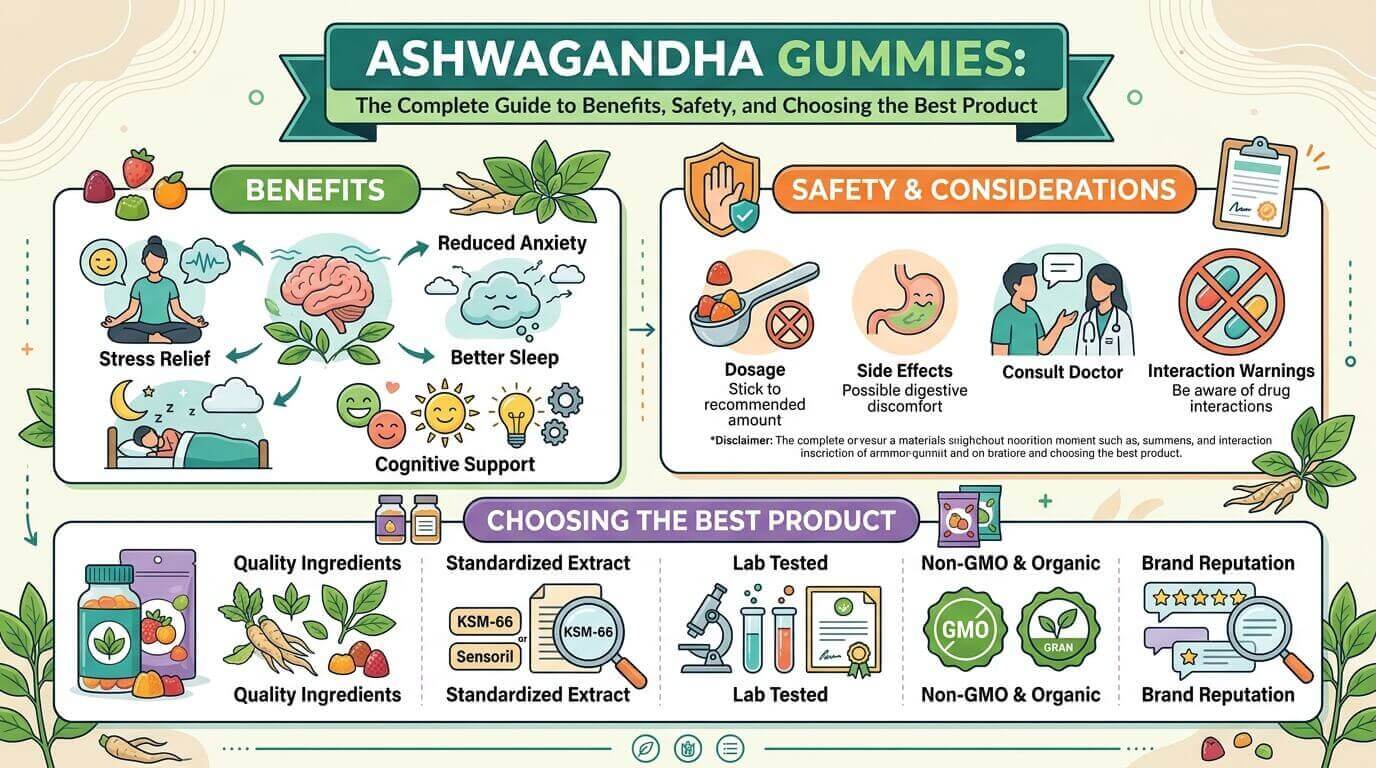
Standardized withanolide content is the most important quality indicator because withanolides are the active compounds responsible for ashwagandha’s therapeutic effects, and products that don’t specify their withanolide concentration may contain insufficient amounts to produce meaningful benefits.
Look for products standardized to contain at least 5% withanolides, which is the concentration used in most clinical studies demonstrating positive results.
Root-only extracts are generally preferred over whole-plant extracts because the roots contain the highest concentration of beneficial withanolides and have been the primary focus of scientific research supporting ashwagandha’s health benefits.
KSM-66 and Sensoril certifications indicate that the ashwagandha extract has been produced using patented, clinically studied extraction processes that ensure consistent potency and purity, giving you confidence that the product matches the formulations used in published research.
Third-party testing by independent laboratories verifies that what the label claims is actually in the product, protecting you from the mislabeled or contaminated supplements that unfortunately exist in the poorly regulated supplement industry.
Minimal artificial ingredients, including artificial colors, flavors, and sweeteners, indicate a higher quality product that prioritizes health over cost-cutting manufacturing shortcuts.
Recommended Dosage for Ashwagandha Gummies

Understanding appropriate dosing helps you get maximum benefit from ashwagandha gummies while avoiding potential side effects from taking more than your body needs.
Most clinical studies demonstrating positive results used daily doses ranging from 300 to 600 milligrams of ashwagandha root extract standardized to 5% withanolides, and these dosages typically translate to two to four gummies daily, depending on the specific product’s concentration per gummy.
Start with the lowest recommended dose on your chosen product’s label, allowing your body to adjust to the supplement before potentially increasing to higher doses if needed and tolerated. Consistency matters more than dose size, as ashwagandha’s benefits build gradually over weeks of regular supplementation rather than producing immediate effects after a single dose.
Most people notice initial stress reduction and sleep improvements within two to four weeks, with more significant cognitive, hormonal, and physical performance benefits developing over six to twelve weeks of consistent daily use.
Potential Side Effects and Safety Considerations
While ashwagandha gummies are generally well-tolerated by most adults, understanding potential side effects ensures you use this supplement safely and recognize any adverse reactions that might require discontinuation.
Digestive upset, including stomach discomfort, nausea, diarrhea, and loose stools, represents the most commonly reported side effect, particularly when beginning supplementation or taking higher doses on an empty stomach. Taking ashwagandha gummies with food typically reduces gastrointestinal side effects significantly.
Drowsiness may occur, especially when combined with other sedating substances, including alcohol, antihistamines, or sleep medications, which is worth considering if you take ashwagandha gummies primarily for sleep support and also use other sleep-promoting supplements or medications.
Thyroid stimulation means that people with hyperthyroidism or those taking thyroid medications should consult their healthcare provider before using ashwagandha gummies, as the herb can increase thyroid hormone levels and potentially interfere with thyroid medication dosing.
Liver concerns have been raised by rare case reports of liver injury associated with ashwagandha supplementation, though these cases are uncommon and typically involved high doses or pre-existing liver conditions. Monitoring liver function during extended supplementation is reasonable, particularly for those with existing liver concerns.
Who Should Avoid Ashwagandha Gummies
Certain populations should exercise caution or avoid ashwagandha gummies entirely due to potential interactions, contraindications, or insufficient safety data for their specific situations.
Pregnant and breastfeeding women should avoid ashwagandha because some evidence suggests it may induce uterine contractions that could threaten pregnancy, and insufficient safety data exists regarding its effects on breast milk composition and nursing infants.
People taking immunosuppressant medications should avoid ashwagandha because it may stimulate immune function, potentially counteracting the immune-suppressing effects of medications prescribed for autoimmune conditions or organ transplant management.
Individuals scheduled for surgery should discontinue ashwagandha gummies at least two weeks before any surgical procedure because the herb may slow central nervous system activity when combined with anesthesia and surgical medications.
People with autoimmune conditions, including lupus, rheumatoid arthritis, or multiple sclerosis, should consult their healthcare provider before using ashwagandha gummies because the herb’s immune-stimulating properties could potentially exacerbate their conditions.
Best Time to Take Ashwagandha Gummies
Timing your ashwagandha gummies strategically can enhance their effectiveness depending on your specific health goals and daily routine.
For stress management, taking ashwagandha gummies in the morning with breakfast provides cortisol-modulating support throughout the day when stress levels typically peak, helping your body maintain calmer responses to daily challenges and demands.
For sleep improvement, taking ashwagandha gummies thirty to sixty minutes before bedtime allows the calming compounds to reach peak levels as you’re preparing for sleep, supporting the natural transition from wakefulness to restful slumber.
For athletic performance, taking ashwagandha gummies thirty to sixty minutes before exercise may enhance workout capacity, though consistent daily supplementation regardless of timing produces the most significant long-term performance benefits through accumulated hormonal and recovery improvements.
For cognitive benefits, morning dosing supports mental clarity and focus throughout the workday when cognitive demands are highest, though consistent daily use over several weeks produces the most noticeable cognitive improvements regardless of specific timing.
Ashwagandha Gummies vs Other Supplement Forms
Understanding how ashwagandha gummies compare to other available formats helps you determine whether gummies represent the best choice for your specific preferences and needs.
Compared to capsules and tablets, gummies offer superior taste and easier consumption but may contain slightly lower concentrations of active ingredients per serving, meaning you might need to take more gummies to achieve the same dose delivered by a single capsule or tablet.
Compared to powders, gummies provide pre-measured doses that eliminate the guesswork of measuring powder scoops, along with significantly better taste that makes daily supplementation more pleasant and sustainable over the long term.
Compared to liquid extracts, gummies offer better portability, longer shelf life, and more consistent dosing, though liquid extracts may be absorbed slightly faster due to their already-dissolved state when consumed.
How to Maximize the Benefits of Your Ashwagandha Gummies

Several complementary strategies enhance the effectiveness of ashwagandha gummies and help you experience their full range of benefits.
Maintain consistent daily use for at least eight to twelve weeks before evaluating whether ashwagandha gummies are working for you, because the adaptogenic benefits build gradually and require sustained supplementation to reach their full potential.
Combine with healthy lifestyle practices, including regular exercise, balanced nutrition, adequate hydration, and stress management techniques that amplify ashwagandha’s stress-reducing and performance-enhancing effects rather than relying solely on supplementation to compensate for unhealthy habits.
Track your experience in a simple journal, noting changes in stress levels, sleep quality, energy, mood, and cognitive function, because gradual improvements may be difficult to notice without reference points that document your baseline before supplementation and progress during use.
Pair with complementary supplements like magnesium for enhanced sleep benefits, omega-3 fatty acids for additional anti-inflammatory effects, or vitamin D for immune support, creating a synergistic supplement stack that addresses multiple aspects of health simultaneously.
What to Expect When You Start Taking Ashwagandha Gummies
Setting realistic expectations prevents the disappointment that comes from expecting immediate, dramatic transformation from a supplement that works through gradual, cumulative physiological changes.
Week one to two: You may notice subtle changes in how you respond to stressful situations, with some people reporting slightly calmer reactions and marginally improved sleep onset, though many people feel no noticeable difference during these initial weeks.
Week three to four: Stress reduction typically becomes more apparent, with users reporting feeling more resilient during challenging situations, experiencing fewer anxious thoughts, and noticing improved sleep quality that they can clearly distinguish from their pre-supplementation baseline.
Week five to eight: Cognitive benefits, energy improvements, and mood enhancement often become noticeable during this period, along with deeper sleep improvements and the beginning of physical performance benefits for active individuals.
Week eight to twelve: The full spectrum of ashwagandha gummies benefits typically manifests during this period, including hormonal balance improvements, sustained cognitive enhancement, consistent stress resilience, and optimized physical performance for those engaged in regular exercise.
Final Verdict
So, are Ashwagandha Gummies worth the hype? If you are a person who lives with a baseline level of stress and you find it difficult to swallow pills, they can be a fantastic, convenient addition to your wellness routine. They are easy to take, generally well-tolerated, and can help take the edge off a stressful day or an anxious evening. But you must be smart about it.
Don’t fall for the “candy” aspect—treat them with the same respect you would a capsule. Check for quality, don’t over-consume, and always pair them with real lifestyle changes. They are not a magic bullet, but they can be a helpful, tasty little nudge in the right direction. Just stay informed, listen to your body, and don’t expect them to fix problems that need more than a gummy to solve.