Introduction
The healthcare industry has a technology problem that most people in it can describe immediately, but struggle to fix. Patient data lives in three different systems that do not talk to each other. Billing takes twice as long as it should because claims keep getting rejected for preventable reasons. Referring a patient to a specialist involves phone calls, faxes, and waiting in 2025. And compliance documentation piles up while actual patient care gets squeezed into whatever time is left.
About Qevafaginz Network Ltd was built specifically to address this cluster of problems. If you have come across the company name and want to understand what it is, what it does, who it serves, and whether it is worth paying attention to, this guide covers all of it.
What Is Qevafaginz Network Ltd?

Qevafaginz Network Ltd is a technology solutions organization operating primarily in the healthcare sector, with a broader portfolio spanning finance, education, and enterprise services. The company describes its mission clearly: to provide robust, scalable, and secure technology infrastructure solutions that enable organizations to operate efficiently, innovate confidently, and protect their critical digital assets.
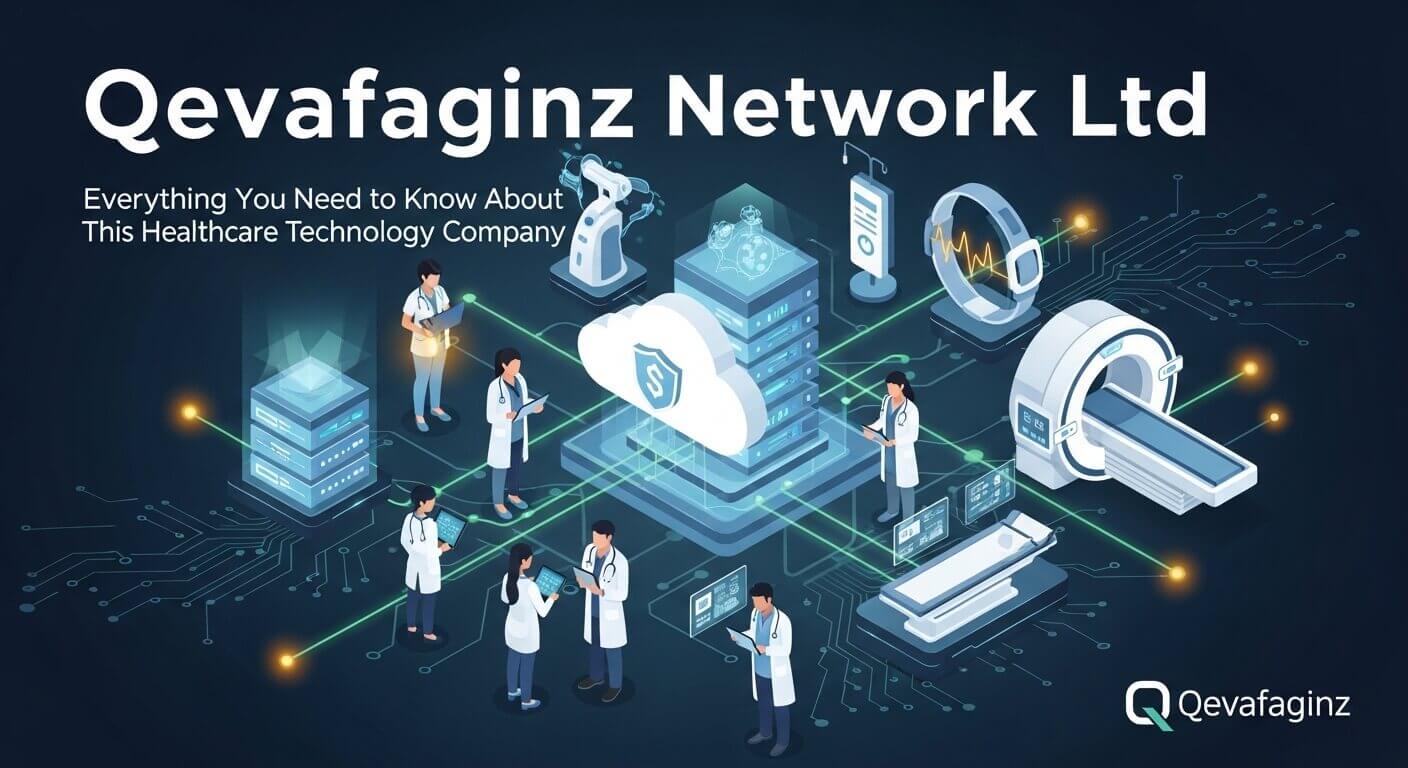
In the healthcare context specifically — where the company has made its most visible impact — Qevafaginz Network Ltd functions as a comprehensive digital health platform. It connects providers, patients, insurers, and administrative teams within a unified ecosystem, handling patient data management, billing automation, care coordination, telehealth integration, and compliance documentation through a single cloud-based system.
What distinguishes the company from generic technology vendors is its approach to integration. About Qevafaginz Network Ltd does not require organizations to abandon their existing systems. Instead, it connects to the tools already in place — Electronic Health Record platforms, practice management software, medical device networks, laboratory systems — and adds an intelligent coordination layer on top. The result is an organization that runs more efficiently without the disruption and retraining burden of a full system replacement.
The Company’s Origins and Growth
Qevafaginz Network Ltd emerged from a recognized need to streamline healthcare services for providers and patients. The company began as a focused pilot programme working directly with local clinics and hospitals, implementing systems that made patient records more accessible and scheduling more manageable. Early results from those pilot partnerships built the credibility that fuelled expansion.
Over the years, the network grew its service portfolio and geographic reach, adapting continuously to the shifting demands of healthcare providers across different regions and regulatory environments. Today, the organization serves a client base spanning solo practitioners, group practices, specialist centres, regional hospitals, and large multi-site healthcare networks.
The founding principles remain embedded in how the company operates: customer-centricity, technical integrity, and a commitment to building long-term partnerships rather than transactional vendor relationships.
Why Qevafaginz Network Ltd Matters in Modern Healthcare
The administrative burden on healthcare providers is not a minor inconvenience — it is a crisis that directly affects patient outcomes. Physicians spend close to two hours on administration for every hour they spend with patients, according to research from the Annals of Internal Medicine.
Claim denials cost the healthcare system hundreds of billions of dollars annually, most of them stemming from preventable coding and eligibility errors. Referral breakdowns — where a patient is referred to a specialist but the handoff is never completed or followed up — are among the most common causes of delayed treatment for serious conditions.
Qevafaginz Network Ltd addresses each of these failure points through automation, real-time data synchronization, and smart workflow design. The company’s value is not abstract — it shows up in measurable outcomes that organizations report after implementation.
One documented case involved a busy hospital billing team that reduced claims processing time by 40% after deployment. Pre-authorizations were automatically triggered, submission became faster, and denial rates dropped significantly. In another case, a small rural practice used the platform to connect with city-based specialists, enabling patient referrals and remote follow-up without requiring patients to travel. A third example involved a behavioural health clinic that automated session scheduling and insurance reporting, saving its therapists substantial documentation time each week.
These outcomes reflect the broader pattern: organizations that implement the platform spend less time managing processes and more time delivering care.
Core Services and Capabilities
Understanding what Qevafaginz Network Ltd actually provides requires looking at each service area in detail.
Healthcare Coordination and Patient Management
At the platform level, Qevafaginz Network Ltd provides a centralized patient management system that gives every authorized team member access to the same current information. Key capabilities include:
- Real-time access to patient records, including medical history, current medications, active care plans, and diagnostic results
- Appointment scheduling tools with automated reminders that reduce no-show rates
- Smart referral routing — when a provider submits a referral, the system automatically sends it to the appropriate specialist or department without manual follow-up
- Care coordination between GPs, specialists, hospitals, laboratories, and imaging centres, all working from a shared, synchronized record
The coordination function specifically eliminates the communication gaps that allow patients to fall through the cracks between departments or between primary and specialist care.
Billing Automation and Revenue Cycle Management
The billing capabilities are among the most immediately impactful for most organizations. The system handles:
- Automated pre-submission coding checks that catch errors before claims are filed
- Real-time insurance eligibility verification to prevent denials caused by outdated coverage information
- Automatic claims submission to insurers with tracking from submission to payment
- Revenue cycle reporting that gives practice managers and finance teams visibility into outstanding balances, payment timelines, and denial patterns
- Support for multiple payment models, including fee-for-service, value-based care arrangements, and bundled payment contracts
Clean claims — those submitted without errors and approved on first submission — are the financial foundation of a healthy practice. The automation tools in the platform are designed specifically to maximize clean claim rates by removing the human error that generates most rejections.
Electronic Health Records and System Integration
Qevafaginz Network Ltd supports interoperability standards, including HL7 and FHIR protocols, enabling the platform to integrate with major EHR systems, including Epic, Cerner, and Allscripts. This means:
- Patient data from existing systems migrates into the platform without manual re-entry
- Lab results, imaging reports, and diagnostic data flow automatically from external sources into the patient record
- All data access and modification is logged automatically, creating the audit trail required for compliance reviews and regulatory inspections
- Prescription management and e-prescribing capabilities are embedded in the platform, eliminating the separate systems many practices currently use
The integration-first design philosophy is central to how the company positions itself. Organizations do not need to throw away working systems — they need those systems to communicate with each other, which is precisely what the platform provides.
Telehealth Infrastructure
Remote and virtual care is now a permanent feature of healthcare delivery, and Qevafaginz Network Ltd has built telehealth capability directly into the platform rather than treating it as an add-on:
- HIPAA-compliant video consultation tools accessible without third-party applications
- Automatic documentation of telemedicine visits including logging and notes
- Remote patient monitoring integration with wearable and IoT health devices
- E-prescription support during virtual consultations
- Asynchronous messaging between providers and patients for non-urgent communications
For providers serving geographically dispersed populations or managing patients with mobility limitations, these tools meaningfully expand the care they can deliver without proportionally increasing costs.
Cybersecurity and Compliance
Healthcare data is the most targeted category in cybersecurity breaches, and the regulatory environment governing its protection is among the most demanding of any industry. Qevafaginz Network Ltd’s security infrastructure includes:
- End-to-end encryption of all patient data, both in transit and at rest
- Role-based access controls that restrict data visibility to staff with legitimate need
- Multi-factor authentication for all platform accounts
- Real-time security alerts and automated breach detection
- Regular third-party security audits
- Compliance modules aligned with HIPAA, GDPR, and regional regulatory requirements
- Automated documentation and audit trails supporting regulatory review preparation
For many smaller practices and clinics, building this level of security infrastructure independently would be prohibitively expensive. The platform delivers enterprise-grade protection at a scale appropriate for practices of all sizes.
How to Engage with Qevafaginz Network Ltd: A Step-by-Step Guide

Whether you are an individual provider, a practice manager, or a hospital administrator evaluating the platform, the process of engaging with Qevafaginz Network Ltd follows a structured path.
Step 1: Initial Discovery and Needs Assessment
Contact the company through their official channels to request an initial consultation. Prepare for this conversation by documenting:
- The size and type of your organisation (solo practice, group practice, hospital, multi-site network)
- Your existing technology stack — which EHR, billing, and practice management systems you currently use
- The specific pain points you are trying to solve — billing delays, coordination gaps, compliance burden, telehealth needs
- Your approximate patient volume and staff headcount
- Regulatory requirements specific to your region or specialty
The initial needs assessment determines how the platform will be configured and integrated for your specific situation.
Step 2: System Integration Planning
Following the assessment, a platform specialist designs a custom integration plan mapping how Qevafaginz Network Ltd will connect with your existing systems. This plan specifies timelines, responsibilities, and the phased rollout of features to minimize disruption to ongoing care.
Step 3: Credential Verification and Onboarding
For healthcare providers joining as network participants, the credentialing process verifies licences, qualifications, and compliance standing. This step typically completes efficiently, with the platform offering structured support throughout.
Step 4: Staff Training
Training programmes are tailored by role — clinical staff focus on patient management and documentation tools, administrative staff on billing and scheduling, and managers on analytics and reporting. Live training sessions, video tutorials, and a dedicated training portal are all available. Most small-to-medium practices achieve operational readiness within one to two weeks.
Step 5: Go-Live and Post-Implementation Support
The platform goes live with real-time support available. Post-launch check-ins allow fine-tuning of workflows, notification preferences, and reporting configurations based on experience. Monthly feature releases and quarterly system updates keep the platform current without requiring organisations to manage upgrades themselves.
Common Mistakes Organisations Make When Evaluating or Implementing the Platform
Mistake 1: Evaluating on features alone rather than integration fit. The value of Qevafaginz Network Ltd is not in its feature list — it is in how well those features connect with the systems and workflows already in place. The most important questions during evaluation are about integration: how well does it connect to your existing EHR, how complex is the data migration, and what happens if one of your existing vendor relationships changes.
Mistake 2: Underestimating change management. Technology implementations succeed or fail largely based on how well the human side is managed. Practices that invest in staff communication, address resistance early, and designate internal champions for the new system see dramatically better adoption rates than those that treat implementation as a purely technical project.
Mistake 3: Not configuring the platform to match actual workflows. The platform is extensively customisable — notification settings, reporting formats, workflow triggers, access controls. Organisations that accept default configurations often find the platform less useful than it could be. Taking time during setup to align the platform with how your practice actually operates, rather than how a generic healthcare practice might operate, produces materially better results.
Mistake 4: Treating go-live as the finish line. Implementation is the beginning of the platform relationship, not the end. The most value comes from continuous refinement — reviewing analytics data, adjusting automation rules as workflows evolve, and engaging with new features as they are released. Practices that stop engaging with the platform after initial setup leave significant value on the table.
Mistake 5: Not utilising the provider network community. Qevafaginz Network Ltd includes a community of network participants who share experiences, best practices, and feature feedback. This resource is consistently underused by new participants despite offering practical operational insights that no vendor documentation can match.
Expert Tips for Working with Qevafaginz Network Ltd

Tip 1: Start with your highest-cost problem. Every organization has a workflow that costs disproportionate time and money. For most, it is billing — specifically denial management and rework. Starting platform implementation with the billing automation tools delivers the most visible, immediate ROI and builds internal confidence in the technology.
Tip 2: Assign an internal platform lead. Designate someone within the organization — not a junior staff member — as the internal owner of the Qevafaginz Network Ltd implementation. This person becomes the liaison with the company’s support team, the trainer for new staff, and the advocate for expanding platform use over time.
Tip 3: Use the analytics dashboard proactively. The reporting and analytics capabilities — treatment outcome tracking, at-risk patient identification, and financial performance monitoring — are the features that compound in value over time. Reviewing this data monthly, rather than only when a problem becomes obvious, allows organisations to identify and address patterns before they become crises.
Tip 4: Leverage telehealth before you think you need it. Many practices delay activating telehealth tools until a specific need arises. Getting the infrastructure in place and familiar to staff before it is urgently needed means it is available when circumstances change — whether that is a patient with mobility limitations, a winter when in-person attendance drops, or a public health situation that makes remote care preferable.
Tip 5: Communicate with patients about the patient portal. The patient-facing tools — portal access to records, secure messaging, appointment reminders — produce better engagement outcomes when providers actively explain and promote them. A brief explanation at appointments and a link in appointment confirmation emails significantly increase portal adoption and reduce the administrative volume of patient phone calls.
Key Takeaways
Qevafaginz Network Ltd is a healthcare technology organization that addresses the operational challenges most likely to drain time, money, and clinical focus from provider organizations of all sizes.
Here is what matters most:
- The company integrates rather than replaces. Existing EHR systems, practice management tools, and workflows connect through the platform without requiring organizations to start from scratch.
- Billing automation is the most immediate ROI driver. Clean claims, automated submissions, and denial prevention produce measurable financial improvement quickly.
- Care coordination is the long-term strategic value. Referral tracking, shared patient records, and seamless communication between providers directly improve the quality and continuity of patient care.
- Security is enterprise-grade and built in. HIPAA, GDPR, encryption, role-based access, and audit trails are included — not optional extras.
- The platform scales from solo to system. Whether you are a GP working alone or a regional hospital network with multiple sites and specialties, the modular architecture adapts.
- Success requires human investment, not just technical deployment. The organizations that extract the most from Qevafaginz Network Ltd are those that invest in staff training, internal ownership, and continuous engagement — not just a successful go-live date.
Healthcare administration should not consume more time than healthcare delivery. Qevafaginz Network Ltd exists to rebalance that equation, giving clinicians and their teams the infrastructure to work efficiently without sacrificing the standards that patient care demands.