You’ve had that mole for years. Then one day you look down and it looks different. Bigger. Darker. Maybe it itches now. You Google it at 11 p.m. and end up staring at photos of melanoma, wondering if you’re overreacting.
About 1 in 5 Americans will develop skin cancer by age 70, according to the Skin Cancer Foundation. Most skin changes turn out to be nothing. But the ones that aren’t can cost you months if you wait. That’s the real question behind every “should I see a dermatologist” search: is this worth an appointment, or am I wasting a doctor’s time? Here’s a clear answer, sign by sign, plus what to do if the next opening is six weeks out.
When Should You See a Dermatologist? (Quick Answer)
See a dermatologist if you notice a new or changing mole, acne that hasn’t cleared after 8 to 12 weeks of over-the-counter treatment, a rash lasting more than two weeks, sudden hair loss, or any spot that bleeds, itches, or won’t heal. These are the signs most likely to point to something a moisturizer can’t fix.
A dermatologist treats skin, hair, and nails. That covers a lot of ground: acne, eczema, psoriasis, mole checks, scars, hair loss, nail infections, and cosmetic concerns. The trick isn’t knowing what they treat. It’s knowing when your specific problem has crossed the line from “wait and see” to “book the appointment.”
12 Signs You Need a Dermatologist, Not Just a Better Moisturizer
1. A mole that’s changed?
Use the ABCDE rule. Asymmetry: one half doesn’t match the other. Border: ragged or blurry edges. Color: more than one shade in the same spot. Diameter: bigger than a pencil eraser, about 6mm. Evolving: any change in size, shape, or color over weeks or months. One or more of these means it’s time to get it checked.
2. A spot that bleeds or won’t heal?
A cut heals. A pimple heals. A spot that keeps bleeding, oozing, or scabbing over for more than four weeks without healing is not doing what normal skin does. Get it looked at.
3. Acne that outlasts your patience?
Give an over-the-counter routine 8 to 12 weeks to work. That’s how long it takes benzoyl peroxide or salicylic acid to show real results. If your skin looks the same or worse after three months, a dermatologist can prescribe something stronger: retinoids, oral antibiotics, or hormonal treatment.
4. A rash or hives that stick around?
Most rashes clear in a few days. If yours lasts more than two weeks, spreads, or comes back every few weeks, it’s worth a visit. Could be an allergy, an infection, or a chronic condition like eczema or psoriasis that needs an actual diagnosis, not another cream from the drugstore aisle.
5. Scarring you’re tired of looking at?
Acne scars, burn scars, surgical scars. If a scar bothers you and it’s been stable for at least six months, a dermatologist has real options: laser resurfacing, microneedling, or steroid injections for raised scars. Home remedies mostly don’t touch these.
6. Dry, itchy, or flaking skin that won’t respond?
You’ve upped your lotion game and it’s still not working. Persistent dryness that survives a good moisturizer for more than a month can point to eczema, a thyroid issue showing up on your skin, or a reaction to something in your routine. Worth ruling out.
7. Nail changes you can’t explain?
Pitting, thickening, a nail lifting off the bed, or a dark streak under the nail. Nails often show the first signs of problems elsewhere in the body, including psoriasis, fungal infection, or in rare cases, melanoma under the nail. Don’t wait this one out.
8. Hair coming out in noticeably larger amounts?
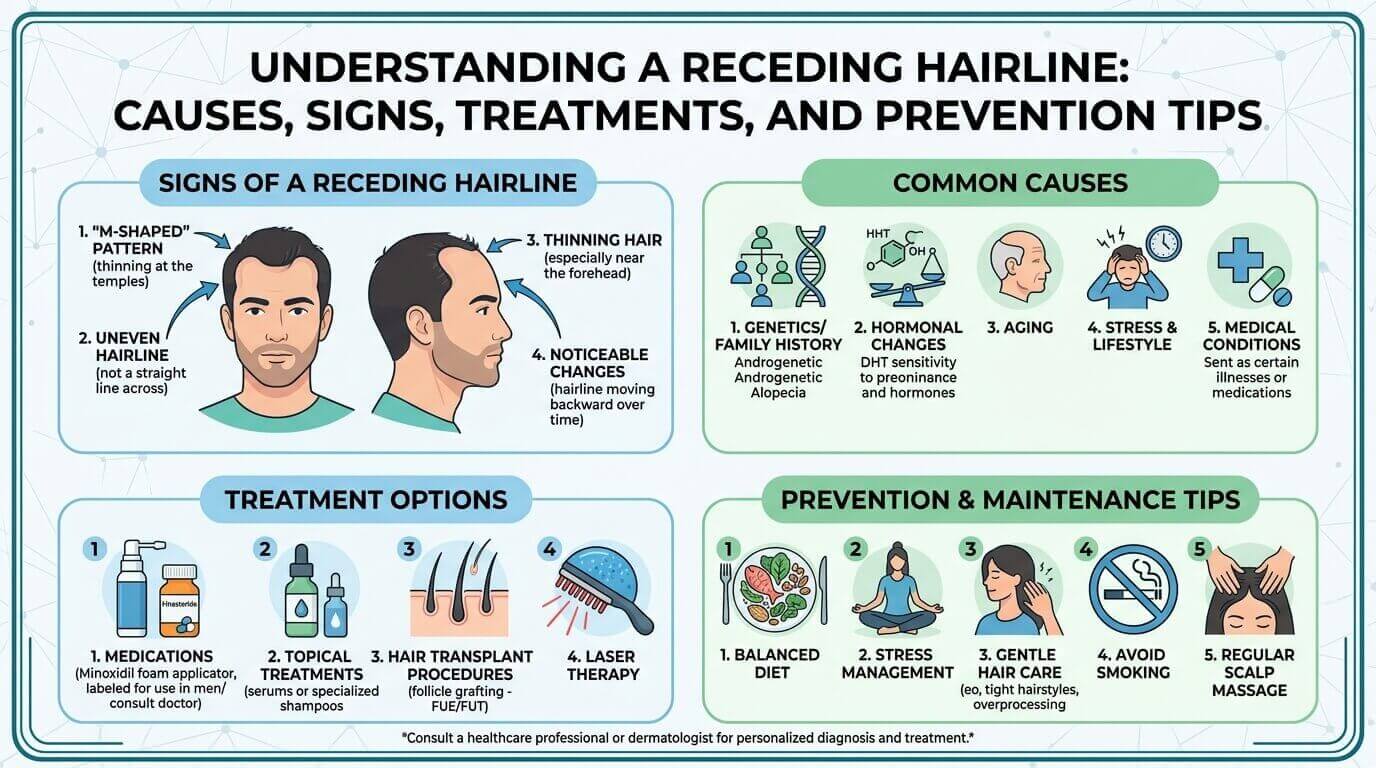
Some shedding is normal, up to about 100 hairs a day. If you’re seeing bald patches, a widening part, or clumps in the shower drain that weren’t there before, a dermatologist can run bloodwork and check for thyroid issues, iron deficiency, or a scalp condition before it gets worse.
9. Skin patches that are darkening, lightening, or thickening?
New patches of discoloration, especially ones with a raised or rough texture, deserve a look. Could be something harmless like a benign growth. Could be early skin cancer. You can’t tell which from a mirror.
10. A condition you already manage stops responding?
If you have eczema, psoriasis, or rosacea and your usual routine suddenly isn’t working, that’s not a sign to try a new influencer-recommended serum. It’s a sign your treatment plan needs adjusting by the person who prescribed it.
11. Sweating that disrupts your day?
Excessive sweating that soaks through clothes, ruins handshakes, or makes you avoid certain fabrics has a name: hyperhidrosis. It’s treatable with prescription antiperspirants, Botox injections, or other procedures. Most people never ask about it and just live with it.
12. You’ve never had a baseline skin check and you’re over 40, fair-skinned, or have a family history of skin cancer?
You don’t need a symptom to justify a first visit. A baseline full-body skin exam gives your dermatologist something to compare future changes against, which makes catching real problems faster.
How Often Should You Get a Skin Check?
Frequency depends on your risk, not your age alone.
| Risk level | Who this applies to | Suggested frequency |
|---|---|---|
| Low risk | No personal or family history of skin cancer, darker skin tone, minimal sun exposure | Every 2-3 years, or as needed for symptoms |
| Moderate risk | Fair skin, history of sunburns, outdoor job or hobbies, age 40+ | Once a year |
| High risk | Personal or family history of melanoma, many atypical moles, history of tanning bed use | Every 6-12 months |
If you’re not sure which group you fall into, a first visit is how you find out. Your dermatologist will tell you what schedule fits you specifically.
Dermatologist, Primary Care, or Urgent Care: Who Do You Actually Need?
Not every skin problem needs a specialist right away. Here’s how to route yourself correctly the first time.
| Situation | Who to see |
|---|---|
| Routine acne, mild eczema, a rash you’ve had before | Primary care doctor first; they can refer you if it doesn’t improve |
| New or changing mole, unexplained hair loss, a condition not responding to treatment | Dermatologist directly |
| Sudden severe rash, hives with swelling, or a possible allergic reaction | Urgent care or ER, especially if breathing feels affected |
| Ongoing skin condition needing specialist management (psoriasis, rosacea, chronic eczema) | Dermatologist |
| Cosmetic concerns: scars, fine lines, unwanted hair, pigmentation | Dermatologist |
A referral from your primary care doctor can also speed up insurance approval and get you a faster dermatology appointment in some networks. Worth a quick call before booking direct.
When Is a Skin Problem a Medical Emergency?
Most skin issues can wait for a scheduled appointment. A few can’t. Go to urgent care or the ER, not a dermatologist’s waiting list, if you have:
- Hives with swelling of the lips, tongue, or throat, or any trouble breathing
- A rash spreading fast with fever, especially with blistering or peeling skin
- A wound that’s red, hot, swollen, and spreading, which can signal a serious infection like cellulitis
- Sudden, widespread skin peeling after starting a new medication
These aren’t “book next week” situations. They need care today.
How Do You Find a Board-Certified Dermatologist?

Not every provider using the title “dermatologist” is board-certified. In the U.S., look for the letters FAAD (Fellow of the American Academy of Dermatology) after their name, which confirms they’ve passed the board exam through the American Board of Dermatology. Here’s how to check before you book:
- Search the provider directory on the American Academy of Dermatology’s site by location and specialty.
- Confirm their board certification status directly through the American Board of Dermatology.
- Check if they treat your specific concern. A general dermatologist and a Mohs surgeon (skin cancer removal specialist) aren’t interchangeable.
- Read recent patient reviews, but weigh clinical credentials more heavily than star ratings.
- Ask your insurance company for an in-network list before you fall in love with an out-of-network provider.
What Happens at Your First Dermatologist Visit?
Expect a medical history review first: past skin issues, sunburns, family history of skin cancer, medications, and allergies. Then a physical exam. For a general visit, that usually means the specific area of concern. For a full-body skin check, you’ll change into a gown and the dermatologist examines your skin head to toe, including your scalp and between your toes, often using a small magnifying tool called a dermatoscope.
Bring a list of current medications and, if you’re tracking a mole, photos showing how it’s changed over time. That single habit makes diagnosis faster.
Can a Telehealth Visit Handle Your Skin Problem?
Sometimes. Virtual dermatology works well for conditions a doctor can diagnose visually and treat with a prescription: acne, eczema flare-ups, rosacea, and follow-up visits for conditions you’re already managing. It doesn’t work for anything that needs to be touched, measured, or biopsied, which rules it out for most new mole checks and anything you suspect could be skin cancer. If you’re unsure which category your issue falls into, book in-person.
What Does a Dermatologist Visit Cost Without Insurance?
Pricing varies widely by state, practice, and whether you need a simple consult or a procedure. As a rough national range, a new-patient visit without insurance often falls somewhere between $150 and $350, with biopsies and procedures billed separately (verify live with the specific practice, since prices change and vary by region). Many practices offer a self-pay rate that’s lower than their billed insurance rate, so it’s worth asking directly rather than assuming the sticker price applies to you. Community health centers and teaching hospital dermatology clinics often charge on a sliding scale.
FAQs
How urgent is a mole that’s changed shape? Book an appointment within a few weeks, not months. If it’s also bleeding, rapidly growing, or you have a family history of melanoma, ask for the next available slot or call an urgent dermatology line if your provider has one.
Can a dermatologist tell if a mole is cancerous just by looking at it? They can flag a mole as suspicious using a dermatoscope and their training, but a biopsy is the only way to confirm cancer. If they’re concerned, they’ll remove a small sample right there or refer you for one.
Do I need a referral to see a dermatologist? Depends on your insurance plan. HMO plans usually require a referral from your primary care doctor. PPO plans often let you book directly. Check your plan before assuming either way.
What’s the difference between a dermatologist and an esthetician? A dermatologist is a licensed medical doctor who can diagnose, prescribe medication, and perform procedures like biopsies and surgery. An esthetician provides skincare services like facials and peels but can’t diagnose conditions or prescribe treatment.
How long does it usually take to get a dermatologist appointment? Wait times vary by region, often anywhere from a few days to a few weeks, and can run longer in areas with fewer dermatologists. If your concern is urgent, ask the front desk about their cancellation list or a same-day clinic option.
Should kids see a dermatologist too? Yes, for persistent eczema, unusual birthmarks, warts that won’t clear, or teenage acne that’s affecting confidence or leaving scars. Pediatric dermatologists specialize in kids specifically, and many general dermatologists see children as well.