Introduction
Have you ever stood up from your couch after a long day, stretched your legs, and heard a loud, startling noise coming from your knee? It is a sound that can be jarring, especially if you are not expecting it.
For many, that initial crack or pop is enough to stop them in their tracks, leading to an immediate worry that something might be wrong with their joints. If you find yourself asking, “why does my knee pop,” you are certainly not alone.
It is one of the most common physical inquiries people bring to their doctors or physical therapists. Most of the time, the sound is completely harmless, a simple byproduct of the way our joints are constructed and how they move. However, there are instances where that popping noise is accompanied by pain, swelling, or a feeling of instability, which might suggest that your knee is trying to tell you something important.
The Mechanics of Joint Movement

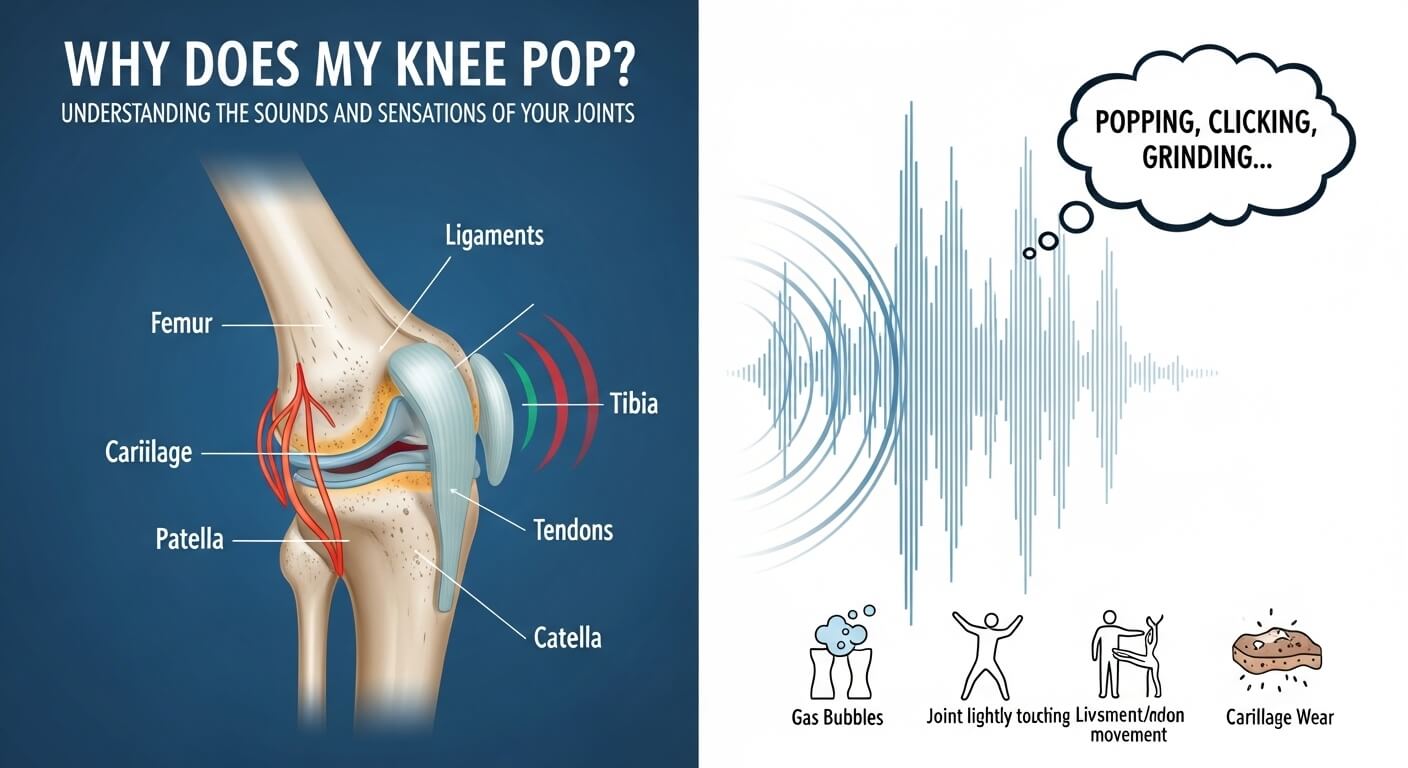
To understand the noise, you have to understand the environment inside your knee. Your knee is a complex hinge joint that connects your thigh bone to your shin bone, cushioned by cartilage and held together by tough bands of tissue called ligaments. It is a busy, hardworking space. Within the joint capsule, there is a substance known as synovial fluid, which acts as a lubricant to keep everything moving smoothly.
When you bend or straighten your leg, the structures inside—the tendons, ligaments, and bones—are constantly sliding and gliding against one another. Sometimes, these structures move in a way that creates a change in pressure or a sudden shift in position, resulting in an audible sound. It is a bit like the sound of knuckles cracking; it is a release of pressure or a momentary snap of tissue moving over bone.
Is the Popping Sound Always a Sign of Trouble?
The most important thing to keep in mind is that sound does not automatically equal damage. In fact, many medical professionals refer to these painless noises as “benign,” meaning they are not harmful or indicative of a medical condition. If your knee pops when you squat down or stand up, but you feel absolutely no pain and your knee moves through its full range of motion without getting stuck, it is likely just a natural quirk of your anatomy.
Think of your body as a machine. Just as an engine might make a whirring or clicking sound as it works without being broken, your joints can make noise simply because they are mechanical structures. If you aren’t experiencing any swelling, locking, or discomfort, you can generally breathe a sigh of relief knowing that your knees are likely doing their job just fine.
Understanding Gas Bubbles and Cavitation
One of the primary explanations for hearing a pop is a process known as cavitation. Within the synovial fluid that lubricates your joints, there are dissolved gases—mostly nitrogen, oxygen, and carbon dioxide. When you stretch your joint or change its position rapidly, you increase the volume of the space inside the joint capsule. This sudden increase in space lowers the pressure of the fluid, causing those dissolved gases to quickly form tiny bubbles.
These bubbles collapse or “pop” almost instantaneously, creating that distinct sound. It is the same physics behind why your fingers crack. Once the bubble collapses, it takes some time for the gas to dissolve back into the fluid, which is why you usually can’t pop the same joint twice in a row immediately after the first time. It is a completely natural physiological phenomenon.
Ligament and Tendon Snapping
While gas bubbles are a common cause, sometimes the sound comes from your soft tissues. Your knee is crisscrossed by ligaments and tendons that hold everything together and connect your muscles to your bones. Occasionally, one of these thick bands of tissue can catch on a bony protrusion as your knee bends. When the tension releases, the tendon or ligament snaps back into place, creating an audible pop or click. This is often described as a “snapping” sensation.
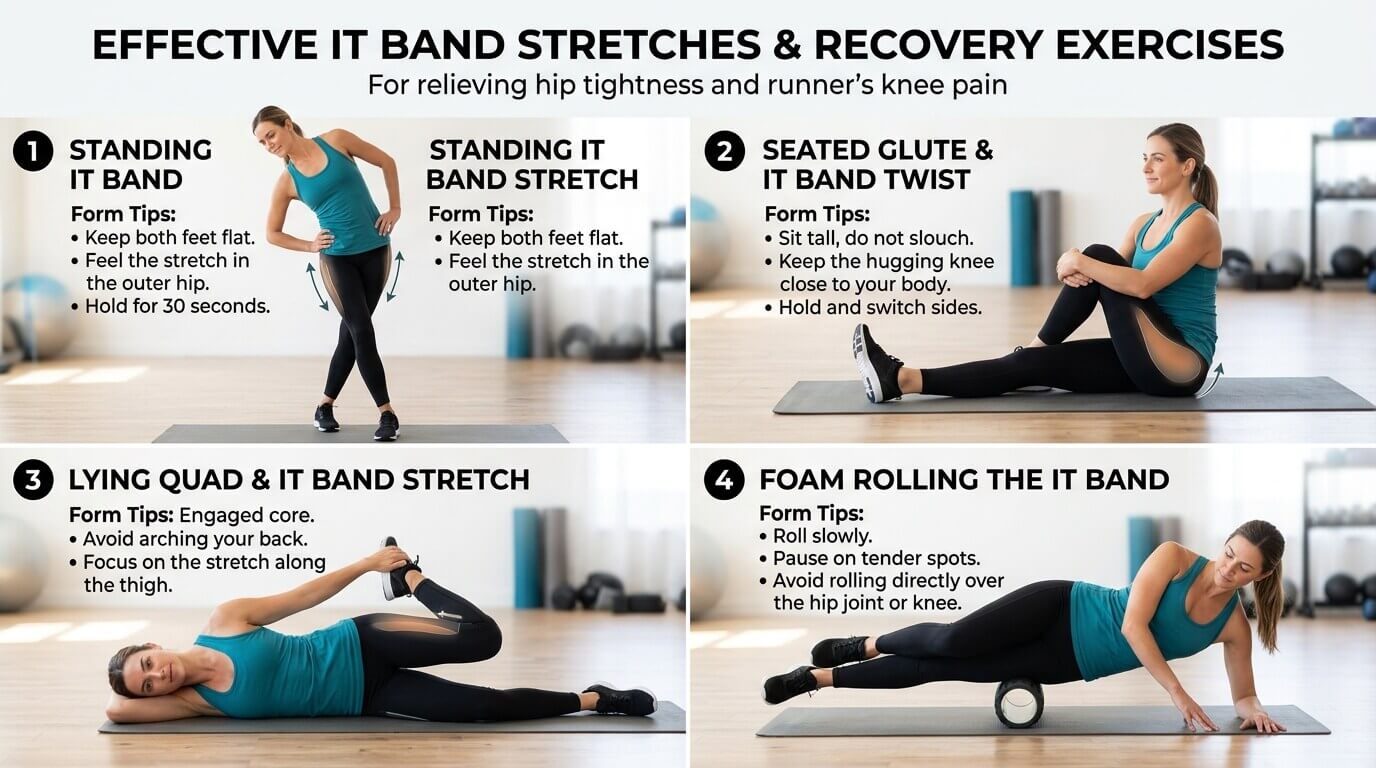
It is particularly common in the iliotibial band—the thick strip of tissue that runs down the outside of your thigh. If this band becomes tight, it can snap over the outer part of your knee joint when you walk or bend your knee, creating a repetitive clicking or popping noise that is usually more annoying than it is painful.
The Role of Meniscus Tears
The meniscus is a C-shaped piece of cartilage that acts as a shock absorber between your thigh bone and shin bone. We have two in each knee. Because this cartilage is durable but still susceptible to wear, it can sometimes become torn or frayed. A torn meniscus is a different beast compared to gas bubbles or snapping tendons. When you have a tear, a loose piece of cartilage can get caught in the hinge of your knee joint as it moves. This creates a clicking, popping, or even a grinding sound.
More importantly, it is often accompanied by a sensation of the knee “catching” or locking up. If your knee pops and then feels stuck, or if it feels like it might give way, it is a significant sign that you should consult a professional to see if the cartilage has been damaged.
Patellofemoral Pain Syndrome (Runner’s Knee)
If your knee pops specifically behind the kneecap, you might be dealing with patellofemoral pain syndrome, often called runner’s knee. This occurs when the kneecap doesn’t track smoothly in the groove of your thigh bone. When you bend your knee, the kneecap should slide perfectly, but if there is a muscle imbalance or structural alignment issues, it can rub or catch slightly.
This creates a grinding or popping sound often described as “crepitus.” It is common among people who exercise, especially those who run or do high-impact activities. Over time, this grinding can wear down the underside of the kneecap, so even if the noise isn’t painful right now, it is worth addressing through strengthening exercises to ensure the kneecap tracks properly in the future.
When Should You Be Concerned?

We have established that noise without pain is usually harmless, but when should that sound set off alarm bells? The biggest red flag is pain. If the pop is followed by a sharp sting, a dull ache, or a persistent throbbing, something is being stressed that shouldn’t be. Another major warning sign is swelling. If your knee puffs up, becomes warm to the touch, or looks red after you hear a pop, your body is telling you that an inflammatory response has been triggered.
Furthermore, pay attention to mechanical issues. If the knee feels unstable, like it might buckle, or if you feel like something is physically blocking the hinge from straightening or bending, these are mechanical symptoms that typically require a medical opinion to rule out more serious cartilage or ligament issues.
Instability and the Feeling of “Giving Way”
A sensation of instability is different from a sound. If your knee pops and you feel like it is about to collapse under you, this is a clear sign that the supporting structures—the ligaments—may be compromised. Your ligaments, specifically the ACL and MCL, provide the structural stability to your knee. If one of these is partially torn or weakened, it can’t hold the bones in place with the same level of security.
When you shift your weight, the joint might slide slightly, creating a pop and a sudden feeling of fear or instability. This is not a “gas bubble” pop; this is a sign that the joint is moving in a way it was not intended to, and it is a situation that needs to be addressed with a physiotherapist or orthopedic specialist to regain that lost stability.
How Age Affects Knee Noises
As we grow older, the internal environment of our joints naturally changes. Cartilage, which is very smooth in our youth, can begin to thin or become slightly rougher over the decades. This process is the beginning of what we often call wear and tear. When the smooth surfaces of your bones rub against each other, they don’t slide as quietly as they once did.
This is why it is much more common for older adults to notice a grinding or crunching sound when they stand up. While this can be a sign of early-stage osteoarthritis, it is not always a cause for panic. Many people live with these sounds for years without significant pain. However, it does mean that your joints require a bit more care, attention, and perhaps some low-impact exercise to maintain their health.
The Role of Physical Activity and Exercise
You might think that if your knees make noise, you should stop exercising, but the opposite is often true. Muscles are the primary support system for your joints. If your quadriceps (the muscles on the front of your thigh) are weak, they cannot hold the kneecap in the correct position, which increases the likelihood of grinding and popping. Strengthening the muscles around the knee—your quads, hamstrings, and glutes—is the single best thing you can do to keep your knees quiet and healthy.
Low-impact activities like swimming, cycling, or walking on flat surfaces are excellent ways to strengthen the area without putting excessive pressure on the joint itself. By building a muscular “cage” around your knee, you take the workload off the joint and put it where it belongs: on the muscles.
Home Remedies for Minor Popping
If your knee pops occasionally but doesn’t hurt, you don’t necessarily need to rush to the doctor. There are simple habits you can adopt at home to manage the situation. First, stay hydrated. Your joints are lubricated by fluid, and if you are chronically dehydrated, that fluid can become less effective. Second, focus on gentle range-of-motion exercises.
Sometimes popping occurs because the joint hasn’t been moved through its full range for a while; gentle, daily movement helps keep the synovial fluid circulating and the joint lubricated. Third, consider the type of footwear you are using. If you have worn-out shoes with no support, your gait might be slightly off, which changes how your knee tracks when you walk. Sometimes, a fresh pair of supportive shoes is all it takes to quiet down a clicking knee.
The Importance of Stretching
Just as important as strengthening is the act of stretching. Tight muscles are a primary cause of joint noise. If your hamstrings are tight, they pull on the back of the knee; if your quads are tight, they pull on the front. This creates a state of constant tension across the joint, which can lead to the tendons “pinging” or snapping as they move. Incorporating a daily stretching routine—focusing on your legs, hips, and calves—can help release that tension.
When your muscles are flexible, they can move through their full range of motion without getting hung up on bones. Aim for slow, controlled stretches, and never force a position that causes sharp pain. Flexibility is essentially “anti-aging” for your joints.
Professional Diagnosis: When to See a Doctor
If the popping has become a constant companion or if it has started to interfere with your daily life, it is time to seek professional help. A doctor or a physical therapist can perform a series of tests to determine the exact source of the noise. They might have you perform specific movements, palpate the joint to feel for irregularities, or check your range of motion.
In some cases, they may order imaging like an X-ray to check for bone health or an MRI to get a clear picture of your cartilage, ligaments, and tendons. Do not feel guilty about making an appointment just because “it doesn’t hurt that much.” Early detection of a small issue—like a minor meniscus fraying—is much easier to treat with physical therapy than a major tear that has been left to worsen for years.
Understanding Crepitus

You may hear the term “crepitus” used by medical professionals. This is the technical term for the grinding, crunching, or popping sensation that you feel or hear in a joint. It is a very broad term that covers everything from the harmless gas bubbles we discussed earlier to the grinding of bone-on-bone arthritis. When a doctor says you have crepitus, they aren’t diagnosing a specific disease; they are simply describing the noise.
Your goal, and your doctor’s goal, is to determine which type of crepitus you are experiencing. Is it the gas bubble type that you can ignore, or is it the structural wear-and-tear type that needs management? By understanding that crepitus is a symptom, not a condition, you can better communicate with your medical provider about what you are feeling.
Myth vs. Fact: Does Popping Lead to Arthritis?
One of the most persistent myths is the idea that if your knees pop, you are “grinding them down” and will inevitably develop arthritis. For most people, this is simply not true. As mentioned, harmless popping is often just gas bubbles or tendons snapping. These actions do not wear away your cartilage. Arthritis is a complex condition driven by genetics, past injuries, age, and systemic inflammation—not by the occasional pop of a joint.
You do not need to live in fear that every time you get up from a chair, you are accelerating your own joint decay. That said, if your popping is caused by mechanical grinding (like in runner’s knee or meniscus damage), that can contribute to long-term wear if left unaddressed. The noise itself isn’t the problem; it’s the underlying mechanical issue causing the noise.
Lifestyle Changes to Support Knee Health
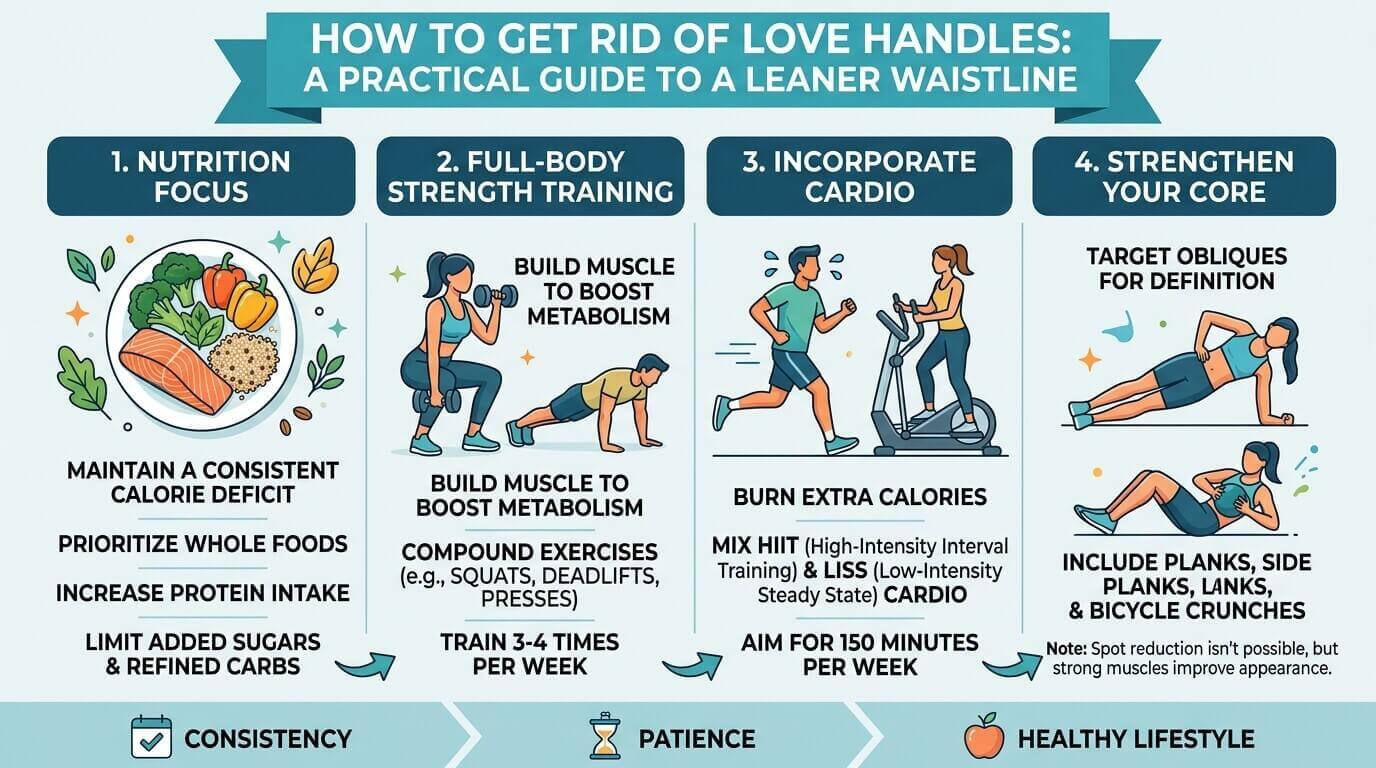
Beyond specific exercises, your overall lifestyle has a massive impact on your joints. Weight management is perhaps the most significant factor. Your knees support your entire body weight, and every extra pound you carry translates to significantly more force placed on the knee joint with every step you take. Losing even a small amount of weight can have a profound impact on reducing knee noise and pain. Additionally, consider your activity levels throughout the day.
If you have a desk job, set a timer to stand up and move every thirty minutes. Prolonged sitting causes the muscles around the knee to become stiff and weak, which makes popping more likely when you finally do stand up. Creating an active, dynamic lifestyle is the best way to ensure your joints remain lubricated, strong, and quiet for as long as possible.
Moving Forward with Confidence
Having a noisy knee can be a source of anxiety, but it is often much less ominous than we fear. By paying attention to the context of the sound—whether it happens with pain, whether it happens with locking, or whether it happens with swelling—you can gain a lot of clarity. Most of the time, the answer to “why does my knee pop?” is simply that your body is a complex, mechanical system that occasionally makes noise during its daily operations.
By staying active, maintaining your strength, and listening to your body when it tells you something is wrong, you can manage your joint health effectively. You don’t need to fear the pop; you just need to understand it, respect it, and make sure your knees are getting the support they need to keep you moving forward. Whether you decide to start a gentle strengthening routine or simply become more mindful of your posture, take small steps to care for your joints today, and they will likely take care of you for years to come.