Introduction
You catch your reflection in a bathroom mirror under bright lighting and notice something unsettling. Your teeth look more yellow than you remember. You brush twice daily, floss regularly, and still your smile seems duller than it used to be.
You’re not imagining things, and you’re definitely not alone. Tooth yellowing affects millions of people regardless of how diligently they care for their teeth. Some people notice gradual changes over the years, while others see sudden discoloration seemingly overnight.
Understanding why teeth turn yellow gives you power over the problem. This guide breaks down exactly what causes that yellow colour of teeth, which treatments actually work, and how you can prevent future staining. No dental degree required—just practical information you can use starting today.
What Causes the Yellow Colour of Teeth

Tooth discoloration doesn’t happen randomly. Specific biological processes and lifestyle factors trigger those yellow tones you see when you smile.
The Natural Structure of Your Teeth
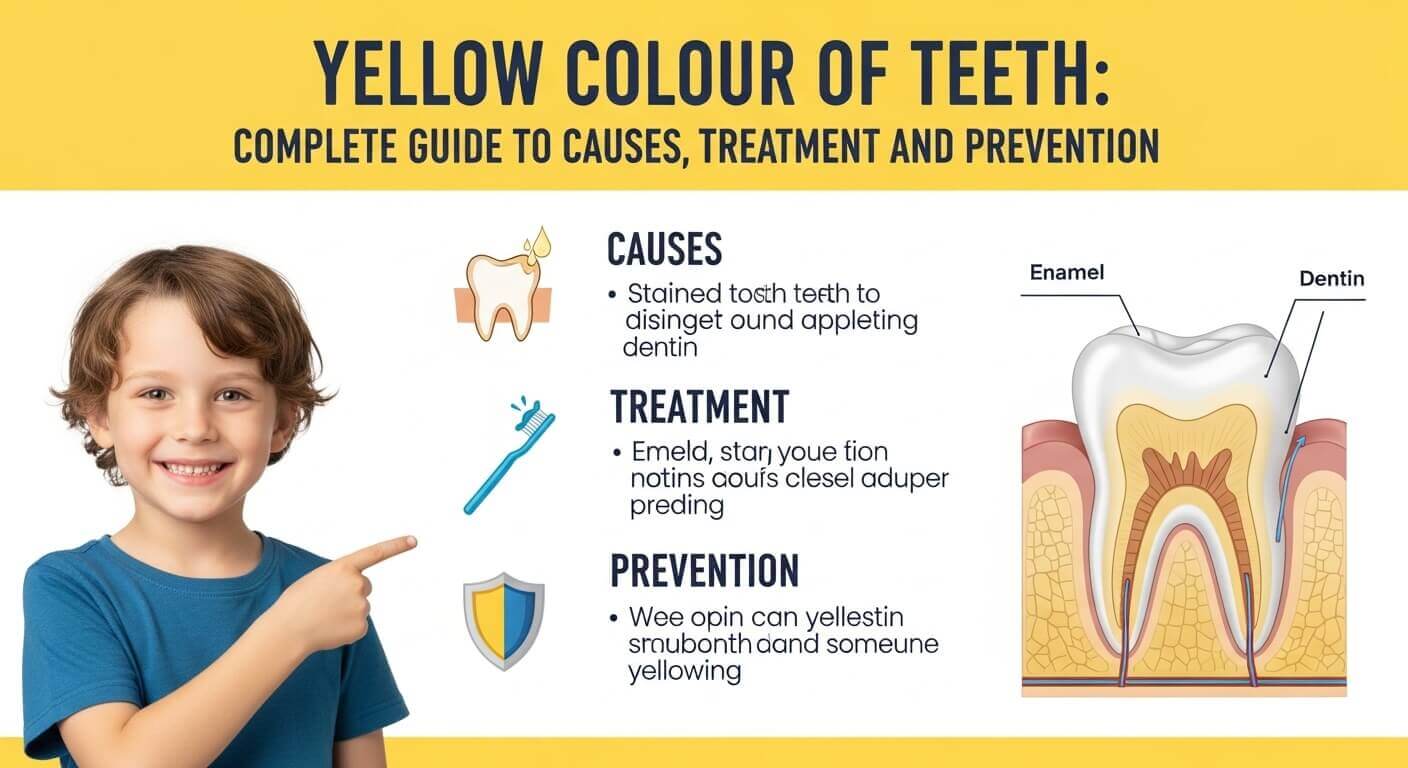
Your teeth consist of multiple layers working together. The outermost layer, called enamel, appears white or slightly off-white when healthy. This hard protective coating covers the softer dentin layer underneath.
Dentin naturally ranges from yellowish to light brown in colour. When enamel thins or wears away over time, more of this yellow dentin shows through the translucent enamel. This creates the appearance of yellow teeth even when nothing is technically wrong with your dental health.
Think of it like looking through a frosted glass window. The thinner the frosting becomes, the more you see the colour behind it.
Age and Natural Enamel Wear
Aging remains one of the most common reasons for yellow colour of teeth. As you get older, your enamel naturally becomes thinner through years of chewing, grinding, and exposure to acidic foods.
The enamel layer starts thick but gradually wears down over decades. By age 40 or 50, many people notice their teeth appearing more yellow than during their younger years. This happens completely independently of oral hygiene habits.
While you can’t stop aging, understanding this natural process helps you set realistic expectations about maintaining tooth brightness throughout life.
Foods and Beverages That Stain
Certain foods and drinks contain chromogens—highly pigmented molecules that latch onto tooth enamel. Coffee leads the pack as one of the worst offenders for causing yellow colour of teeth.
Coffee contains tannins that create surface stains when they bond with enamel. Tea, particularly black tea, causes similar staining for the same reason. Red wine adds another layer of staining with both its dark colour and acidic content that weakens enamel.
Common staining culprits include:
- Coffee and black tea
- Red wine and dark sodas
- Tomato-based sauces
- Berries like blueberries and blackberries
- Soy sauce and balsamic vinegar
- Curry and turmeric-based dishes
The frequency matters more than occasional consumption. Drinking coffee all day creates more staining than having one cup with breakfast.
Tobacco Use and Nicotine Staining
Smoking cigarettes or using other tobacco products creates some of the most stubborn yellow and brown stains on teeth. Nicotine and tar both penetrate tooth enamel and cause deep discoloration.
The stains from tobacco don’t sit on the surface like coffee stains. They actually seep into microscopic cracks and pores in your enamel, making them much harder to remove. Even after quitting, tobacco stains can persist for months or years without professional treatment.
Vaping products containing nicotine can cause similar yellowing, though typically less severe than that of traditional cigarettes.
Poor Oral Hygiene Habits
When you don’t brush and floss properly, plaque builds up on the tooth surfaces. This sticky bacterial film appears colourless at first but gradually hardens into tartar, a yellowish or brownish crusty deposit.
Tartar forms when plaque isn’t removed within 24 to 72 hours. Once tartar develops, you can’t remove it with regular brushing. Only professional dental cleaning can eliminate tartar buildup.
Areas where tartar commonly accumulates include:
- Along the gumline
- Between teeth
- Behind the lower front teeth
- On the chewing surfaces of back molars
Regular brushing and flossing prevent plaque from hardening into yellow tartar in the first place.
Medications That Cause Discoloration
Several prescription medications list tooth discoloration as a potential side effect. Tetracycline and doxycycline antibiotics are particularly notorious for causing yellow, grey, or brown teeth staining.
Children who take tetracycline before age 8, while permanent teeth are still developing, often experience permanent discoloration. Adults who take these antibiotics may notice temporary yellowing that gradually fades after stopping the medication.
Other medications linked to yellow colour of teeth include:
- Antihistamines like Benadryl
- High blood pressure medications
- Antipsychotic drugs
- Chemotherapy and radiation treatments
Always discuss potential dental side effects when starting new medications. Your doctor may be able to suggest alternatives if tooth staining becomes a concern.
Excessive Fluoride Exposure
Fluoride strengthens tooth enamel and prevents cavities when used appropriately. However, too much fluoride during childhood causes a condition called fluorosis—white spots or streaks that can appear yellowish brown.
Fluorosis occurs when children regularly swallow toothpaste or drink water with very high fluoride levels during the years their permanent teeth are forming. Once fluorosis develops, it remains permanent.
Sources of excess fluoride include:
- Swallowing fluoride toothpaste regularly
- Drinking well water with naturally high fluoride
- Taking fluoride supplements unnecessarily
- Using fluoride rinses intended for adults
Parents should supervise young children during brushing to ensure they spit out toothpaste rather than swallowing it.
Trauma and Tooth Injuries
Physical trauma to a tooth can disrupt blood flow and damage the inner pulp. When this happens, the tooth may turn yellow, grey, or brown over time as internal tissues die.
Children who fall and hit their baby teeth sometimes develop yellow discoloration in the affected tooth. Adults who experience dental trauma in accidents or sports injuries may notice similar colour changes weeks or months later.
A single yellow tooth surrounded by otherwise white teeth often indicates previous trauma to that specific tooth. This requires professional evaluation since it might signal nerve damage or internal decay.
Genetics and Natural Tooth Colour
Some people are simply born with thicker, whiter enamel, while others have naturally thinner enamel that allows more yellow dentin to show through. Your genetic makeup determines your baseline tooth colour just like it determines your eye colour or hair texture.
If your parents have naturally yellow-toned teeth, you’re more likely to have similar colouring regardless of how well you care for your teeth. This doesn’t mean your teeth are unhealthy—they’re just expressing their natural genetic colour.
Understanding your genetic baseline helps you set realistic goals for whitening treatments.
How Yellow Colour of Teeth Affects Your Life

Beyond aesthetics, tooth discoloration impacts several aspects of daily living and psychological well-being.
Social Confidence and Self-Esteem
People with yellow teeth often feel self-conscious about smiling in photos or during conversations. This self-consciousness can limit social interactions and create unnecessary stress in professional and personal settings.
Studies show that people perceive those with whiter teeth as more successful, friendly, and trustworthy. While these perceptions are superficial, they create real social advantages in job interviews, dating, and first impressions.
Addressing yellow colour of teeth isn’t vanity—it’s about feeling confident enough to smile freely without second-guessing yourself.
Professional Implications
In customer-facing roles, sales positions, or public speaking careers, your smile becomes part of your professional toolkit. Yellow teeth may unfairly influence how colleagues and clients perceive your competence and attention to detail.
Many professionals invest in teeth whitening as part of their career advancement strategy, viewing it similarly to maintaining appropriate business attire or grooming standards.
Indicator of Oral Health Issues
Sometimes yellow colour of teeth signals underlying dental problems beyond mere cosmetics. Heavy tartar buildup indicates inadequate oral hygiene that could lead to gum disease or tooth decay.
Sudden yellowing of a single tooth might reveal internal decay or nerve damage requiring immediate dental attention. Monitoring tooth colour changes helps catch potential problems before they escalate into painful or expensive dental emergencies.
Professional Treatments for Yellow Teeth
Modern dentistry offers several effective solutions for removing yellow colour from teeth, ranging from simple cleanings to advanced cosmetic procedures.
Professional Dental Cleaning
A standard dental cleaning removes surface stains and tartar that regular brushing can’t eliminate. Dental hygienists use specialized tools to scrape away buildup and polish tooth surfaces.
This basic procedure often makes teeth appear noticeably brighter by removing months or years of accumulated staining. Dentists recommend professional cleanings every six months to prevent tartar buildup and maintain tooth brightness.
Professional cleaning typically costs between $75 and $200 without insurance, making it the most affordable professional option for addressing yellow teeth.
In-Office Teeth Whitening
Professional whitening treatments use high-concentration bleaching agents applied directly to teeth under controlled conditions. These procedures produce dramatic results in a single appointment lasting 60 to 90 minutes.
The process works like this:
- A dentist applies protective barriers to the gums
- Strong whitening gel (usually hydrogen peroxide) goes on the tooth surfaces
- Special light or laser activates the whitening agent
- Gel sits on teeth for 15-20 minute intervals
- Process repeats 2-3 times during one visit
In-office whitening can lighten teeth by several shades in one session. Results last anywhere from six months to two years, depending on your habits and maintenance routine.
Costs range from $300 to $1,000 per treatment, depending on location and specific technique used.
Custom Take-Home Whitening Trays
Dentists create custom-fitted trays molded to your exact tooth structure. You fill these trays with professional-grade whitening gel and wear them at home for prescribed periods.
This method takes longer than in-office treatment—typically 10 to 14 days of daily use—but offers more gradual whitening with less sensitivity. The custom fit ensures even coverage and prevents gel from irritating gums.
Take-home professional kits cost $200 to $500 and often include enough gel for multiple whitening cycles over time.
Dental Veneers for Permanent Solutions
When yellow colour of teeth results from deep staining that doesn’t respond to whitening, veneers offer a permanent cosmetic solution. These thin porcelain or composite shells bond to the front of teeth, completely covering discoloration.
Veneers require removing a small amount of enamel from teeth to create space for the veneer material. Once placed, veneers can last 10 to 15 years with proper care.
The primary drawback is cost. Veneers typically run $800 to $2,500 per tooth, making this option best suited for people with severe discoloration affecting just a few visible front teeth.
Dental Bonding for Spot Treatment
Bonding applies tooth-coloured resin material directly to stained areas. Dentists shape and polish the resin to match surrounding teeth, effectively hiding yellow spots or streaks.
This procedure works well for small areas of discoloration or single-stained teeth. The process takes 30 to 60 minutes per tooth and costs $300 to $600 per tooth.
Bonding material can stain over time and typically lasts 5 to 10 years before needing replacement.
At-Home Remedies and Products
Several over-the-counter products and home remedies can reduce yellow colour of teeth, though results vary significantly in effectiveness.
Whitening Toothpastes
Whitening toothpastes contain mild abrasives and chemical agents that help remove surface stains. They work gradually with consistent use over several weeks.
These toothpastes can lighten teeth by about one shade, but won’t dramatically change tooth colour. They work best for maintaining results from professional whitening rather than as a primary treatment.
Look for products with the American Dental Association (ADA) Seal of Acceptance to ensure safety and reasonable effectiveness.
Whitening Strips and Gels
Over-the-counter whitening strips use peroxide-based gels in much lower concentrations than professional treatments. You apply thin strips to teeth for 30 minutes daily over 10 to 14 days.
Results typically include one to two shades of lightening. Strips can cause temporary tooth sensitivity and sometimes miss gaps between teeth or hard-to-reach areas.
Popular brands like Crest 3D White cost $30 to $60 per box and deliver modest but noticeable improvement in yellow colour of teeth.
LED Whitening Kits
At-home LED kits combine whitening gel with blue light activation similar to professional treatments. You apply gel to teeth, insert a mouth tray with LED lights, and wait 10 to 30 minutes.
These kits produce better results than strips alone but still fall short of professional in-office treatments. They cost $50 to $150 and can lighten teeth by two to three shades with consistent use.
Baking Soda and Hydrogen Peroxide
Mixing baking soda with hydrogen peroxide creates a mild whitening paste that removes surface stains through gentle abrasion. Use this paste once or twice weekly at most to avoid enamel damage.
Create the mixture by combining two tablespoons of hydrogen peroxide with one tablespoon of baking soda. Brush gently for two minutes, then rinse thoroughly.
This remedy shows modest results over several weeks but won’t match professional whitening effectiveness.
Oil Pulling
Oil pulling involves swishing coconut oil or sesame oil in your mouth for 15 to 20 minutes. Proponents claim it removes bacteria and surface stains, though scientific evidence remains limited.
While oil pulling won’t harm your teeth when done correctly, don’t expect dramatic whitening results. Some people report slightly brighter teeth after weeks of daily practice.
Preventing Yellow Colour of Teeth

Prevention always costs less and requires less effort than fixing existing discoloration. These strategies help maintain naturally bright teeth.
Proper Brushing Technique
Brush at least twice daily for two full minutes each session. Use gentle circular motions rather than aggressive back-and-forth scrubbing that can wear enamel.
Hold your toothbrush at a 45-degree angle to the gumline and brush all tooth surfaces—outer, inner, and chewing surfaces. Don’t forget to brush your tongue where bacteria accumulate.
Replace your toothbrush every three months or when the bristles become frayed.
Daily Flossing
Flossing removes plaque and food particles from between teeth where toothbrush bristles can’t reach. These areas are particularly prone to yellowing when bacteria accumulate.
Floss at least once daily, preferably before bedtime. Use about 18 inches of floss, winding most around your middle fingers and leaving 1-2 inches to work with. Gently slide floss between teeth using a sawing motion, then curve it around each tooth in a C-shape.
Rinse After Staining Foods
When you can’t brush immediately after consuming coffee, wine, or other staining foods, rinse your mouth with water. This simple act washes away pigmented molecules before they bond to enamel.
Swish water around your mouth for 30 seconds after drinking coffee or eating curry. This takes five seconds and significantly reduces staining potential.
Use a Straw for Dark Beverages
Drinking coffee, tea, or soda through a straw minimizes contact between staining liquids and your front teeth. The liquid bypasses teeth and goes directly toward the back of your mouth.
This won’t prevent all staining, but it reduces exposure to your most visible teeth—the ones that matter most for your smile appearance.
Quit Tobacco Products
Stopping smoking or chewing tobacco eliminates one of the worst causes of yellow colour of teeth. The benefits extend far beyond tooth colour to include better gum health, reduced cancer risk, and improved overall well-being.
Many communities offer free smoking cessation programs through public health departments. Your doctor can also prescribe medications that make quitting easier.
Limit Acidic Foods
Acidic foods and drinks weaken enamel, making it more susceptible to staining and yellowing. Coffee and wine deliver a double hit—they’re both acidic and highly pigmented.
Don’t brush immediately after consuming acidic foods. The acid temporarily softens enamel, and brushing right away can actually damage it. Wait at least 30 minutes before brushing.
Regular Dental Checkups
Visit your dentist every six months for cleanings and examinations. Professional cleanings remove tartar before it causes significant yellowing. Regular checkups catch small problems before they become large, expensive issues.
Many dental insurance plans cover two cleanings per year at no additional cost beyond monthly premiums.
Common Mistakes That Worsen Yellow Teeth
Certain well-intentioned actions actually increase tooth yellowing rather than preventing it.
Brushing Too Hard
Aggressive brushing wears away enamel faster than gentle brushing. Once enamel thins, the yellow dentin beneath becomes more visible. Some people brush harder, thinking it cleans better, but this backfires completely.
Use a soft-bristled toothbrush and let the bristles do the work without applying excessive pressure. Your teeth should feel clean without your gums feeling sore afterward.
Using Charcoal Toothpaste Regularly
Activated charcoal products have surged in popularity for teeth whitening. However, charcoal’s abrasive nature can scratch enamel with frequent use, potentially worsening yellow colour of teeth over time.
While charcoal may remove surface stains initially, the enamel damage it causes allows deeper yellowing later. Use charcoal products sparingly if at all.
Ignoring Dry Mouth
Saliva naturally cleanses teeth and neutralizes acids. When your mouth stays dry due to medications, mouth breathing, or insufficient water intake, staining occurs more readily.
Drink water throughout the day and chew sugar-free gum to stimulate saliva production. Talk to your doctor if medications are causing persistent dry mouth.
Overusing Whitening Products
More isn’t always better with teeth whitening. Using whitening strips more frequently than recommended or leaving them on longer than directed can damage enamel and increase tooth sensitivity.
Follow product instructions exactly. If you’re not seeing results after completing a full treatment course, consult a dentist rather than repeatedly using over-the-counter products.
Delaying Professional Treatment
Waiting years to address yellow colour of teeth means stains penetrate deeper into enamel, making them harder to remove. Surface stains respond well to simple treatments, but deep stains often require expensive procedures.
Address yellowing early when it first becomes noticeable rather than waiting until discoloration becomes severe.
Expert Tips for Maintaining White Teeth
Dentists and dental hygienists share these professional insights for keeping teeth bright long-term.
Timing Matters for Brushing
Brush first thing in the morning to remove bacteria that accumulated overnight. Brush again before bed to eliminate food particles and plaque from the day.
Wait 30 minutes after acidic foods or drinks before brushing. This allows saliva to remineralize enamel that acid temporarily weakened.
Choose the Right Toothpaste
Use fluoride toothpaste to strengthen enamel and prevent decay. If you use whitening toothpaste, alternate it with regular fluoride toothpaste to balance stain removal with enamel protection.
Avoid toothpastes with harsh abrasives that score enamel surfaces. These microscopic scratches actually trap more stains over time.
Consider Your Diet’s Impact
Crunchy vegetables like carrots, celery, and apples naturally scrub teeth while you chew. They also stimulate saliva production that protects against staining.
Dairy products like cheese and yogurt contain calcium and phosphates that help remineralize enamel, making it more resistant to yellowing.
Address Teeth Grinding
Grinding teeth at night wears enamel and exposes yellow dentin. If you wake with jaw pain or your dentist notices wear patterns, ask about a night guard.
Custom night guards protect teeth from grinding damage and preserve enamel thickness. They cost $300 to $800 but last several years.
Monitor Changes in Tooth Colour
Pay attention to sudden colour changes in individual teeth or rapid yellowing across all teeth. These changes might indicate dental problems requiring professional evaluation.
Take photos of your smile periodically to track gradual changes that you might not notice day to day.
When to See a Dentist About Yellow Teeth
Certain situations require professional dental evaluation rather than home treatment.
Sudden Discoloration
If teeth rapidly turn yellow over weeks rather than a gradual change over months or years, schedule a dental appointment. Sudden yellowing can signal tooth decay, infection, or other problems.
Single teeth that turn yellow, grey, or brown particularly need evaluation since this often indicates internal damage or dying tooth pulp.
Pain or Sensitivity
Yellow colour of teeth accompanied by pain, temperature sensitivity, or swelling requires immediate dental attention. These symptoms suggest infection or decay beyond mere cosmetic discoloration.
Don’t delay treatment when pain accompanies yellowing. Root infections can spread to surrounding tissues and become serious health threats.
Whitening Treatments Don’t Work
If you’ve tried over-the-counter whitening products for several weeks without any improvement, a professional evaluation helps identify the underlying cause. Some types of discoloration don’t respond to standard whitening approaches.
Your dentist can recommend appropriate treatments based on what’s causing your specific yellowing.
Young Children with Yellow Teeth
Baby teeth normally appear whiter than permanent teeth. If your child’s teeth look unusually yellow, especially if only certain teeth are affected, consult a pediatric dentist.
Early intervention can prevent permanent staining and address any developing dental problems.
Understanding Your Treatment Options
Different causes of yellow colour of teeth require different solutions. Understanding which treatment matches your situation saves money and frustration.
Surface stains from coffee and tea respond well to professional cleaning and over-the-counter whitening products. Deep stains from medications or fluorosis need professional-strength treatments or cosmetic dentistry.
Age-related yellowing from enamel thinning shows improvement with whitening, but may require realistic expectation adjustment. You’re working against natural biological processes.
Genetic factors that create naturally yellow-toned teeth can be lightened somewhat, but won’t achieve brilliant white without veneers or other cosmetic dentistry.
Discuss your goals and budget openly with your dentist. They can outline realistic outcomes for each treatment option and help you choose the approach that matches your priorities.
Yellow colour of teeth affects millions of people for dozens of different reasons. Whether your yellowing comes from years of coffee drinking, natural aging, genetics, or inadequate oral care, effective solutions exist at every price point.
Start with prevention—proper brushing, regular flossing, and limiting staining foods protect against future yellowing. For existing discoloration, match your treatment to the severity of staining and your budget. Professional treatments deliver faster, more dramatic results, while at-home products offer gradual improvement at a lower cost.
Remember that teeth aren’t naturally brilliant white. Don’t compare your real teeth to heavily edited photos or unrealistic standards. Healthy teeth range from off-white to light yellow naturally. Your goal should be the healthiest, brightest version of your natural tooth colour—not an artificial shade that doesn’t match your genetics.
Take action today by examining your oral care routine, identifying which factors might be yellowing your teeth, and choosing one prevention strategy to implement this week. Small consistent changes deliver better long-term results than sporadic intensive efforts.
Your smile deserves the attention you give it. Whether through simple home care improvements or professional whitening treatments, brighter teeth and renewed confidence are absolutely within reach.