Introduction
When your baby starts teething, it can feel like you are entering a new phase of parenthood filled with sleepless nights, fussy days, and endless drool. One of the most common and frustrating side effects of this milestone is the appearance of a teething rash, also known as drool rash. If you have noticed red, irritated patches on your baby’s chin, cheeks, or neck, you are not alone.
This condition affects the majority of teething infants and can cause significant discomfort if not properly managed. Understanding what causes this rash, how to prevent it, and the best ways to treat it will help you keep your baby’s delicate skin healthy and comfortable during this challenging developmental stage.
What Exactly Is a Teething Rash?
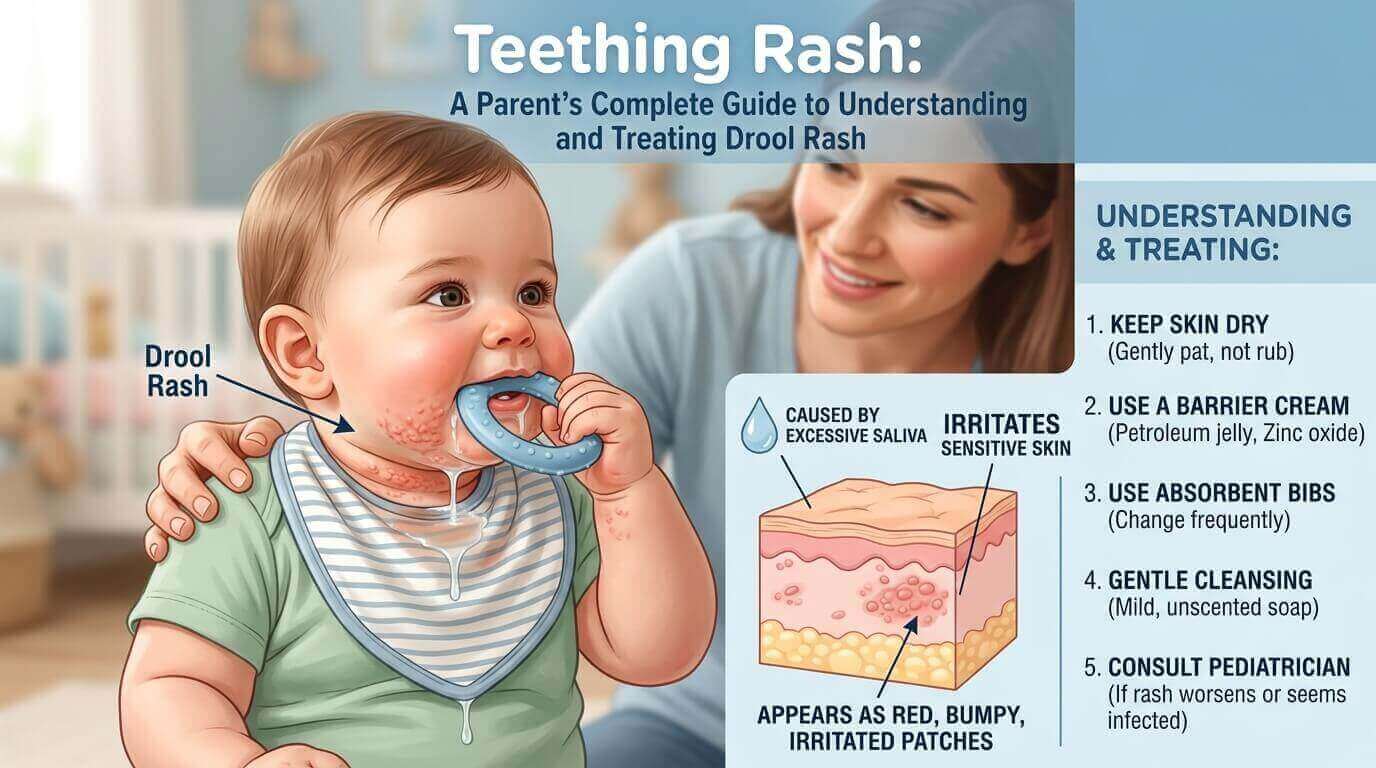
A teething rash is a type of skin irritation that develops as a direct result of excessive drooling during the teething process. When babies begin cutting their first teeth, their saliva production increases dramatically, often to the point where they are constantly wet around the mouth and chin. Saliva contains enzymes that are designed to help break down food, but when it sits on delicate baby skin for extended periods, it can cause irritation, redness, and inflammation.
The skin around a baby’s mouth is particularly thin and sensitive, making it highly susceptible to breakdown when exposed to constant moisture. The rash typically appears as red, slightly raised patches that may be dry, flaky, or even weepy in more severe cases. While it is not a serious medical condition, it can be uncomfortable for your baby and concerning for you as a parent.
Why Teething Causes So Much Drooling

To understand why a teething rash develops, it helps to know why teething triggers such excessive saliva production in the first place. When a baby’s teeth begin to push through the gums, the body responds by increasing saliva flow. This serves several purposes: saliva helps to lubricate the gums, making the eruption of teeth slightly less painful, and it also contains antibacterial properties that help protect the gums from infection during this vulnerable time.
However, young babies do not yet have full control over their swallowing reflex, which means they cannot efficiently manage the increased volume of saliva in their mouths. As a result, the drool spills out constantly, soaking their chin, cheeks, neck, and even their chest if they are lying down. This persistent wetness is what ultimately leads to the development of the rash.
Identifying the Signs and Symptoms
Recognizing a teething rash early allows you to take action before it becomes severe. The most obvious sign is redness around the mouth, chin, and cheeks, often in areas where drool tends to pool. The skin may feel rough or dry to the touch, and in some cases, it may develop small bumps or become slightly swollen. You might also notice that the affected areas are warm, indicating inflammation.
In more advanced cases, the skin can crack or develop open sores, which can be painful and increase the risk of secondary infection. Babies with a teething rash may also be more fussy than usual, especially if the rash is causing discomfort. It is important to distinguish a teething rash from other common baby skin conditions, such as eczema or contact dermatitis, as the treatment approaches can differ.
How to Differentiate Teething Rash from Other Rashes
While a teething rash is common, it is not the only type of rash that can appear on a baby’s face. Eczema, for example, can cause red, dry, and itchy patches that may look similar to a teething rash, but eczema tends to appear on the cheeks, scalp, and other parts of the body, not just around the mouth. Eczema also tends to be more persistent and is often associated with a family history of allergies or asthma.
Contact dermatitis, on the other hand, is caused by exposure to an irritant or allergen, such as a new laundry detergent or a harsh soap, and usually appears wherever the skin comes into contact with the offending substance. A teething rash, in contrast, is almost always confined to the areas that are constantly wet with saliva—the chin, the corners of the mouth, and the neck. If you are unsure what type of rash your baby has, it is always best to consult with your pediatrician for an accurate diagnosis.
The Best Prevention Strategies
Preventing a teething rash is all about managing moisture and protecting your baby’s skin from prolonged exposure to saliva. The most effective strategy is to keep the affected areas as dry as possible throughout the day. This means wiping your baby’s face frequently with a soft, clean cloth, being careful to pat rather than rub, which can further irritate the skin.
Many parents find it helpful to keep a small stack of burp cloths or soft muslin cloths handy for quick drool clean-ups. You can also use a bib to catch drool before it soaks into your baby’s clothes or runs down their neck, but be sure to change the bib frequently if it becomes wet, as a damp bib sitting against the skin can actually make the rash worse. Some parents prefer to use bibs made from highly absorbent materials with a waterproof backing to keep moisture away from the skin.
Creating a Protective Barrier on the Skin

In addition to keeping the skin dry, creating a protective barrier can help prevent saliva from directly irritating the skin. Applying a thin layer of a barrier cream or ointment before the rash develops can be highly effective. Products containing petroleum jelly, zinc oxide, or lanolin work well because they create a waterproof layer that shields the skin from moisture.
Apply the barrier cream after each face wipe and before naps or bedtime, when drool tends to pool most. It is important to use products that are specifically formulated for babies and free from fragrances, dyes, and other potential irritants. If your baby already has a rash, these barrier creams can also help to soothe and heal the skin by protecting it from further damage while it recovers.
Gentle Cleansing Techniques
How you clean your baby’s skin matters just as much as how often you do it. Harsh soaps and cleansers can strip the skin of its natural oils, making it even more vulnerable to irritation. When washing your baby’s face, use only lukewarm water and a soft, damp cloth. If you need to use a cleanser, choose a gentle, fragrance-free baby wash and use it sparingly.
After washing, pat the skin dry rather than rubbing, as rubbing can cause friction and worsen the rash. Avoid using baby wipes on the face, as many contain alcohol or other drying agents that can aggravate sensitive skin. If you are out and about and need a quick clean-up, look for wipes that are specifically designed for sensitive skin and are free from harsh chemicals.
Treating an Active Teething Rash
If your baby has already developed a teething rash, the good news is that it is usually very treatable with simple home care. The first step is to keep the area clean and dry, following the prevention strategies outlined above. Once the skin is clean and dry, apply a soothing, healing ointment to the affected areas. Ointments containing calendula, which have natural anti-inflammatory and healing properties, can be particularly effective.
Coconut oil is another natural option that many parents swear by, as it is moisturizing and has antimicrobial properties. For more stubborn rashes, over-the-counter diaper rash creams containing zinc oxide can work wonders, as they provide a thick, protective barrier while promoting healing. Apply the ointment liberally and reapply frequently, especially after feedings and naps.
When to See a Pediatrician
While most cases of teething rash can be managed at home, there are times when it is important to seek medical advice. If the rash does not improve after several days of home treatment, or if it appears to be getting worse despite your efforts, it is time to call your pediatrician. You should also seek medical attention if the rash develops open sores, begins to ooze or bleed, or if you notice signs of infection such as increased redness, warmth, swelling, or pus.
Fever, while often associated with teething, is not typically caused by a teething rash itself, so if your baby develops a fever along with the rash, it may indicate a separate infection that requires medical treatment. Your pediatrician may prescribe a mild topical steroid or antibiotic ointment if the rash is severe or infected.
Managing Other Teething Symptoms
A teething rash is just one of many symptoms your baby may experience during this phase. To help your baby feel more comfortable overall, consider addressing other teething-related discomforts as well. Teething rings, especially those that can be chilled in the refrigerator, can provide soothing relief to sore gums. Gently massaging your baby’s gums with a clean finger can also help.
Some parents find that offering cold foods, such as chilled applesauce or a frozen washcloth, provides additional comfort. If your baby seems to be in significant pain, you can talk to your pediatrician about using over-the-counter pain relievers such as infant acetaminophen or ibuprofen, but always follow the dosing instructions carefully and never use teething gels that contain benzocaine, as they can be dangerous for young babies.
The Role of Diet and Hydration

Keeping your baby well-hydrated can also help manage both teething symptoms and the associated rash. Offer breast milk, formula, or small amounts of water frequently throughout the day, especially if your baby is drooling heavily, as excessive drooling can lead to fluid loss.
If your baby is eating solids, avoid foods that are overly acidic or salty, as these can further irritate the skin around the mouth. Instead, offer soft, bland foods that are easy to eat and less likely to cause additional irritation. If you notice that certain foods seem to make the rash worse, try eliminating them temporarily to see if the skin improves.
Choosing the Right Fabrics and Clothing
The type of fabric that comes into contact with your baby’s skin can also make a difference in managing a teething rash. Choose soft, breathable fabrics like cotton for bibs and clothing, as these are less likely to cause friction or trap moisture against the skin. Avoid synthetic materials that do not breathe well, as they can create a warm, damp environment that exacerbates the rash.
Wash all of your baby’s clothing, bibs, and bedding in a gentle, fragrance-free detergent, and avoid using fabric softeners or dryer sheets, which can leave irritating residues on the fabric. Some parents find that double-rinsing laundry helps to remove any lingering detergent that could irritate sensitive skin.
Long-Term Skin Care Practices
Even after the rash has healed, it is important to continue practicing good skin care habits to prevent recurrence. Make it a routine to apply a protective barrier cream before bed and before your baby goes out in cold or windy weather, as these conditions can also dry out and irritate the skin. Keep your baby’s skin well-moisturized with a gentle, fragrance-free baby lotion, especially during the winter months when the air is dry.
Regularly inspect your baby’s skin for any signs of irritation or dryness, and address any issues promptly before they have a chance to develop into a full-blown rash. By being proactive and consistent with your skin care routine, you can help keep your baby’s skin healthy and comfortable throughout the entire teething process.
Understanding the Teething Timeline
Knowing what to expect during the teething process can help you prepare for and manage a teething rash more effectively. Most babies begin teething between four and seven months of age, though some may start earlier or later. The bottom front teeth usually come in first, followed by the top front teeth. By the time your baby is three years old, they will have a full set of 20 primary teeth.
Teething can be an on-and-off process, with periods of intense symptoms followed by periods of relative calm. Each new tooth that erupts can bring a fresh wave of drooling and, potentially, a new teething rash. Understanding this timeline helps you recognize that the rash is a temporary issue that will eventually resolve as your baby’s teeth come in and their ability to manage saliva improves.
Final Thoughts
Dealing with a teething rash can be frustrating, but it is important to remember that it is a common, temporary condition that most babies experience. With consistent care, gentle treatment, and a little patience, you can keep your baby’s skin healthy and comfortable during this challenging time. Focus on keeping the skin dry, creating a protective barrier, and using soothing, healing ointments as needed.
Pay attention to your baby’s cues and adjust your care routine based on what seems to work best for their unique skin. And above all, do not hesitate to reach out to your pediatrician if you have concerns or if the rash is not responding to home treatment. Teething is a phase that will pass, and before you know it, your baby will have a beautiful smile full of new teeth, and the days of constant drool and rash will be a distant memory.