1. Quick Answer: Amoxicillin and Alcohol
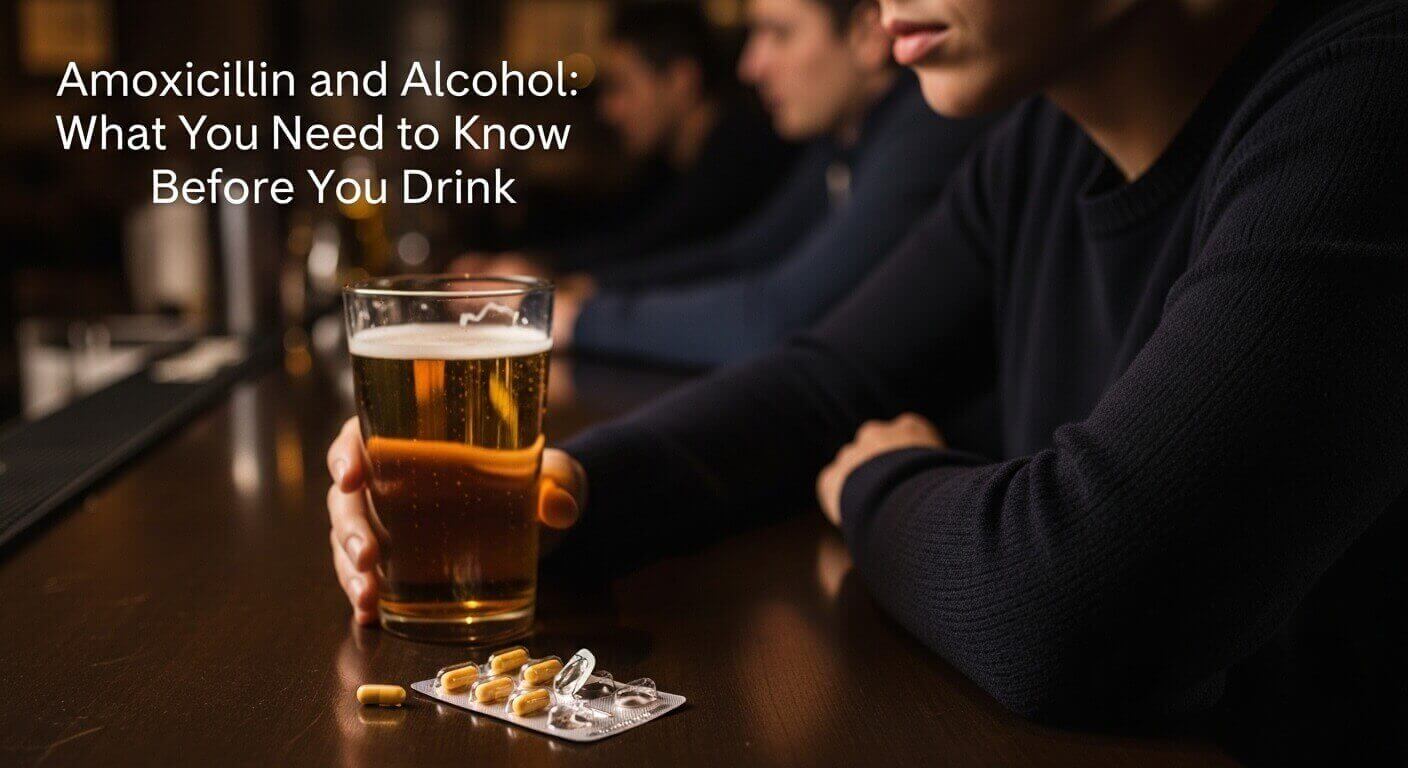
Many people wonder if amoxicillin and alcohol are dangerous together. The short answer is that alcohol does not usually stop amoxicillin from working. However, drinking alcohol while you are sick or taking antibiotics can make you feel worse, increase side effects like nausea and dizziness, and slow down your recovery. The safest choice is to avoid alcohol until you feel better and finish your medicine.
2. What Is Amoxicillin?
Amoxicillin is a common antibiotic used to treat bacterial infections. Doctors often prescribe it for ear infections, throat infections, sinus infections, chest infections, dental infections, urinary tract infections, and some skin infections. It belongs to a group of antibiotics called penicillins. Amoxicillin works by stopping bacteria from building strong cell walls, which causes the bacteria to break down and die. It is important to remember that amoxicillin only works against bacterial infections. It does not treat viral infections like the common cold or flu.
3. Why People Ask About Amoxicillin and Alcohol

People ask about amoxicillin and alcohol because many medicines can interact with alcohol in unsafe ways. Some antibiotics, such as metronidazole, can cause strong reactions when mixed with alcohol. These reactions may include vomiting, flushing, a fast heartbeat, and severe discomfort. Amoxicillin is different because it does not usually cause this type of reaction. Still, alcohol can affect your body while you are fighting an infection. That is why the question is not only, “Can alcohol stop amoxicillin?” but also, “Will alcohol make my illness or side effects worse?”
4. Does Alcohol Stop Amoxicillin From Working?
Alcohol does not usually make amoxicillin less effective. If you drink a small amount of alcohol, the antibiotic should still fight the bacteria in your body. However, this does not mean drinking is a good idea. When you have an infection, your body needs rest, fluids, and energy to heal. Alcohol can dehydrate you, affect your sleep, upset your stomach, and weaken your body’s natural recovery process. So while alcohol may not directly block amoxicillin, it may still make it harder for you to feel better quickly.
5. Common Side Effects of Amoxicillin
Like many medicines, amoxicillin can cause side effects. Common side effects include nausea, diarrhea, stomach pain, headache, and a mild skin rash. Some people may also feel tired or less hungry while taking it. These side effects are often mild, but they can become more uncomfortable if alcohol is added. Alcohol can irritate the stomach and intestines, which may make nausea and diarrhea worse. If you already feel weak or dizzy from being sick, alcohol may increase that feeling and make daily activities harder.
6. How Alcohol Can Make Side Effects Worse
Alcohol can affect the same parts of the body that are already stressed by an infection or an antibiotic. For example, if amoxicillin gives you an upset stomach, alcohol may make your stomach burn, cramp, or feel more unsettled. If your infection makes you tired, alcohol can make you feel even more drained the next day. If you have diarrhea, alcohol may increase fluid loss and raise the risk of dehydration. This is why many doctors suggest avoiding alcohol while taking antibiotics, even when there is no serious direct interaction.
7. Can You Have One Drink While Taking Amoxicillin?
For many healthy adults, one small drink while taking amoxicillin may not cause a serious problem. But “may not” does not mean “always safe.” Your safety depends on your health, the type of infection you have, your dose, other medicines you take, and how your body reacts to alcohol. If you are very sick, have a fever, are vomiting, have diarrhea, or feel dizzy, it is better not to drink at all. If you are unsure, ask your doctor or pharmacist before mixing amoxicillin and alcohol.
8. When You Should Avoid Alcohol Completely
You should avoid alcohol completely if your infection is serious, if you have liver disease, kidney problems, stomach ulcers, severe diarrhea, vomiting, or a history of alcohol misuse. You should also avoid alcohol if you are pregnant, breastfeeding, taking other medicines that interact with alcohol, or using painkillers that can affect the liver. If your doctor prescribed amoxicillin with another medicine, such as clavulanate, it is even more important to ask about alcohol. Some combinations may carry more risk for stomach upset or liver stress.
9. Amoxicillin, Alcohol, and Your Liver
Amoxicillin is not usually known as a heavy liver-stressing antibiotic for most people, but your liver still plays a major role in processing many substances in your body, including alcohol. When you drink, your liver must work to break alcohol down. If you are sick, taking medicines, or not eating well, your body may already be under pressure. In rare cases, antibiotics can affect liver enzymes or cause liver-related side effects. If you notice yellow skin, dark urine, pale stool, severe tiredness, or pain in the upper right side of your belly, contact a doctor right away.
10. Amoxicillin and Alcohol With Stomach Problems
Stomach problems are one of the biggest reasons to avoid alcohol while taking amoxicillin. Antibiotics can change the balance of bacteria in your gut, which may lead to diarrhea or stomach discomfort. Alcohol can also irritate the stomach lining and increase acid production. Together, they may make you feel bloated, sick, or uncomfortable. If you are already having diarrhea, focus on drinking water or oral rehydration fluids instead of alcohol. Severe or watery diarrhea, especially with blood or fever, should be checked by a doctor.
11. Does Alcohol Slow Down Recovery?
Alcohol can slow recovery in several indirect ways. It can reduce sleep quality, lower hydration, affect appetite, and make your immune system less effective for a period of time. When your body is fighting a bacterial infection, these things matter. Even if amoxicillin is doing its job, your body still needs strength to heal damaged tissues and clear the infection. A night of drinking may leave you tired, dehydrated, and less able to rest. This can make your infection feel like it is lasting longer.
12. How Long Should You Wait to Drink Alcohol?
There is no single waiting time that fits everyone. Many people choose to wait until they finish their amoxicillin course and feel fully better. This is a smart and simple rule. If you want to be extra careful, wait 24 to 48 hours after your last dose before drinking alcohol, especially if you had stomach problems, fever, or strong side effects. If your infection has not improved or you still feel weak, continue avoiding alcohol and speak with your healthcare provider. Healing should come before drinking.
13. Do Not Skip Amoxicillin to Drink Alcohol
Never skip a dose of amoxicillin just so you can drink alcohol. Skipping doses can allow bacteria to keep growing, which may make the infection harder to treat. It can also increase the risk of antibiotic resistance, meaning the medicine may not work as well in the future. Take amoxicillin exactly as prescribed, at the right times, and for the full course unless your doctor tells you to stop. Even if you feel better after a few days, finishing the course helps make sure the infection is fully treated.
14. What to Do If You Already Drank Alcohol

If you already drank alcohol while taking amoxicillin, do not panic. In most cases, a small amount is unlikely to cause a dangerous reaction. Drink water, rest, and continue taking your antibiotic as prescribed unless a doctor tells you otherwise. Watch for stronger side effects, such as severe nausea, vomiting, dizziness, rash, trouble breathing, or severe diarrhea. If you feel very unwell or have signs of an allergic reaction, seek medical help right away. For future doses, it is best to avoid alcohol until you are better.
15. Warning Signs That Need Medical Help
Some symptoms should not be ignored while taking amoxicillin, whether you drink alcohol or not. Get urgent medical help if you have swelling of the face, lips, tongue, or throat, trouble breathing, hives, or a severe rash. These may be signs of an allergic reaction. You should also contact a doctor if you have severe diarrhea, bloody stool, ongoing vomiting, yellowing of the skin or eyes, dark urine, confusion, or symptoms that get worse after starting the antibiotic. These signs may mean you need medical advice quickly.
16. Amoxicillin and Alcohol With Other Medicines
The risk of alcohol may increase if you take other medicines with amoxicillin. Pain relievers, sleep medicines, anxiety medicines, allergy medicines, and some cold medicines can cause extra drowsiness or liver stress when mixed with alcohol. If you are taking paracetamol/acetaminophen, ibuprofen, blood thinners, or any long-term medicine, ask a pharmacist before drinking. Also, if vomiting or diarrhea happens while you are on birth control pills, the pill may not work as well. In that case, ask a healthcare professional about backup birth control.
17. Best Tips While Taking Amoxicillin
The best way to recover is to take amoxicillin exactly as directed and support your body while it heals. Drink plenty of water, eat simple foods if your stomach is upset, and get enough sleep. Avoid alcohol if you feel sick, weak, dizzy, or dehydrated. Try not to smoke, and avoid heavy exercise if you have a fever or chest infection. If your doctor says to take amoxicillin with food, follow that advice to reduce stomach upset. Small healthy choices can make your recovery smoother and faster.
Final Thoughts
The main thing to know about amoxicillin and alcohol is that alcohol does not usually stop amoxicillin from working, but it can still make your recovery harder. It may worsen nausea, diarrhea, tiredness, dehydration, and dizziness. For the safest choice, avoid alcohol until you finish your antibiotic and feel well again. If you have health problems, take other medicines, or feel unsure, ask your doctor or pharmacist. Your body is already working hard to fight infection, so giving it rest, fluids, and proper medicine is the best plan.