1. What Is a Receding Hairline?
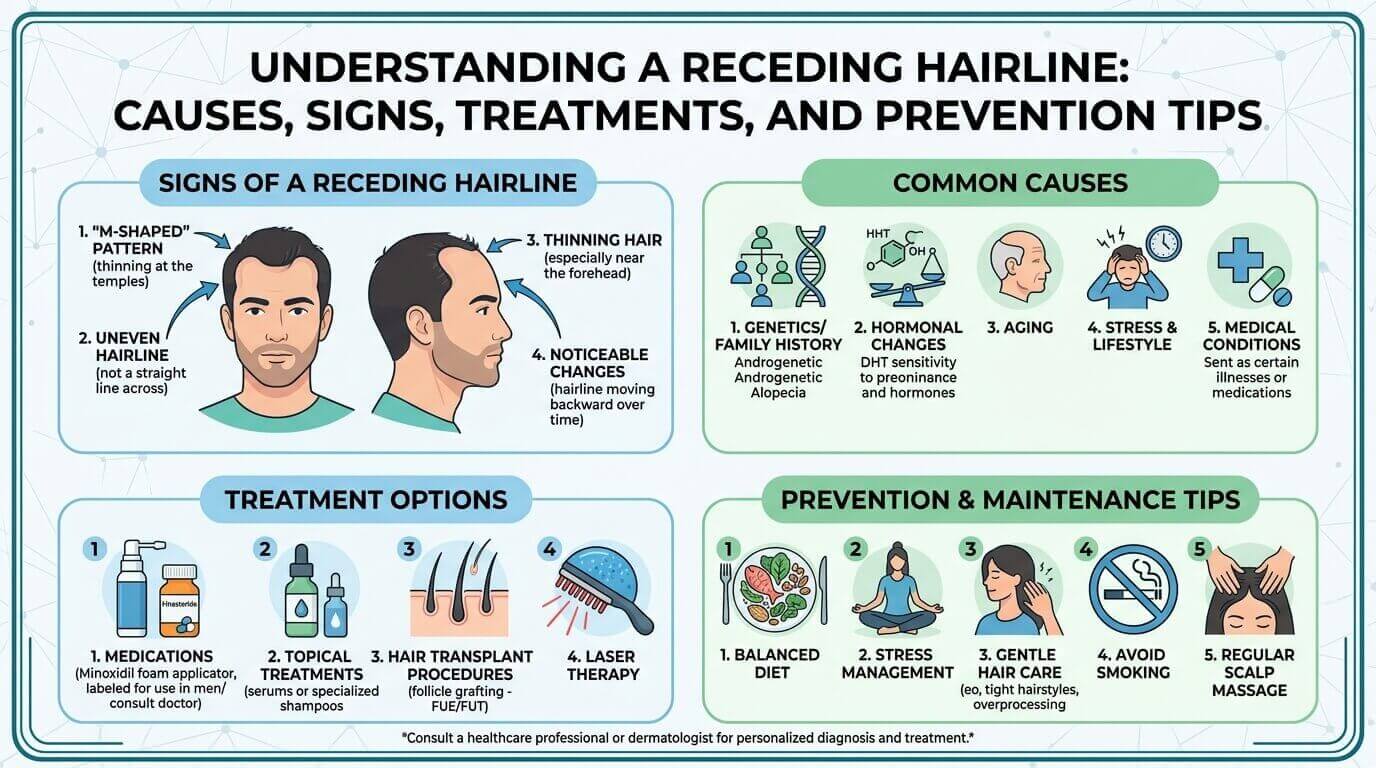
A receding hairline means the hair at the front of your head starts to thin or move back from its original line. For many people, it begins near the temples and creates an “M” shape. Some people notice it in their early 20s, while others see changes later in life.
A small change in the hairline can be normal with age, but if the hairline keeps moving back, it may be a sign of pattern hair loss. The good news is that noticing it early gives you more time to take action, understand the cause, and choose the right treatment or care plan.
2. Why a Receding Hairline Feels So Personal

Hair is not just hair for many people. It can be connected to confidence, style, age, identity, and how we feel when we look in the mirror. A receding hairline can make someone feel older than they are or worried that others will notice.
Some people start avoiding photos, changing hairstyles, or wearing hats more often. These feelings are normal. Hair loss is common, but that does not mean it is easy. The important thing is to treat yourself with patience and not panic. There are many ways to manage a changing hairline, from simple styling tricks to medical treatments.
3. Early Signs of a Receding Hairline
The early signs of a receding hairline can be easy to miss because hair loss often happens slowly. You may notice your forehead looks a little bigger, your temples look thinner, or your usual hairstyle does not sit the same way.
Some people see more scalp showing when their hair is wet or under bright light. Others find more hair in the shower, on a pillow, or in a comb, though shedding alone does not always mean the hairline is receding. Taking photos every few months in the same lighting can help you see whether the hairline is truly changing.
4. Common Causes of a Receding Hairline
The most common cause of a receding hairline is androgenetic alopecia, also called male or female pattern hair loss. This type of hair loss is linked to genetics and hormones. If close family members have thinning hair or baldness, your chances may be higher.
Hormones called androgens can make some hair follicles shrink over time, causing hair to become thinner, shorter, and weaker. Other causes may include stress, poor nutrition, tight hairstyles, scalp conditions, certain medicines, illness, or sudden weight loss. Finding the cause matters because treatment depends on why the hairline is changing.
5. Receding Hairline in Men
A receding hairline is very common in men and often starts at the temples. Over time, the hairline may move back more, and thinning may also appear at the crown of the head. This pattern is usually caused by sensitivity to DHT, a hormone made from testosterone.
DHT can slowly shrink hair follicles in people who are genetically sensitive to it. Not every man loses hair in the same way or at the same speed. Some men keep a mature hairline for years, while others experience faster thinning. Early treatment can often slow the process and help maintain density.
6. Receding Hairline in Women
Women can also develop a receding hairline, though the pattern may look different. Women more often notice widening of the part, thinning near the front, or less volume around the temples. Hormonal changes after pregnancy, during menopause, or due to conditions like polycystic ovary syndrome may play a role.
Tight hairstyles, extensions, harsh chemical treatments, and heat styling can also damage the front hairline. Because female hair loss can have many causes, it is helpful to speak with a dermatologist or healthcare provider before starting treatment. Blood tests may be needed to check iron, thyroid, hormones, or vitamin levels.
7. Mature Hairline vs Receding Hairline
A mature hairline and a receding hairline are not always the same thing. A mature hairline is a normal, slight movement of the hairline that often happens after the teenage years. It may move back a little, but then stay stable.
A receding hairline keeps moving backward over time and may come with thinning at the temples or crown. The difference is usually seen by tracking changes. If your hairline has looked the same for years, it may simply be mature. If it is slowly getting higher or thinner, it may be true recession and worth checking.
8. Can Stress Cause a Receding Hairline?
Stress can affect hair, but it does not always cause a classic receding hairline by itself. High stress can trigger a condition called telogen effluvium, where more hair than usual enters the shedding phase.
This often causes diffuse shedding all over the scalp rather than only at the temples. However, stress can make existing hair loss look worse and may affect sleep, diet, hormones, and scalp health. If hair loss began after illness, emotional stress, surgery, or a major life change, it may improve with time. Still, if your hairline keeps moving back, it is best to get a proper diagnosis.
9. Diet and Hairline Health
Your hair needs nutrients to grow well. A poor diet may not be the main cause of a receding hairline, but it can make hair weaker and thinner. Hair needs protein, iron, zinc, vitamin D, B vitamins, healthy fats, and enough calories.
Crash dieting or skipping meals can lead to shedding because the body may see hair growth as less important than survival. Good food choices include eggs, fish, beans, lentils, yogurt, nuts, seeds, leafy greens, fruits, and whole grains. Supplements may help if you are deficient, but taking random vitamins without testing is not always useful and can sometimes be harmful.
10. Hairstyles That Can Make the Hairline Worse
Some hairstyles can pull on the front hairline and lead to traction alopecia. This type of hair loss happens when tight pulling damages the hair follicles over time. Tight ponytails, braids, buns, cornrows, extensions, and heavy wigs can all stress the hairline if worn often or too tightly.
If your receding hairline is worse around the edges or temples and you often wear tight styles, changing your hairstyle may help prevent more damage. Choose looser styles, avoid constant tension, and give your scalp breaks. If traction alopecia is caught early, some hair may grow back, but long-term damage can become permanent.
11. Best Haircuts for a Receding Hairline
The right haircut can make a receding hairline look more balanced and natural. Shorter styles often work better because they reduce the contrast between thin and thick areas. Buzz cuts, crew cuts, textured crops, fades, and side-swept styles can help. Longer hair may sometimes highlight thinning because it separates and shows the scalp.
For women, soft layers, face-framing cuts, gentle bangs, and volume at the crown may help create a fuller look. A good barber or stylist can suggest a style that fits your face shape and hair density. The goal is not to hide in fear, but to choose a look that makes you feel confident.
12. Minoxidil for Receding Hairline
Minoxidil is one of the most common treatments used for hair loss. It is available as a liquid or foam and is applied to the scalp. Minoxidil may help some people slow hair loss and improve thickness, but results take time. Most people need to use it for at least 3 to 6 months before judging results, and it must be continued to maintain benefits.
Some users may notice temporary shedding at first, which can be scary but may happen as hair cycles change. Minoxidil does not work for everyone, and it is best to ask a dermatologist if it is right for your receding hairline.
13. Finasteride and Medical Treatments
Finasteride is a prescription medicine often used for male pattern hair loss. It works by lowering DHT levels, which may help slow a receding hairline and protect existing hair. Some men see thicker hair or slower hair loss after several months.
However, finasteride can have side effects, including sexual side effects in some users, so it should be discussed with a doctor. Dutasteride is another medicine sometimes used, depending on the country and medical advice. Women who are pregnant or may become pregnant should not handle certain hair loss medicines unless a doctor says it is safe. Medical treatments should always be chosen carefully.
14. PRP Therapy for Receding Hairline

PRP stands for platelet-rich plasma. In PRP therapy, a small amount of your blood is taken, processed, and injected into the scalp. The idea is that growth factors in the plasma may support hair follicles and improve thickness. Some people use PRP for a receding hairline, especially in early hair loss.
Results vary, and several sessions are usually needed. PRP can be expensive and is not a guaranteed cure, but it may be helpful for certain people when done by a trained professional. If you are considering it, ask about cost, expected results, risks, and whether you are a good candidate.
15. Hair Transplant for Receding Hairline
A hair transplant can be an option for people with a stable receding hairline who want a more permanent change. During a transplant, hair follicles are usually taken from the back or sides of the scalp and moved to the front hairline.
Modern methods can look natural when done well, but results depend on the surgeon’s skill, donor hair quality, hair loss pattern, and future hair loss risk. A transplant does not stop new hair loss, so some people still need medicine after the procedure. It is important to choose a qualified clinic and avoid rushed decisions based only on low prices.
16. Natural Remedies: What Helps and What Does Not
Many natural remedies claim to fix a receding hairline, but not all have strong proof. Scalp massage may improve blood flow and help you relax, but it is unlikely to reverse genetic hair loss alone. Oils like rosemary oil, coconut oil, or castor oil may improve scalp comfort or reduce dryness, but results vary.
Onion juice, herbal mixes, and homemade treatments can irritate the scalp in some people. Natural care can support hair health, but be careful with big promises. If a treatment claims to regrow all hair quickly, it is probably not realistic. Simple, consistent care is better than harsh experiments.
17. Scalp Care for Better Hair Growth
A healthy scalp creates a better environment for hair growth. If your scalp is itchy, flaky, oily, painful, or inflamed, it may affect hair quality. Dandruff, seborrheic dermatitis, psoriasis, and fungal infections can make shedding worse.
Use a gentle shampoo that suits your scalp, avoid scratching, and do not overload the hairline with heavy products. If you have flakes or itching, an anti-dandruff shampoo with ingredients like ketoconazole, zinc pyrithione, or selenium sulfide may help, but follow directions. Good scalp