1. What Are Sunken Eyes?
Sunken eyes mean the eyes look deeper in the eye sockets than usual. The area under the eyes may look hollow, dark, shadowy, or tired. Some people notice a deep line or groove under the lower eyelid, while others feel their whole face looks weak or older.
Sunken eyes can happen slowly over time or appear suddenly after illness, poor sleep, or dehydration. In many cases, they are not dangerous, but they can affect confidence because the face may look exhausted even when you feel fine. Understanding the cause is the first step to improving the appearance and protecting your health.
2. Common Signs of Sunken Eyes

Sunken eyes are usually easy to notice in the mirror, especially in bright light. You may see dark circles, hollow spaces under the eyes, thin skin, deep tear troughs, or shadows around the eye area. The eyes may look dull, dry, or tired.
Some people also notice fine lines, sagging skin, or a bony look around the eye sockets. If sunken eyes are caused by dehydration, you may also feel thirsty, dizzy, weak, or have dry lips. If they are linked to lack of sleep, you may feel heavy-eyed, moody, and low in energy during the day.
3. Why Do Sunken Eyes Happen?
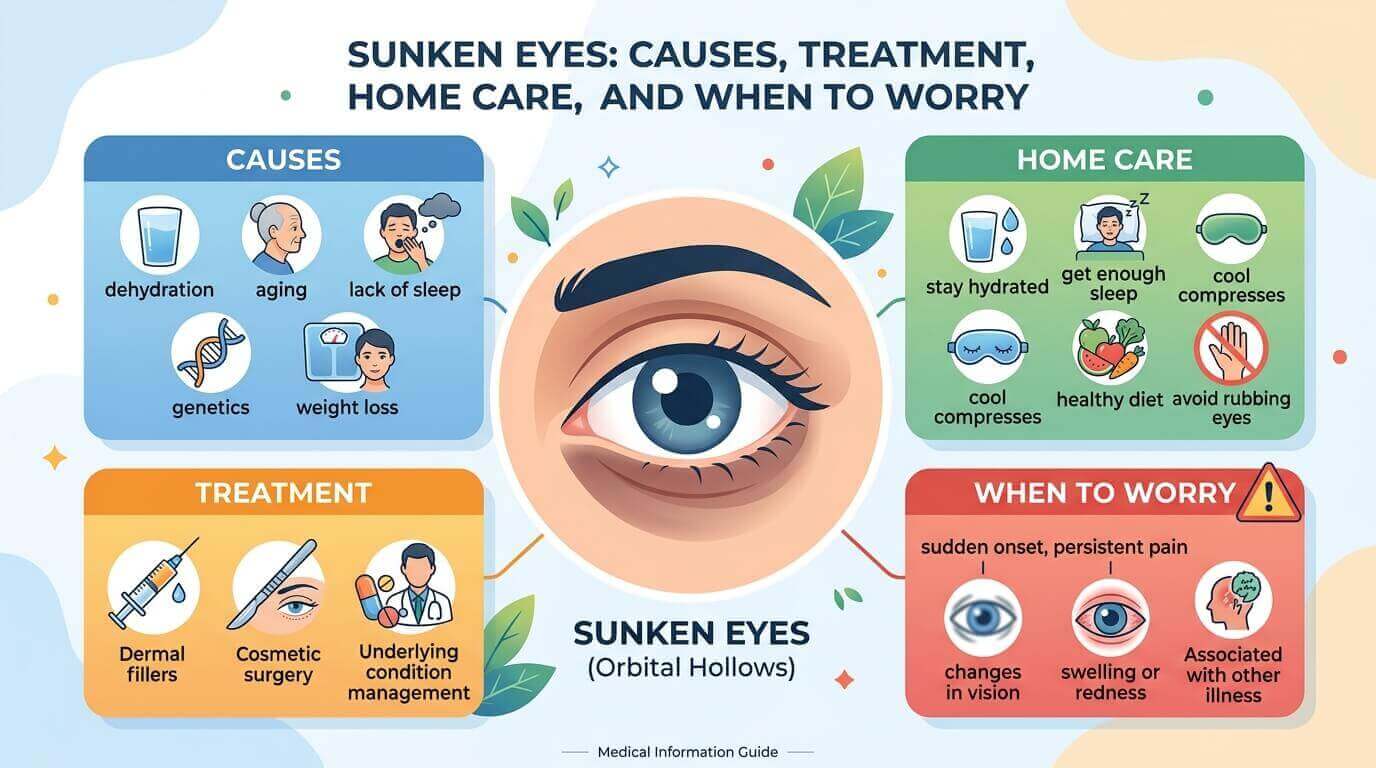
Sunken eyes happen when the area around the eyes loses volume, moisture, or support. The skin under the eyes is very thin, so even small changes are visible. Loss of fat, collagen, and hydration, poor sleep, and illness can make the eyes look hollow.
Genetics also plays a big role. Some people naturally have deeper-set eyes or thinner under-eye skin, so shadows appear more easily. In other cases, sunken eyes may develop after sudden weight loss, stress, smoking, allergies, or long-term health problems. The reason can be simple or complex, depending on the person.
4. Dehydration and Sunken Eyes
Dehydration is one of the most common causes of sudden sunken eyes. When your body does not have enough water, the skin loses moisture and may look dry, loose, or hollow. The eyes may also look tired because the tissues around them are not as full as usual.
Dehydration can happen from not drinking enough water, sweating a lot, vomiting, diarrhea, fever, or drinking too much alcohol or caffeine. Mild dehydration often improves with fluids and rest. However, severe dehydration can be serious, especially in babies, older adults, and sick people. Signs like confusion, very little urine, a fast heartbeat, or extreme weakness need urgent medical help.
5. Lack of Sleep and Tired Eyes
Poor sleep can quickly make the eyes look sunken and dark. When you do not sleep enough, blood flow and fluid balance around the eyes can change, causing shadows and puffiness in some people and hollowness in others.
Lack of sleep can also make the skin look pale, which makes dark circles and sunken areas more visible. If you sleep late often, wake up many times at night, or spend long hours on screens, the eye area may look dull and strained. A regular sleep routine, less screen time before bed, and proper rest can make a visible difference over time.
6. Aging and Loss of Facial Volume
Aging is a natural reason for sunken eyes. As we get older, the body produces less collagen and elastin, which are proteins that keep skin firm and smooth. The fat pads under the eyes may also shrink or move downward, creating a hollow look.
Bones around the eyes can also change slowly with age, making the eye socket appear deeper. This is normal and happens to many people, but the speed can depend on genetics, sun exposure, smoking, diet, and skincare habits. While aging cannot be stopped completely, healthy habits and good skin care can slow visible changes.
7. Weight Loss and Hollow Under-Eyes
Fast or major weight loss can lead to sunken eyes because the face may lose fat along with the rest of the body. The under-eye area has very little padding, so it can look hollow quickly when body fat drops.
This may happen after dieting, illness, stress, or appetite loss. If weight loss is planned and healthy, the eye area may settle with time. But if weight loss is sudden, unexplained, or comes with weakness, fever, night sweats, stomach problems, or loss of appetite, it is important to see a doctor. Unexplained weight loss can sometimes point to a medical condition.
8. Stress and Sunken Eyes
Stress can affect your face more than you may think. Long-term stress can disturb sleep, reduce appetite, increase muscle tension, and make you forget basic self-care like drinking water or eating balanced meals. Over time, this can make sunken eyes more noticeable.
Stress can also increase inflammation in the body and make skin look dull or tired. Many people under stress also rub their eyes more, drink more coffee, or use screens late at night, which can worsen the look of the under-eye area. Managing stress with simple steps like walking, deep breathing, rest, and routine can help your face look healthier.
9. Allergies and Eye Irritation
Allergies can make the under-eye area look darker, tired, and sometimes sunken. Nasal allergies can cause congestion, which may affect blood flow under the eyes and create dark shadows known as allergic shiners. Eye rubbing can also irritate thin skin and make it look darker or more wrinkled.
Common allergy triggers include dust, pollen, pet hair, mold, and certain foods or cosmetics. If your sunken eyes come with itching, sneezing, watery eyes, blocked nose, or frequent rubbing, allergies may be part of the problem. Treating allergies and avoiding triggers can improve the appearance of the eyes.
10. Smoking, Alcohol, and Lifestyle Habits
Smoking and alcohol can both contribute to sunken eyes. Smoking damages collagen, reduces blood flow to the skin, and speeds up aging. This can make under-eye skin thinner and more wrinkled. Alcohol can dehydrate the body and affect sleep quality, which may make the eyes look hollow and tired the next day.
Too much caffeine may also contribute to dehydration if you do not drink enough water. A lifestyle with poor food, little sleep, and no exercise can make the skin look weak over time. Reducing smoking, limiting alcohol, drinking water, and eating better can help the eye area look fresher.
11. Nutrition Deficiency and Sunken Eyes

A poor diet can make sunken eyes worse because the skin needs nutrients to stay strong and healthy. Low iron, vitamin B12, vitamin C, vitamin K, protein, or healthy fats may affect skin tone, energy, and tissue repair. Iron deficiency can also cause pale skin and dark circles, making the eyes appear deeper.
People who skip meals, follow very strict diets, or eat mostly processed foods may not get enough nutrients. Adding protein, fruits, vegetables, nuts, seeds, whole grains, and enough fluids can support healthier skin. If you feel very tired or weak, a doctor may suggest blood tests.
12. Sunken Eyes in Babies and Children
Sunken eyes in babies and children should be taken seriously, especially if they appear suddenly. In children, sunken eyes can be a sign of dehydration from diarrhea, vomiting, fever, or not drinking enough fluids. Other warning signs include dry mouth, no tears when crying, fewer wet diapers, unusual sleepiness, fast breathing, or cold hands and feet.
Babies can become dehydrated faster than adults, so medical care should not be delayed. If a child looks very weak, refuses fluids, has ongoing vomiting or diarrhea, or has sunken eyes with fever, contact a doctor or emergency service quickly.
13. Medical Conditions That May Cause Sunken Eyes
Sometimes sunken eyes are linked to health problems. Conditions that cause dehydration, weight loss, poor nutrition, chronic infection, thyroid problems, digestive disease, or long-term inflammation may affect the face and eye area. Severe sinus problems or long-term allergies may also change the look around the eyes.
In rare cases, changes around one eye only may be related to injury, nerve problems, or other medical issues. If your eyes suddenly look sunken without a clear reason, or if one eye looks different from the other, it is best to get checked. A doctor can help find the cause instead of guessing.
14. When Should You Worry About Sunken Eyes?
You should worry about sunken eyes if they appear suddenly, keep getting worse, or come with other symptoms. Warning signs include severe thirst, dizziness, fainting, confusion, ongoing vomiting, diarrhea, fever, unexplained weight loss, extreme tiredness, eye pain, vision changes, or swelling around one eye.
You should also seek medical advice if one eye looks sunken while the other looks normal, especially after injury or illness. In many people, sunken eyes are harmless and cosmetic, but sudden changes can be your body’s way of showing that something is wrong. Getting early advice can prevent bigger problems.
15. How Doctors Diagnose the Cause
A doctor or healthcare provider may ask when you first noticed the sunken eyes, whether the change was sudden or gradual, and if you have other symptoms. They may ask about sleep, diet, water intake, stress, weight changes, medicines, allergies, and medical history.
In some cases, they may check your blood pressure, hydration level, eyes, skin, thyroid, or weight. Blood tests may be suggested if a deficiency, thyroid issue, infection, or other health problem is suspected. If the concern is mainly cosmetic, a dermatologist or skin specialist may look at skin thickness, volume loss, and under-eye structure.
16. Home Remedies for Sunken Eyes
Home care can help improve mild sunken eyes, especially when the cause is lifestyle-related. Start by drinking enough water during the day and eating balanced meals with protein, vegetables, fruits, and healthy fats. Try to sleep 7 to 9 hours if possible and keep a steady sleep schedule.
Cold compresses can help reduce tiredness and improve the look of the eye area for a short time. Gentle massage may support circulation, but avoid pulling the thin skin under the eyes. Home remedies work best when used consistently, not just once. If the cause is aging or genetics, home care may help, but may not fully remove hollowness.
17. Best Foods for Healthier Under-Eye Skin
Food can support healthier skin from the inside. For sunken eyes, focus on foods that provide protein, vitamins, minerals, and hydration. Good options include eggs, fish, beans, lentils, yogurt, nuts, seeds, leafy greens, citrus fruits, berries, carrots, sweet potatoes, and avocados.
Vitamin C supports collagen, protein helps repair tissue, and healthy fats support skin moisture. Iron-rich foods like spinach, beans, meat, or fortified foods may help if iron is low. Drinking enough water is also important because even the best diet will not help much if the body is dehydrated. A steady, balanced diet is better than quick fixes.
18. Skincare Tips for Sunken Eyes

Skincare can help the under-eye area look smoother and brighter, but it should be gentle. Use a mild cleanser, a good moisturizer, and sunscreen every day. Sun damage can break down collagen and make under-eye hollows and wrinkles more visible.
Ingredients like hyaluronic acid can help hold moisture, while vitamin C, niacinamide, and retinol may improve skin texture over time. Retinol should be used carefully near the eyes because it can irritate sensitive skin. Do not rub harsh creams into the under-eye area. Apply products gently with your ring finger and stop using anything that burns, stings, or causes swelling.
19. Medical and Cosmetic Treatments
If sunken eyes are caused by volume loss or aging, medical cosmetic treatments may help. Some people choose dermal fillers to add volume under the eyes and reduce hollowness. Others may consider laser treatments, microneedling, chemical peels, or skin-tightening treatments depending on their skin type and concern.
These treatments should only be done by trained and licensed professionals because the under-eye area is delicate. Poorly done fillers or treatments can cause swelling, uneven results, or serious complications. Before any procedure, ask about risks, experience, expected results, cost, and recovery time. Natural appearance should always be the goal.
20. How to Prevent Sunken Eyes
You may not be able to prevent sunken eyes completely, especially if they are caused by genetics or aging, but you can reduce the risk of making them worse. Drink enough water, sleep well, avoid smoking, limit alcohol, protect your skin from the sun, and eat a nutrient-rich diet.
Treat allergies early so you do not keep rubbing your eyes. Take breaks from screens to reduce eye strain. Avoid crash diets that cause fast weight loss. A healthy lifestyle may not give instant results, but it can keep your skin and face looking better over time. Small daily habits matter more than expensive quick fixes.
Final Thoughts
Sunken eyes can happen for many reasons, including dehydration, lack of sleep, aging, weight loss, stress, allergies, poor nutrition, and some medical conditions. In many cases, simple changes like drinking more water, sleeping better, eating well, and caring for your skin can help improve the look of the eyes.
However, sudden or severe sunken eyes should not be ignored, especially if they come with weakness, vomiting, diarrhea, weight loss, pain, or vision changes. Your eyes and face often reflect what is happening inside your body. If you are unsure about the cause, getting medical advice is the safest and smartest step.