Introduction
If you have ever stood in line at a coffee shop, staring at the menu and wondering what the actual difference is between a cappuccino and a latte, you are not alone. These two espresso-based drinks are staples on nearly every café menu around the world, yet they are often confused or used interchangeably by people who are not well-versed in coffee culture.
While they share some common ingredients, the proportions and preparation methods make them distinctly different experiences in both flavor and texture. Understanding the nuances of cappuccino vs latte can transform the way you order your morning coffee and help you discover which drink truly suits your taste preferences. This guide will break down everything you need to know about these two beloved beverages, from their origins and ingredients to their ideal serving conditions and how to make them at home.
The Origins of Cappuccino and Latte

To truly appreciate the cappuccino vs latte debate, it helps to understand where these drinks come from. The cappuccino has deep roots in Italian coffee culture, with its name believed to be derived from the Capuchin friars, whose brown robes resembled the color of the drink when espresso is mixed with frothed milk. The cappuccino as we know it today became popular in Italy in the early 20th century, particularly after the invention of the espresso machine, which made it possible to create the signature frothy milk topping.
The latte, on the other hand, has a slightly more modern origin. While the term “caffè latte” simply means “milk coffee” in Italian, the latte as it is served in coffee shops today is largely an American invention. It was popularized in the United States in the 1980s and 1990s as coffee culture began to boom, particularly in cities like Seattle. The latte was designed to appeal to those who wanted a milder, creamier coffee experience without the intensity of straight espresso or the strong coffee-to-milk ratio of a traditional cappuccino.
Breaking Down the Ingredients
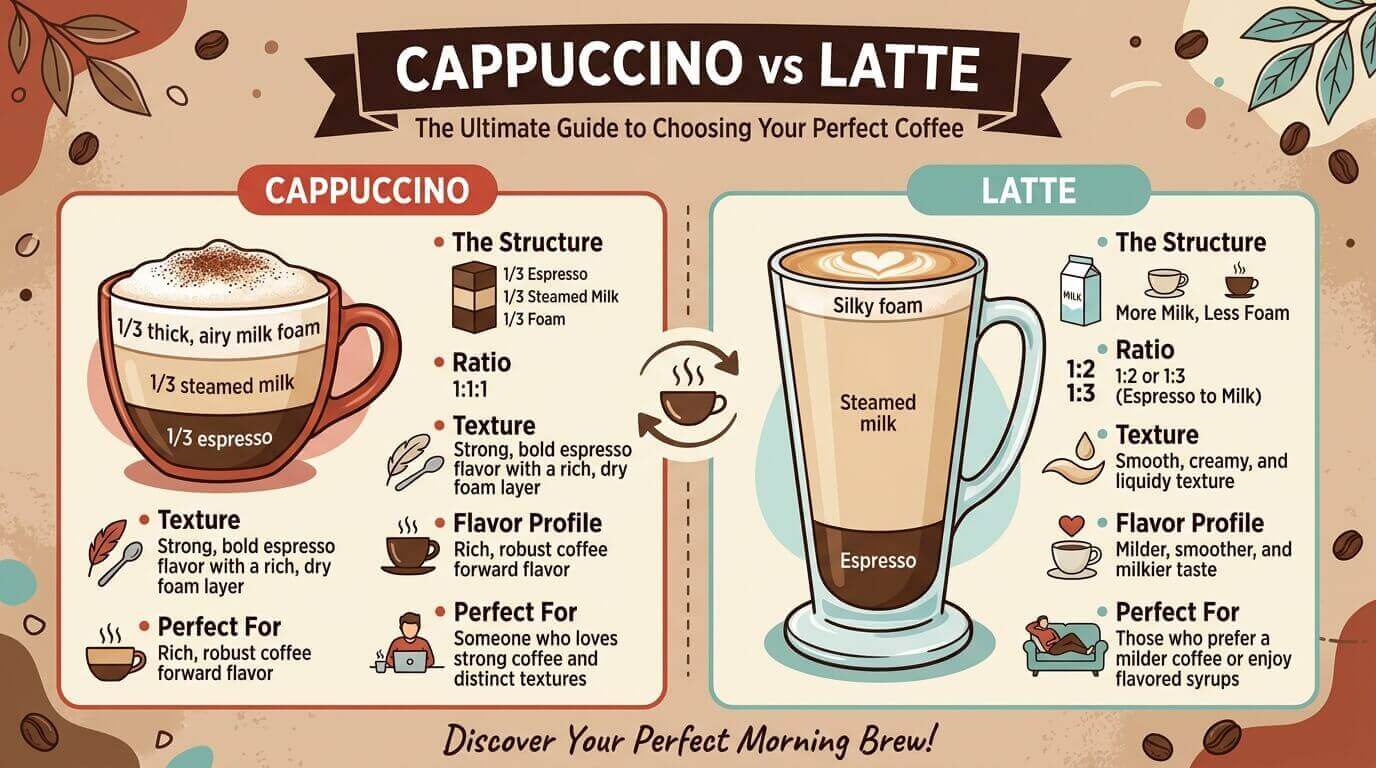
At first glance, the ingredients in a cappuccino and a latte seem almost identical: both drinks are made with espresso and steamed milk. However, the magic lies in the proportions and the way the milk is prepared. A traditional cappuccino is composed of one-third espresso, one-third steamed milk, and one-third milk foam. This creates a drink that is strong, bold, and has a thick, airy foam on top that provides a distinct texture with every sip.
The foam is an essential part of the cappuccino experience, and skilled baristas often create intricate latte art on the surface of the foam, although the foam itself is more voluminous and less smooth than that of a latte. A latte, in contrast, is made with one or two shots of espresso, a generous amount of steamed milk, and just a thin layer of milk foam on top. The ratio is typically about one part espresso to three or four parts milk, making the latte much milkier and milder than a cappuccino. The foam in a latte is minimal, serving more as a light topping than a substantial component of the drink.
The Role of Espresso in Each Drink
Espresso is the foundation of both cappuccino and latte, and the quality of the espresso can make or break either drink. A shot of espresso is made by forcing hot water through finely ground coffee beans under high pressure, resulting in a concentrated, flavorful coffee with a rich crema on top. In a cappuccino, the espresso is more prominent because the overall volume of the drink is smaller and the ratio of espresso to milk is higher.
This means that the bold, slightly bitter notes of the espresso are front and center, balanced by the sweetness and creaminess of the milk and foam. In a latte, the espresso is more subdued, as it is diluted by a much larger quantity of steamed milk. This makes the latte a gentler, smoother drink that still has the coffee flavor but is less intense. For those who find straight espresso too strong but still want to taste the coffee, a latte is often the preferred choice. The cappuccino, on the other hand, is for those who want a stronger coffee flavor without sacrificing the creamy texture that milk provides.
The Texture and Mouthfeel
One of the most noticeable differences between cappuccino and latte is the texture and mouthfeel of each drink. A cappuccino is characterized by its thick, velvety foam, which gives the drink a light, airy quality. When you take a sip, you get a combination of rich espresso, creamy steamed milk, and frothy foam all at once, creating a multi-layered sensory experience.
The foam in a cappuccino is dry and dense, meaning it holds its shape and sits on top of the drink rather than mixing in. This creates a distinct separation between the layers, which is part of the traditional appeal of the cappuccino. A latte, by contrast, has a much smoother, more homogeneous texture. The steamed milk is fully integrated with the espresso, creating a silky, creamy consistency throughout the drink. The small amount of foam on top is smooth and glossy, often used as a canvas for latte art. When you drink a latte, the experience is more uniform and less about distinct layers. It is a comforting, creamy drink that goes down easily and is often enjoyed slowly over a longer period.
Serving Size and Presentation
Another key difference in the cappuccino vs latte discussion is the typical serving size and how each drink is presented. A traditional Italian cappuccino is served in a small, wide cup, usually around 5 to 6 ounces. This smaller size is intentional, as it allows the drinker to enjoy the concentrated flavors and the rich foam without diluting the experience. In many Italian cafés, cappuccinos are considered a morning drink and are rarely ordered after 11 a.m.
A latte, on the other hand, is typically served in a larger cup, ranging from 8 to 16 ounces or more, especially in American coffee shops. The larger size is necessary to accommodate the greater volume of milk. Lattes are often served in tall glasses or wide ceramic mugs, and the presentation is usually more polished, with baristas taking time to create intricate latte art on the surface. This visual appeal is part of the latte’s charm, making it a popular choice for social media photos and a more leisurely coffee experience.
Flavor Profiles: Bold vs Creamy
The flavor profile is where the cappuccino vs latte comparison becomes very personal. A cappuccino has a more intense, espresso-forward flavor. The higher ratio of coffee to milk means that the natural bitterness and acidity of the espresso are more pronounced. This is balanced by the sweetness of the milk and the airy texture of the foam, but the coffee itself remains the star of the show. If you enjoy the taste of coffee and want a drink that highlights the quality of the espresso, a cappuccino is the way to go.
A latte, on the other hand, has a much milder, creamier flavor. The larger amount of milk softens the intensity of the espresso, creating a smooth, sweet drink that is less about the coffee and more about the overall harmony of flavors. Lattes are often flavored with syrups like vanilla, caramel, or hazelnut, which blend seamlessly with the creamy milk. While you can add flavors to a cappuccino, the strong coffee flavor can sometimes overpower subtle syrups, whereas lattes provide a blank canvas that complements added flavors beautifully.
Caffeine Content: What to Expect
When it comes to caffeine, the amount in a cappuccino vs latte is often similar, as both drinks are typically made with the same number of espresso shots—usually one or two. However, the caffeine concentration per sip differs due to the varying volumes of milk. A cappuccino, being smaller, delivers a more concentrated dose of caffeine in each sip, while a latte spreads the same amount of caffeine over a larger volume, making it feel less intense.
If you are looking for a quick caffeine boost without a large drink, a cappuccino is ideal. If you prefer to sip a larger, more satisfying beverage over a longer period while still getting your caffeine fix, a latte is the better choice. It is also worth noting that the perception of strength is influenced by flavor—since cappuccinos taste more robust, many people assume they contain more caffeine, even when the actual content is the same.
When to Order a Cappuccino
Knowing when to order a cappuccino can enhance your coffee experience. Traditionally, cappuccinos are a morning drink in Italy, enjoyed alongside a pastry or a light breakfast. The smaller size and bold flavor make it a perfect wake-up call that does not feel too heavy or overly filling. If you are someone who enjoys the ritual of a quick, strong coffee to start your day, a cappuccino is an excellent choice.
It is also ideal for those who appreciate the artistry of coffee and want to savor the distinct layers of espresso, milk, and foam. Cappuccinos are best enjoyed fresh, as the foam can start to dissipate over time, so they are not ideal for long, leisurely sipping sessions. If you are meeting a friend for a quick coffee before work or need a mid-morning pick-me-up, a cappuccino is the perfect companion.
When to Order a Latte

A latte, with its larger size and creamier texture, is perfect for different occasions. If you are settling in for a long study session at a café, a latte provides a comforting, warm beverage that can be enjoyed over an extended period. The milder flavor also makes it a great choice for those who are new to coffee or who prefer a less intense taste.
Lattes are incredibly versatile and can be customized with a wide range of flavors, making them a popular choice for those who like to experiment with seasonal drinks like pumpkin spice or peppermint mocha. They are also a great afternoon or evening drink, as the larger volume and lower coffee-to-milk ratio make them less intense than a cappuccino. If you are looking for a drink that is as much about comfort and creaminess as it is about coffee, a latte is the ideal choice.
Making a Cappuccino at Home
If you want to make a cappuccino at home, the process is relatively simple, though it does require some practice to perfect the foam. Start by brewing a shot of espresso using an espresso machine. If you do not have one, a stovetop moka pot or a strong French press coffee can serve as a substitute, though the flavor will be slightly different. While the espresso is brewing, heat your milk in a saucepan or steam it using a milk frother or the steam wand on an espresso machine.
The goal is to create thick, velvety foam that is dense and dry. Pour the steamed milk into a cup with the espresso, holding back the foam with a spoon. Once the liquid is in, spoon the foam on top, creating that signature thick layer. Dust with a bit of cocoa powder or cinnamon if desired, and enjoy your homemade cappuccino.
Making a Latte at Home
Making a latte at home is even easier than a cappuccino, as it requires less foam and is more forgiving in terms of technique. Brew one or two shots of espresso and pour them into a large mug. Steam your milk until it is hot and has a small amount of smooth, glossy foam on top. Pour the steamed milk into the espresso, holding back the foam with a spoon until the end.
Once the milk is in, use a spoon to add a thin layer of foam on top. If you want to try your hand at latte art, pour the milk in a slow, steady stream from a height, then bring the pitcher closer to the surface to create designs like hearts or rosettas. Add any flavored syrups before the milk if you want a vanilla latte, caramel latte, or other flavored variation.
Health Considerations
When comparing cappuccino vs latte from a health perspective, the main difference lies in the amount of milk. A latte contains significantly more milk, which means it has more calories, fat, and sugar (from the natural lactose in milk) than a cappuccino.
If you are watching your calorie intake, a cappuccino is the lighter option. However, lattes can be made healthier by choosing low-fat or non-dairy milk alternatives like almond, oat, or soy milk. Both drinks can be part of a balanced diet when consumed in moderation, and the choice ultimately depends on your personal health goals and dietary preferences.
Cultural Significance and Coffee Trends
The cappuccino and latte have both played significant roles in the global coffee culture. The cappuccino represents the traditional Italian coffee experience, steeped in history and ritual. It is a symbol of quality and craftsmanship, often enjoyed standing at a bar in Italy.
The latte, meanwhile, represents the modern, globalized coffee culture that emphasizes customization, comfort, and accessibility. It has become a canvas for creativity, from flavor innovations to latte art competitions. Both drinks continue to evolve, with new variations and twists appearing regularly, but their core appeal remains timeless.
Final Thoughts
In the end, the choice between cappuccino vs latte comes down to personal preference. If you love bold, intense coffee flavor and appreciate the artistry of a thick, foamy top, the cappuccino is your drink. If you prefer a milder, creamier coffee experience that you can savor slowly, the latte is the better choice.
Both drinks offer unique pleasures and can be enjoyed in different contexts, depending on your mood, the time of day, and your taste preferences. Now that you understand the key differences, you can confidently order—or make—the perfect cup every time.