Introduction
If you have ever wandered down the refrigerated aisle of a grocery store and spotted those white blocks sitting in plastic tubs filled with water, you have likely encountered tofu. It is a staple in many kitchens around the world, particularly in Asian cuisine, and has become increasingly popular in Western diets as more people explore plant-based eating.
But despite its growing presence on dinner plates, many people still wonder: what is tofu made of? The answer is simpler than you might think, yet the process of making it is both fascinating and rooted in centuries of culinary tradition. In this guide, we will explore the ingredients, production methods, nutritional benefits, and versatile uses of tofu, giving you a complete understanding of this humble yet powerful food.
The Main Ingredient: Soybeans

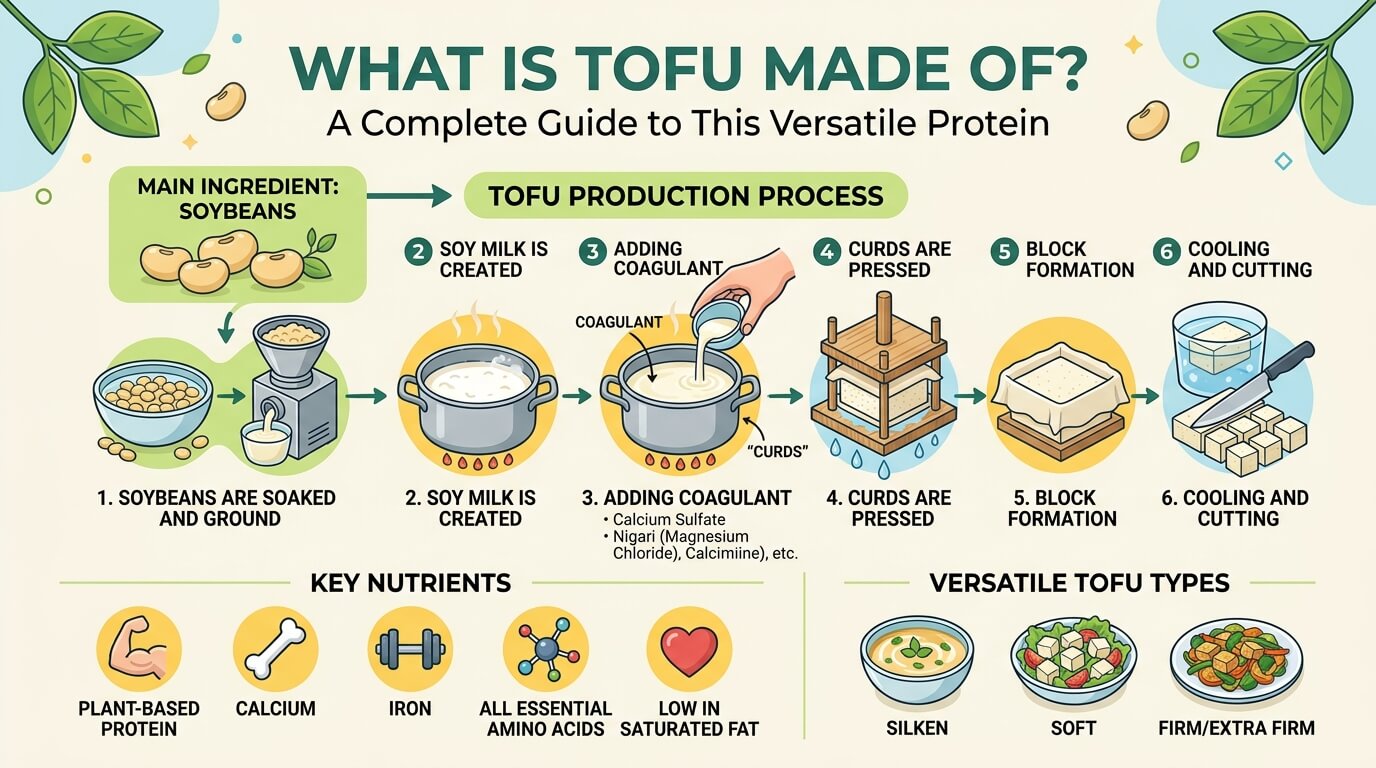
At its core, tofu is made from soybeans. These small, nutrient-dense legumes are the foundation of tofu production and have been cultivated in East Asia for thousands of years. Soybeans are unique among plant-based proteins because they contain all nine essential amino acids, making them a complete protein source, which is relatively rare in the plant kingdom. When you ask what tofu is made of, the answer begins and ends with these powerful little beans.
The process of turning soybeans into tofu is similar in principle to how milk is turned into cheese—it involves curdling and pressing to create a solid block. The soybeans are soaked, ground, and cooked to produce soy milk, which then serves as the base for tofu. The quality and type of soybeans used can affect the flavor and texture of the final product, which is why many tofu producers take great care in sourcing their beans.
The Role of Water in Tofu Production
Water is the second essential ingredient when discussing what tofu is made of. Clean, fresh water is used at multiple stages of the tofu-making process, from soaking the soybeans to creating the soy milk and even in the final packaging. The water helps soften the beans, making them easier to grind and extract the maximum amount of liquid.
Once the soybeans are blended with water, the mixture is cooked and strained to separate the fibrous pulp, called okara, from the smooth, creamy soy milk. The quality of the water can influence the taste of the tofu, which is why traditional tofu makers often emphasize the importance of using pure, mineral-rich water. In fact, in some regions of Japan and China, certain areas are famous for their tofu specifically because of the quality of their local water sources.
Coagulants: The Key to Curdling Soy Milk
The transformation from soy milk to tofu requires a coagulant, which is a substance that causes the proteins in the soy milk to clump together and form curds. This is the critical step that turns a liquid into a solid, and it is central to understanding what tofu is made of. There are several types of coagulants commonly used in tofu production, and the choice of coagulant can affect the texture, flavor, and nutritional profile of the final product.
The most traditional coagulant is nigari, which is derived from seawater and contains magnesium chloride. Nigari produces a slightly firmer tofu with a subtle, clean flavor. Another common coagulant is gypsum, also known as calcium sulfate, which creates a softer, silkier tofu and adds a significant amount of calcium to the finished product. Some producers use lemon juice or vinegar as natural acids to curdle the soy milk, though this method is less common in commercial production. Each coagulant brings its own unique qualities to the tofu, and experienced tofu makers carefully select the right one based on the desired outcome.
The Tofu-Making Process: From Bean to Block
Understanding what is tofu made of also involves appreciating the craftsmanship and technique that go into its production. The process begins with soaking dried soybeans in water for several hours or overnight, which softens them and makes them easier to grind. Once soaked, the beans are blended with fresh water to create a thick slurry. This mixture is then cooked to break down the beans and release their proteins and flavors. After cooking, the mixture is strained through a fine cloth or mesh to separate the soy milk from the okara, the fibrous pulp left behind.
The okara is not wasted—it is often used in baking, animal feed, or composting. The freshly extracted soy milk is then heated and combined with the chosen coagulant, which causes the proteins to curdle and form soft, delicate curds. These curds are carefully scooped into molds lined with cloth, and pressure is applied to press out excess water and compact the curds into a solid block. The amount of pressure and the length of time the tofu is pressed determine its final texture, ranging from silken and soft to extra firm.
Different Types of Tofu and Their Textures
When exploring what is tofu made of, it is important to recognize that not all tofu is the same. There are several distinct types, each with its own texture and best uses in cooking. Silken tofu, also known as soft tofu, has a high water content and a delicate, custard-like texture. It is often used in soups, smoothies, desserts, and sauces because it blends easily and adds creaminess without a strong flavor.
Soft tofu is slightly firmer than silken but still quite tender, making it ideal for dishes where you want the tofu to absorb flavors without falling apart. Medium tofu strikes a balance between soft and firm, holding its shape reasonably well while still being tender enough for stir-fries and braises.
Firm tofu is the most versatile and popular type, with a dense texture that holds up well to frying, baking, and grilling. Extra firm tofu has the lowest water content and the most substantial texture, making it perfect for dishes that require the tofu to maintain its shape, such as kebabs or crispy baked tofu. Each type is made from the same basic ingredients but varies in how much water is pressed out during production.
Nutritional Benefits of Tofu
One of the reasons tofu has become so popular, especially among those following vegetarian or vegan diets, is its impressive nutritional profile. When considering what is tofu made of, it is worth noting that the simplicity of its ingredients translates into a food that is both wholesome and nutritious. Tofu is an excellent source of plant-based protein, providing all nine essential amino acids.
A typical serving of firm tofu contains around 10 grams of protein, making it comparable to many animal-based proteins. It is also low in calories and contains no cholesterol, which is beneficial for heart health. Tofu is a good source of iron, calcium (especially when made with calcium sulfate), and magnesium, all of which are important for bone health, energy production, and muscle function.
Additionally, tofu contains compounds called isoflavones, which are plant-based phytoestrogens that have been studied for their potential health benefits, including supporting heart health and reducing the risk of certain cancers. The fat content in tofu is relatively low, and the fats it does contain are primarily unsaturated, which are considered heart-healthy fats.
How Tofu Absorbs Flavors

One of the most appealing characteristics of tofu is its ability to absorb the flavors of whatever it is cooked with. Because tofu itself has a very mild, neutral taste, it acts like a sponge, soaking up marinades, sauces, and spices. This makes it incredibly versatile in the kitchen, as it can be adapted to suit a wide range of cuisines and flavor profiles. To maximize flavor absorption, many cooks recommend pressing the tofu to remove excess water before cooking.
This can be done by wrapping the tofu in a clean towel and placing a heavy object on top for 15 to 30 minutes. Once pressed, the tofu has a denser texture and more room to soak up the delicious flavors you introduce. Marinating tofu in soy sauce, garlic, ginger, sesame oil, or other seasonings can infuse it with bold, savory flavors. Whether you are making a spicy stir-fry, a creamy curry, or crispy baked tofu bites, the key to great-tasting tofu is treating it as a blank canvas and giving it the time and ingredients it needs to shine.
Common Misconceptions About Tofu
Despite its popularity, there are several misconceptions about tofu that can deter people from trying it. One common myth is that tofu is flavorless and boring. While it is true that tofu has a mild taste on its own, this is actually one of its greatest strengths, as it allows it to take on the flavors of the dish it is prepared in. Another misconception is that tofu is only for vegetarians or vegans.
In reality, tofu is enjoyed by people of all dietary preferences, including meat-eaters who appreciate its versatility and nutritional benefits. Some people also worry that consuming tofu and other soy products can have negative health effects due to the presence of isoflavones. However, extensive research has shown that moderate consumption of soy foods like tofu is safe and can even be beneficial for most people. Understanding what is tofu made of—simple, natural ingredients—can help dispel these myths and encourage more people to incorporate this nutritious food into their diets.
How to Store Tofu Properly
Proper storage is essential to maintaining the freshness and quality of tofu. Most tofu is sold in water-filled packages, and once opened, it should be kept submerged in fresh water in an airtight container in the refrigerator. Change the water daily to keep the tofu fresh for up to a week. If the tofu develops a sour smell or slimy texture, it has gone bad and should be discarded. Unopened packages of tofu can often be stored in the refrigerator for several weeks, but always check the expiration date.
Tofu can also be frozen, though this changes its texture, making it chewier and more porous. Frozen tofu is excellent for dishes where you want a firmer, meatier texture, such as stir-fries or grilled skewers. To freeze tofu, drain it, cut it into portions, and place it in a freezer-safe container. When you are ready to use it, thaw it in the refrigerator and press out the excess water before cooking.
Cooking Methods That Bring Out the Best in Tofu
There are countless ways to cook tofu, and experimenting with different methods can help you discover your favorite preparations. Pan-frying or stir-frying tofu in a bit of oil until it is golden and crispy on the outside is one of the most popular methods, as it creates a satisfying contrast between the crispy exterior and the soft interior. Baking tofu in the oven is another great option, especially if you want to prepare a large batch.
Simply cut the tofu into cubes or slabs, toss with your favorite seasonings, and bake at a high temperature until crispy. Grilling tofu adds a smoky flavor and appealing grill marks, making it perfect for summer barbecues. Tofu can also be scrambled, similar to eggs, by crumbling it and cooking it with vegetables and spices for a protein-packed breakfast. Silken tofu can be blended into smoothies, soups, or desserts for added creaminess and nutrition. The possibilities are truly endless, and once you understand what is tofu made of and how it behaves in the kitchen, you can confidently incorporate it into your cooking repertoire.
Tofu in Global Cuisines
While tofu originated in China over 2,000 years ago, it has since become a beloved ingredient in cuisines around the world. In Japan, tofu is featured in dishes like miso soup, where soft tofu cubes float in a savory broth, and agedashi tofu, where cubes of tofu are lightly fried and served in a flavorful dashi sauce.
Korean cuisine includes dishes like sundubu-jjigae, a spicy soft tofu stew, and dubu-kimchi, where tofu is served alongside stir-fried kimchi and pork. In Southeast Asia, tofu is commonly used in curries, noodle dishes, and as a filling for spring rolls. Western cuisines have also embraced tofu, incorporating it into burgers, tacos, pasta dishes, and even desserts. This global appreciation for tofu speaks to its versatility and the universal appeal of its simple, wholesome ingredients.
Conclusion
So, what is tofu made of? At its essence, tofu is a beautifully simple food made from soybeans, water, and a coagulant. Yet this simplicity is what makes it so remarkable. Tofu is a blank canvas that can be transformed into countless delicious dishes, a nutritional powerhouse that supports health and well-being, and a sustainable protein source that is kinder to the planet than many animal-based options.
Whether you are new to tofu or a longtime fan, understanding its ingredients and production process deepens your appreciation for this ancient food. By experimenting with different types, textures, and cooking methods, you can unlock the full potential of tofu and enjoy its many benefits. The next time you see those white blocks in the grocery store, you will know exactly what they are made of and feel confident bringing them home to create something delicious.