Introduction
If you have ever run your tongue across the roof of your mouth and felt a strange texture at the back, you know that sudden flash of concern that hits when you realize your tongue doesn’t feel smooth. Discovering bumps on back of tongue can be unnerving, especially when you don’t know what is normal and what might need attention.
Your tongue is one of the most sensitive and constantly active parts of your body, and because you use it every day to eat, speak, and swallow, any unusual sensation immediately grabs your attention. While most bumps are completely harmless and a natural part of your anatomy, there are times when they can signal something that requires a closer look from a healthcare professional. In this guide, we will walk through everything you need to know about these bumps—what they are, why they appear, and when you should actually be concerned.
What Are the Normal Structures on Your Tongue?
Before you panic about bumps on back of tongue, it helps to understand what your tongue is supposed to look like. Your tongue is covered in tiny structures called papillae, which give it that rough, textured surface. These papillae come in different shapes and sizes, and they serve various functions, from helping you grip food to housing your taste buds. The back of your tongue is naturally bumpier than the front because this is where some of the largest papillae are located.
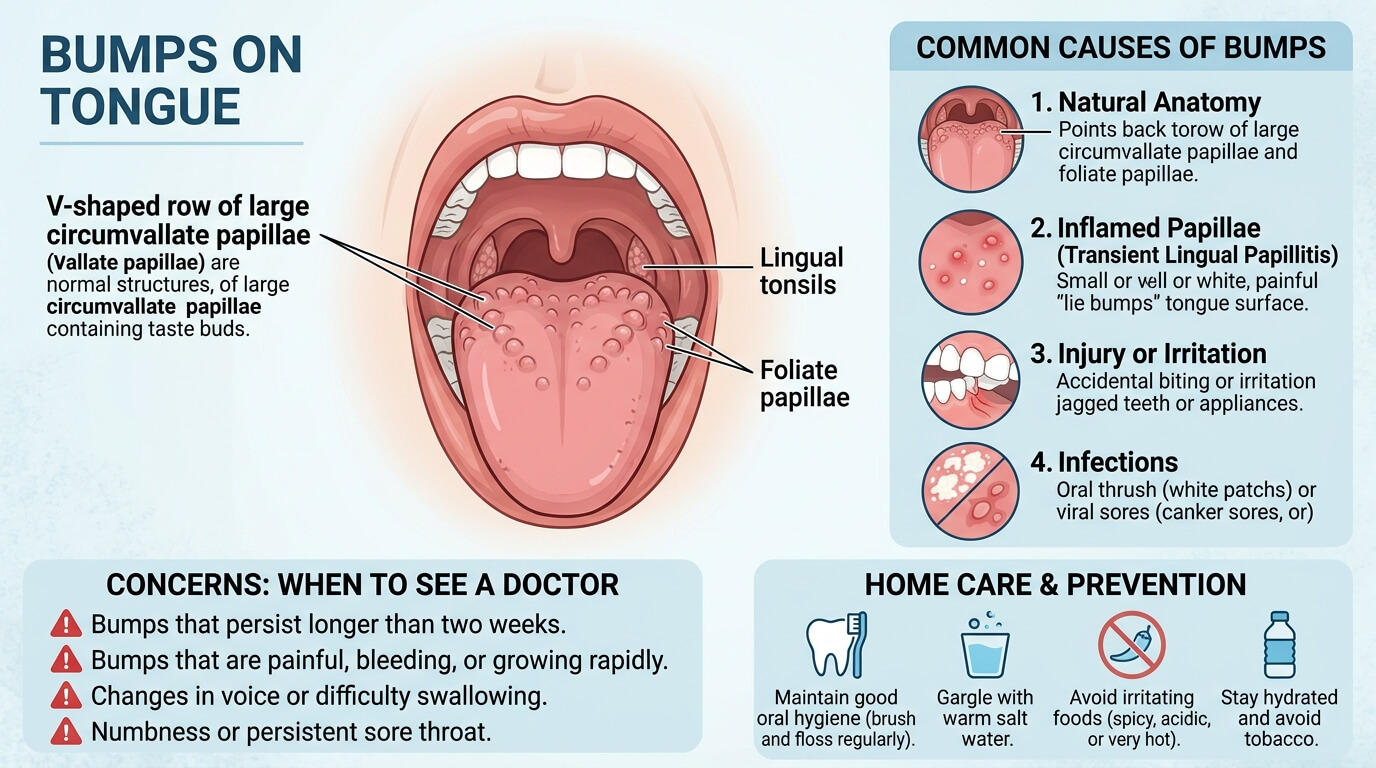
Specifically, you have “circumvallate papillae,” which are large, dome-shaped bumps arranged in a V-shape at the very back of your tongue. These are completely normal, and they are supposed to be there. Many people go their entire lives without noticing them, and then one day, they happen to look in the mirror or feel the back of their tongue and suddenly become aware of these structures for the first time, triggering unnecessary worry.
Circumvallate Papillae: The Most Common “Bumps”
The circumvallate papillae are usually the culprits when people worry about bumps on back of tongue. These are not small; they can be quite large, sometimes the size of a small pea, and they sit in a row across the back third of your tongue. They are larger than the other types of papillae because they contain a high concentration of taste buds. If you stick your tongue out in the mirror and look closely, you will see them arranged symmetrically.
They are flesh-colored, smooth, and rounded. Because they are situated so far back, you might not notice them visually, but you can definitely feel them with your finger or the roof of your mouth. The reason they suddenly feel more noticeable is often due to minor irritation, such as eating something acidic, spicy, or hot, which can cause temporary swelling that draws your attention to them.
When Bumps Might Indicate a Health Issue
While the majority of bumps on back of tongue are harmless anatomical features, there are times when unusual bumps can indicate something that warrants medical attention. If the bumps are painful, rapidly growing, bleeding, or accompanied by other symptoms like a sore throat, difficulty swallowing, or unexplained weight loss, these are red flags that should prompt you to see a doctor.
Additionally, if you notice a single, isolated bump that is different in color—such as white, red, or black—or if it has an irregular shape or texture, it is worth having it evaluated. Most concerning bumps are not symmetrical. If you have a bump on one side of your tongue that does not have a matching counterpart on the other side, this asymmetry is a reason to get it checked out by a healthcare professional.
Lie Bumps: Temporary and Harmless
One of the most common causes of sudden, painful bumps on back of tongue is a condition informally known as “lie bumps,” though the medical term is transient lingual papillitis. These are small, inflamed papillae that become swollen and tender, usually due to irritation or minor trauma. You might develop them after eating something particularly hot, acidic, or crunchy that irritates the surface of your tongue.
They can also appear during times of stress or hormonal changes. Lie bumps are usually white or red, very small, and they tend to resolve on their own within a few days. While they can be uncomfortable and make eating or talking slightly painful, they are not dangerous and do not require treatment beyond rinsing with salt water and avoiding further irritation.
Oral Thrush and Fungal Infections

Another potential cause of bumps on back of tongue is oral thrush, which is a fungal infection caused by an overgrowth of Candida yeast. This condition is more common in people with weakened immune systems, those taking antibiotics, or individuals who wear dentures. Oral thrush typically presents as white, cottage-cheese-like patches on the tongue and inner cheeks, but it can also cause raised, bumpy areas on the back of the tongue.
If you try to scrape off the white coating and it bleeds or leaves a raw, red area underneath, this is a strong indicator of thrush. The condition is treatable with antifungal medications, but it requires a proper diagnosis from a doctor or dentist. If left untreated, thrush can spread and become more uncomfortable, so it is important to seek care if you suspect this is the cause.
Canker Sores and Aphthous Ulcers
Canker sores are small, painful ulcers that can appear anywhere in the mouth, including on the back of the tongue. They are usually round or oval, with a white or yellowish center and a red border. Unlike cold sores, which are caused by a virus and appear on the outside of the mouth, canker sores are not contagious, and their exact cause is not fully understood.
They can be triggered by stress, certain foods, minor injuries to the mouth, or underlying health conditions like vitamin deficiencies or autoimmune disorders. When a canker sore appears on the back of the tongue, it can feel like a raised bump, especially in the early stages before it fully ulcerates. These sores are self-limiting and usually heal within one to two weeks, but they can be quite painful and may interfere with eating and speaking.
Enlarged Lingual Tonsils
Many people do not realize that they have tonsils on the back of their tongue in addition to the ones at the back of their throat. These are called lingual tonsils, and they are part of your immune system. Normally, they are small and unnoticeable, but they can become enlarged due to infection, inflammation, or irritation. When this happens, you might feel or see bumps on back of tongue that are red, swollen, and possibly tender.
Enlarged lingual tonsils can make swallowing uncomfortable and can sometimes cause a sensation of something being stuck in your throat. This condition can be triggered by viral or bacterial infections, allergies, or chronic post-nasal drip. If the enlargement persists or causes significant discomfort, it is worth consulting a doctor to rule out an infection or other underlying issue.
Trauma and Irritation from Food or Habits
Sometimes, bumps on back of tongue are simply the result of accidental trauma. If you accidentally bite your tongue, burn it on hot food or drink, or scrape it against a sharp edge of a tooth or dental appliance, the tissue can become swollen and form a raised bump. This type of bump is usually tender, localized to the area of injury, and accompanied by redness or even a small amount of bleeding.
The good news is that the tongue heals remarkably quickly due to its rich blood supply. Most minor injuries resolve within a few days to a week. To promote healing, avoid spicy, acidic, or rough-textured foods, rinse your mouth with warm salt water, and maintain good oral hygiene.
Allergic Reactions and Sensitivities
Allergic reactions can manifest in various ways in the mouth, and bumps on back of tongue can sometimes be a sign of an allergic response to food, medication, or even oral care products. If you notice swelling, bumps, or a tingling sensation on your tongue shortly after eating a new food or using a new toothpaste or mouthwash, this could indicate an allergy or sensitivity.
In more severe cases, an allergic reaction can cause significant swelling of the tongue, difficulty breathing, or hives, which constitutes a medical emergency requiring immediate attention. However, milder reactions may simply cause localized bumps or irritation that resolve once the allergen is removed. If you suspect an allergy, try to identify and eliminate the trigger and consult with an allergist if the problem persists.
Oral Cancer: Rare but Important to Recognize
While it is important not to jump to the worst-case scenario, it is equally important to be aware that persistent, unexplained bumps on back of tongue can, in rare cases, be a sign of oral cancer. Oral cancer can present as a lump, bump, or ulcer that does not heal within two weeks. It is often painless in the early stages, which is why regular self-examination and dental checkups are so important.
Risk factors for oral cancer include tobacco use, heavy alcohol consumption, HPV infection, and a history of sun exposure to the lips. If you notice a bump that is growing, changing in appearance, or accompanied by symptoms like a persistent sore throat, difficulty swallowing, or unexplained bleeding, you should see a doctor or dentist promptly for evaluation. Early detection is key to successful treatment.
How to Perform a Self-Examination
Regular self-examination of your mouth is a simple but powerful tool for catching problems early. To check for bumps on back of tongue, stand in front of a well-lit mirror and stick your tongue out as far as you comfortably can. Use a flashlight or your phone’s light to illuminate the back of your mouth. Look for any asymmetry, changes in color, or new lumps that were not there before.
Gently run a clean finger along the surface of your tongue to feel for any hard lumps or unusual textures. Pay attention to whether any areas are painful or tender to the touch. If you notice anything concerning, take a photo and make an appointment with your dentist or doctor. Having a visual record can help you track changes over time and provide valuable information to your healthcare provider.
When to See a Doctor or Dentist
Knowing when to seek professional help is crucial. You should schedule an appointment if any bump on your tongue lasts longer than two weeks, is growing, or is accompanied by other symptoms like pain, bleeding, difficulty swallowing, or unexplained weight loss. Additionally, if you have a history of tobacco or alcohol use, or if you have been exposed to HPV, you should be extra vigilant about any changes in your mouth.
Your dentist or doctor can perform a thorough examination, and if necessary, they may recommend a biopsy to rule out serious conditions. Remember, it is always better to have something checked and be told it is nothing than to ignore a potential problem and regret it later.
Home Remedies and Self-Care Tips
For most benign bumps on back of tongue, simple home care measures can provide relief and promote healing. Rinsing your mouth with warm salt water several times a day can help reduce inflammation and keep the area clean. Mix about half a teaspoon of salt in a glass of warm water, swish it around your mouth for 30 seconds, and spit it out. Avoid spicy, acidic, or rough foods that can further irritate the bumps.
Stay hydrated and maintain good oral hygiene by brushing your teeth twice a day and flossing daily. If the bumps are painful, you can use over-the-counter oral pain relievers or numbing gels specifically designed for mouth sores. Avoid smoking and limit alcohol consumption, as these can slow healing and exacerbate irritation.
Preventing Future Bumps and Irritation
While you cannot completely prevent all bumps on back of tongue, you can take steps to minimize your risk. Practice good oral hygiene to reduce the risk of infections. Avoid known food allergens and be cautious when trying new foods. If you have braces or dental appliances, make sure they fit properly and do not have sharp edges that could injure your tongue.
Manage stress through healthy coping mechanisms, as stress can weaken your immune system and make you more susceptible to conditions like lie bumps and canker sores. Stay hydrated, eat a balanced diet rich in vitamins and minerals, and avoid tobacco and excessive alcohol. Regular dental checkups allow your dentist to catch potential problems early and provide guidance on maintaining a healthy mouth.
Understanding the Role of Hydration and Nutrition
Your overall health, including the health of your tongue, is closely tied to your diet and hydration status. Dehydration can cause your tongue to become dry and irritated, making it more susceptible to injury and inflammation.
Drinking plenty of water throughout the day helps keep your mouth moist and supports the natural healing processes of your tissues. Nutritional deficiencies, particularly in vitamins B12, folate, and iron, can lead to changes in the tongue, including swelling, soreness, and the development of bumps or ulcers. If you frequently experience tongue problems, consider evaluating your diet to ensure you are getting adequate nutrients, and consult with a healthcare provider about whether supplementation might be beneficial.
Conclusion
Discovering bumps on back of tongue can be alarming, but in most cases, they are harmless anatomical features or minor irritations that resolve on their own. By understanding the normal structures of your tongue, recognizing the common causes of bumps, and knowing when to seek professional help, you can approach this issue with confidence rather than fear. Regular self-examinations, good oral hygiene, and a healthy lifestyle are your best defenses against oral health problems.
If you ever have doubts or concerns, do not hesitate to reach out to a dentist or doctor. Your oral health is an important part of your overall well-being, and staying informed and proactive is the key to maintaining a healthy, happy mouth for life.