introduction
In the world of natural wellness and holistic health, few trends have gained as much traction in the last decade as oil pulling. If you have spent any time browsing lifestyle blogs or watching wellness influencers on social media, you have almost certainly seen someone swishing a spoonful of coconut oil around in their mouth for ten or twenty minutes.
Proponents claim it can whiten teeth, cure gum disease, draw toxins out of the body, and even improve your overall health. However, as with any health trend that moves from ancient traditions to modern internet fads, it is important to pause and look at the science.
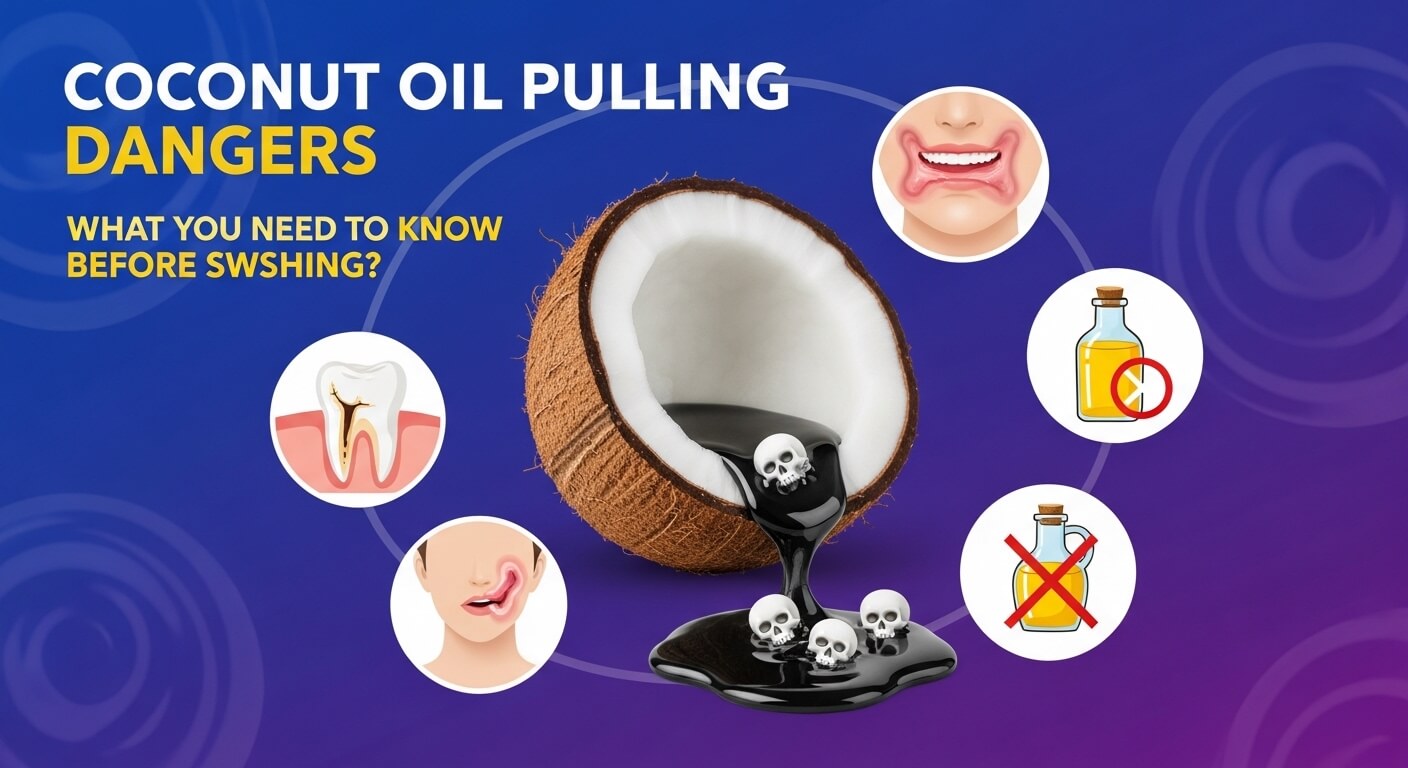
While many people swear by it, there are valid concerns that need to be addressed. We need to have an honest conversation about Coconut Oil Pulling Dangers to ensure that you are making decisions that actually protect your health rather than putting it at risk. It is easy to get swept up in the promise of a “natural cure,” but it is vital to remember that just because something is natural does not mean it is universally safe for everyone or free from potential complications.
Understanding What Oil Pulling Is and Why It Went Viral
Oil pulling is a practice that dates back thousands of years to Ayurvedic medicine, where it was traditionally used as a way to cleanse the body and improve oral hygiene. The process is quite simple: you take a tablespoon of oil—usually coconut, sesame, or sunflower oil—and swish it around your mouth, pulling it through your teeth and around your gums for a set period, typically between 10 and 20 minutes, before spitting it out.
The theory behind it is that the oil acts as a magnet for bacteria, binding them together so they can be removed when you spit the oil into the trash. It became a viral sensation because it promised a low-cost, easy-to-do addition to a daily routine. When you see a simple, inexpensive habit that promises to fix complex issues like yellow teeth or bad breath, it is natural to want to try it. However, the popularity of the trend often outpaces the clinical evidence, leaving many people unaware of the risks involved.
Is Oil Pulling Actually Safe for Everyone?

The question of safety is where things get complicated. For the average person with a healthy mouth and no underlying medical conditions, oil pulling is generally considered safe if done with common sense. It is not going to cause immediate harm if you do it once or twice. However, the safety profile shifts when you look at certain groups of people or when you look at the potential for improper technique.
The safety of the practice relies entirely on the integrity of your oral cavity and your respiratory system. If you are someone who has a sensitive gag reflex, underlying jaw issues, or a history of respiratory complications, the risks begin to outweigh the perceived benefits. We often treat wellness practices as “one size fits all,” but your mouth is a complex biological environment, and adding a large amount of lipid-based material to that environment every single day can cause issues that many proponents of the practice fail to mention.
The Risk of Lipid Pneumonia: A Serious Concern
One of the most significant and often overlooked Coconut Oil Pulling Dangers is the risk of lipid pneumonia. This is a rare but very serious condition that occurs when fatty substances—like coconut oil—are accidentally inhaled into the lungs. When you are swishing a mouthful of oil for 15 or 20 minutes, especially if you have a weak gag reflex or issues with swallowing, it is entirely possible to aspirate tiny droplets of that oil.
While the lungs are designed to clear away dust and debris, they are not designed to clear away heavy, thick oils. If oil gets into your lungs, it can trigger an inflammatory response, leading to a type of pneumonia that is very difficult to treat. This is particularly a risk for the elderly, individuals with swallowing difficulties, or anyone who struggles with acid reflux, where the contents of the mouth can easily move down the wrong pipe. It is not a common side effect, but the severity of the risk makes it a point that everyone should be aware of.
Digestive Issues and Potential Upset Stomach
If you have ever tried oil pulling, you know that the sensation of keeping a mouthful of oil for twenty minutes can be physically taxing. For many, this process triggers a strong gag reflex. When you are fighting a gag reflex, you are straining your throat and upper digestive muscles. Furthermore, even if you are very careful, you will almost certainly swallow a small amount of the oil by accident. Coconut oil is, after all, a fat. If you swallow a tablespoon of oil every morning, your digestive system may react poorly.
Common digestive side effects include nausea, stomach cramps, and, in some cases, diarrhea. While these aren’t life-threatening, they can definitely disrupt your morning and make you feel sluggish. If you have a sensitive stomach or suffer from conditions like Irritable Bowel Syndrome, introducing this volume of oil to your digestive tract can exacerbate your symptoms, making the supposed health benefits entirely counterproductive.
The Risk of Jaw Pain and Muscle Tension
Another area of concern regarding Coconut Oil Pulling Dangers is the mechanical stress placed on your jaw. Your temporomandibular joint (TMJ) is a complex hinge that connects your jawbone to your skull. It is not designed to support the mechanical action of swishing a viscous liquid for long periods. If you are vigorously pulling the oil through your teeth, you are putting a significant amount of strain on your jaw muscles and the joint itself.
For individuals who already suffer from TMJ disorders, bruxism (teeth grinding), or general jaw tension, oil pulling can actually trigger flare-ups of pain. You might find that your jaw feels tight, sore, or clicks more frequently after you have started an oil-pulling routine. It is a subtle physical impact, but when repeated daily, this repetitive stress can lead to chronic jaw pain that is much harder to treat than a simple case of bad breath.
Not a Replacement for Professional Dentistry
The most dangerous aspect of oil pulling is the mindset it creates, which is that it might be a valid substitute for professional dental care. There is no clinical evidence to suggest that oil pulling can remove tartar, reverse deep cavities, or treat periodontal disease. The danger lies in people skipping their regular cleanings, dental exams, or necessary treatments because they believe their daily oil-pulling habit is keeping them covered.
If you have a cavity and you think oil pulling is fixing it, you are allowing that decay to spread until it eventually requires a root canal or an extraction. Dentists are trained to see the microscopic signs of trouble that you cannot see in the mirror. No amount of coconut oil can replace the mechanical action of a professional cleaning or the diagnostic expertise of a dentist. If you use oil pulling as an “excuse” to avoid the dentist, you are putting your long-term oral health at significant risk.
The Myth of Whitening Your Teeth
We all want a brighter smile, and the promise of a natural whitening method is a massive draw. However, one of the biggest misconceptions about oil pulling is its effectiveness as a whitening agent. The truth is that coconut oil is not a bleaching agent. It does not contain the peroxide or abrasive agents necessary to penetrate the enamel and lift stains. At best, it might help remove some surface debris or film that is sitting on your teeth, which could make them look slightly cleaner for a few minutes. However, it will not change the actual color of your teeth.
The danger here is purely psychological and financial; you might spend weeks or months diligently swishing oil, hoping for a “Hollywood smile,” only to find that your teeth are the same shade they were before. People often get frustrated and try to increase the intensity of their pulling, which leads back to the risks of jaw pain and mouth irritation without any aesthetic reward.
Bacteria Resistance and Oral Microbiome Misconceptions
There is a lot of talk about how coconut oil has antimicrobial properties because of lauric acid. While it is true that lauric acid has some ability to fight certain bacteria, the idea that oil pulling “detoxes” your mouth by pulling out “bad bacteria” is a gross oversimplification. Your mouth is home to a complex ecosystem—an oral microbiome—that includes both good and bad bacteria. They exist in a delicate balance.
When you swish a dense, oily substance around for twenty minutes, you are altering the environment of that microbiome. There is a risk that you are disrupting the good bacteria that actually protect your teeth and gums. By trying to sterilize your mouth in a way that isn’t biologically natural, you could potentially create an imbalance, allowing other, more harmful bacteria to flourish or causing your gum tissue to become irritated by the constant oily film. Nature intended your mouth to be cleaned by saliva, brushing, and flossing, not by an artificial oil barrier.
Clogged Drains and Household Problems
This is a Coconut Oil Pulling Dangers category that no one warns you about until it is too late: your plumbing. Coconut oil is solid at room temperature. When you spit a mouthful of thick, oil-laden mixture into your sink, you might think the water will flush it away. Unfortunately, that is not how it works. As the oil travels down your pipes, it cools down and turns back into a solid form.
Over time, this creates a buildup of hardened fat in your pipes, commonly known as a “fatberg.” This is the number one cause of kitchen sink clogs. Plumbers will tell you that the single worst thing you can put down a drain is fat, oil, or grease. If you practice oil pulling every day, you are essentially pouring a small amount of liquid fat down your drain every morning. Eventually, you will be faced with a backed-up sink and an expensive plumber’s bill. Always spit your oil into the trash can, never the drain.
Who Should Definitely Avoid Oil Pulling?

Given the risks we have discussed, there are certain people who should avoid the practice entirely. If you have a history of pneumonia, frequent respiratory infections, or lung disease, you should not put yourself at risk of aspirating oil. If you have been diagnosed with TMJ disorder or have a history of chronic jaw pain, the mechanics of swishing will likely do more harm than good.
Furthermore, if you are currently recovering from dental work, such as a tooth extraction or a filling, you should not be swishing anything in your mouth, as it can disrupt the healing process and introduce bacteria to a sensitive surgical site. Finally, children should never be encouraged to oil pull. They are much more likely to swallow the oil or choke on it, and there is absolutely no evidence that it provides any benefit to developing teeth and gums. If you fall into these categories, please stick to standard, proven dental care methods.
Signs That Oil Pulling Isn’t Working for You
How do you know if you are harming? Your body usually gives you signs long before a doctor does. If you notice an increase in tooth sensitivity, that is a huge warning sign. Oil pulling should not cause your teeth to hurt; if they do, you may be damaging your gums or enamel through the mechanical stress of the swishing. If you notice that your gums look red, swollen, or bleed when you floss, you might be irritating them.
If you have noticed an increase in digestive issues, nausea, or a feeling of “heaviness” in your stomach after your morning routine, your body is telling you to stop. If you find yourself dreading the process or feeling like your jaw is constantly locked or tired, listen to your body. These are not signs of “detox” or “healing”; they are signs that the practice is having a negative impact on your physical well-being.
Better Alternatives for Daily Oral Hygiene
If your goal is to have a clean, healthy mouth, you don’t need to take risks with oil pulling. The medical community has spent decades perfecting oral care, and the results are consistent. Brushing with fluoride toothpaste twice a day is non-negotiable. It strengthens enamel and helps prevent decay in a way that coconut oil simply cannot. Flossing daily is the only effective way to remove the plaque that hides between your teeth where your brush can’t reach.
If you are worried about bad breath, consider using a tongue scraper. Most of the bacteria that cause bad breath live on the back of your tongue, and scraping them away is far more effective and less risky than swishing oil. Using an alcohol-free mouthwash can also help manage bacteria without drying out your mouth. These methods are safe, tested, and highly effective for maintaining a healthy smile.
How to Practice Safely If You Choose To Continue
If, after reading about the Coconut Oil Pulling Dangers, you still feel that you want to try it, please be incredibly careful and treat it as a supplemental activity, not a replacement for dental care. First, start with a very small amount—maybe just a teaspoon—to see how your stomach and jaw react. Do not force yourself to do it for twenty minutes; start with two or three minutes and see how it feels.
Never swish vigorously; do it gently to minimize jaw stress. Always be conscious of your swallowing to avoid aspiration. If you have any history of breathing issues, skip it entirely. Finally, never spit the oil into your sink. Always spit into a wastebasket or a paper towel that you can throw away. If you feel any pain, irritation, or nausea, stop immediately. Your health is not worth the stress of a trend that may not be providing any real benefit.
When to See a Dentist About Your Oral Health
Regardless of what you choose to do at home, there is no substitute for a professional. You should be seeing a dentist at least twice a year. If you have concerns about your teeth or gums, talk to your dentist about them. Be honest with them about your oil-pulling habit.
A good dentist will not judge you; they will look at the health of your gums and the integrity of your enamel to give you an objective assessment. If you are practicing oil pulling and you start to notice any changes in your dental health—even positive ones—ask your dentist if they can see any clinical evidence of improvement. They are the only ones who can tell you if your mouth is actually healthy or if you are simply masking problems with a daily swish.
Final Verdict: Weighing the Risks
At the end of the day, the internet is full of “health hacks” that promise the world but deliver very little. The conversation around Coconut Oil Pulling Dangers isn’t meant to scare you, but rather to encourage a more skeptical and thoughtful approach to your health. We should all be our own health advocates. We should question trends, look for the science, and prioritize methods that are proven to be safe.
Oil pulling is a harmless ancient ritual for some, but it has become a potentially risky habit for others who lack the full picture. If you want a healthy mouth, focus on the fundamentals: brush, floss, see your dentist, and eat a healthy diet. If you choose to add oil pulling to your day, do it with your eyes wide open, knowing the risks, and putting your safety above the trend. You only get one set of adult teeth and one respiratory system—protect them with evidence-based care.